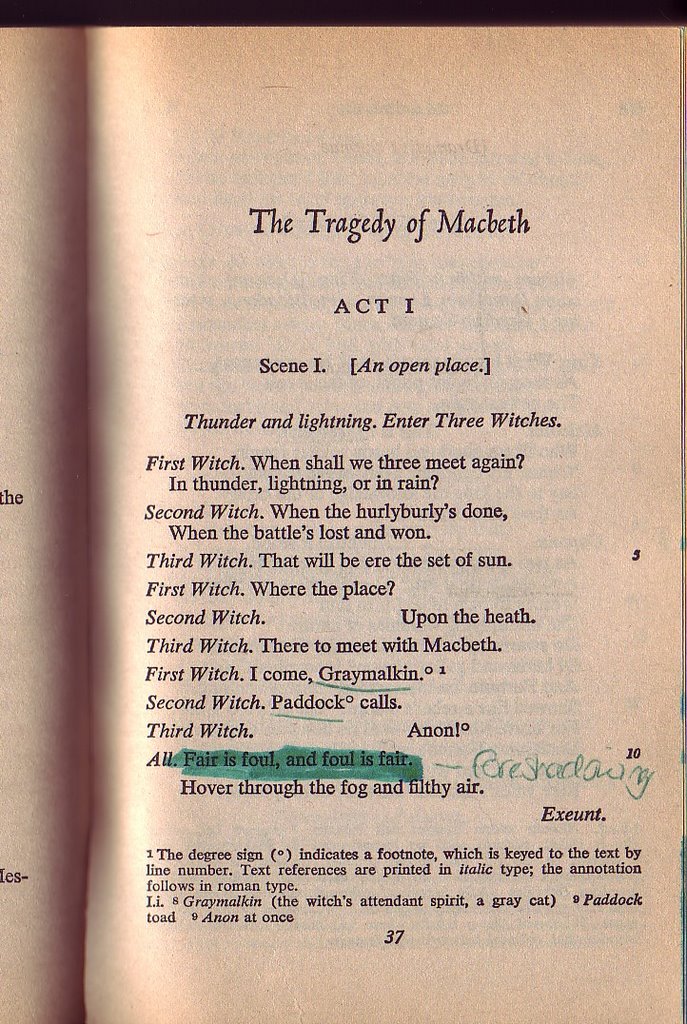
A recently discovered artifact from my book-reviewing past (click to enlarge). I think there should be an entire publication in this format, with thematic shapes for every page, and bound in finger-knitting string.


A recently discovered artifact from my book-reviewing past (click to enlarge). I think there should be an entire publication in this format, with thematic shapes for every page, and bound in finger-knitting string.

The Gawker item about how no one (that is, Liz Smith) in New York wants to go out anymore in this fallen city—”The best way to spend an evening these days, she said, was with a good book, television and the telephone turned off”—reminded me of the charming profile of Ed and Nancy Sorel in the Times Real Estate section the other day. It turns out Ed and Liz are as one:
It’s an oddity of real estate that, as neighborhoods change, people have to move to stay in the same place. Coming to Harlem restored a sense of neighborliness to the Sorels’ lives that had slowly deteriorated in TriBeCa.
But in many ways, the New York they pine for is irretrievably lost. “There’s no cafe life anymore,” Mr. Sorel said. “There’s no meeting by chance. The dinner party is the big social gathering.”
His professional interactions have also grown less spontaneous and convivial over the years. “There was something so invigorating and amateur” about magazine offices in the 60’s and 70’s,” he said. “Now everything is very corporate and very cold. It’s not all that pleasant — the high-rise with security at the desk. There are several stages before you get to see anybody, and then they don’t want to see you because they’re in the middle of something, so you generally meet them in the reception room.”
And so goes life in this evolving city: the chummy lunch with an editor is replaced by the terse exchange and chilly handshake; the warm camaraderie of neighborhoods by an impersonal obsession with real estate values; the parent or grandparent by the professional nanny. Yet the Sorels really can’t imagine living anywhere but New York.
There’s an accompanying Sorel “audio slide show,” too.
Stay Home [lyrics, Self]
Don’t Stay Home [lyrics, 311]
There Is Life Outside Your Apartment [lyrics, Avenue Q]
Ed Sorel [New Yorker cartoons and covers, Cartoon Bank]
A lot of people are writing about Caitlin Flanagan’s To Hell With All That, but my favorite piece so far is the smart, wide-ranging, and fair-minded review by Ann Hulbert in Slate. All of it is this good:
But the Flanagan who dispenses the provocative diagnoses also seems, a la Poppins, to have taken a swig of rum-punch potion herself. What is fascinating—if also infuriating—to watch is Flanagan parading as almost a parody of the spoiled-child-parent she scolds her contemporaries for being and lauds her own mother for not being. The minimemoir that emerges from these essays betrays more adolescent Sturm und Drang than she seems to realize. The mother Flanagan idolizes as the acme of accomplished housewifery in fact got fed up at home and went to work, defying a husband (writer and historical novelist Thomas Flanagan) who told her to drop dead—and leaving a daughter feeling abandoned and, years later, obviously still very ambivalent about her role models. How else to explain a worshipper of domestic expertise who has never changed a sheet or sewed on a button, and who boasts about it in print? Flanagan also airily confesses to being “far too educated and uppity to have knuckled down and learned anything about stain removal or knitting or stretching recipes.” In a scene I suspect few readers will forget, the Flanagan who insists on her at-home-mother status describes summoning the nanny, Paloma, to clean up one boy’s vomit. Meanwhile Flanagan, the writer with the clout to leave the mucky work to others, stands “in the doorway, concerned, making funny faces at Patrick to cheer him up—the way my father did when I was sick and my mother was taking care of me.”
Hulbert observes, “It’s telling that this book leaves out the one article in which Flanagan ventured [in The Atlantic] to speak up in the larger liberal cause of economic justice, “How Serfdom Saved the Women’s Movement.” Also in Slate, posted the same day: Melonyce McAfee’s “I Hate Secretaries Day.”
Lee Siegel’s TNR blog (“an anti-blog blog that consists not of byte-sized thoughts and links, but of arguments, insights, and literary style,” says the email promo) just debuted, and I’m sorry to note that for a man purportedly obsessed with accuracy, he’s got a bad case of the typos.
After a fashion. The always fantastic Go Fug Yourself has some stern words for the Renaissance fellow, who, here, is wearing something he maybe should have left in the ’60s. Actually, I don’t mind it, because he seems to be wearing it humorously, but I certainly see Jessica’s point. She writes (and you’ll obviously need to see the picture to appreciate it):
WALLACE SHAWN, WHAT ARE YOU WEARING? No! No! Althought I admire the sentiment behind your plea for peace, DON’T WEAR THAT SHIRT WITH A SUIT! No! No! Again, I say no!
And why is this so painful for me? Because I LOVE Wallace Shawn. How can you look at that face and not love this man (albeit not in a Tom Cruise I LOVE THIS WOMAN kind of way, at least not in my experience)? First of all, he was, of course, Mr Hall, the lovable hapless teacher in Clueless — which, hello, who doesn’t love Clueless? It’s the first movie I ever walked out of with the reaction, “That was hilarious! I need to go buy some clothes immediately,” a reaction which basically informed the rest of my life — and, then, of course, in The Princess Bride [now out in a special-edition DVD, I notice], he taught us all both never to get involved in a land war in Asia, and, more importantly, to never go up against a Sicilian when death is on the line. Those are important life lessons, people. Which is why it is almost INCONCEIVABLE that I have to say something mean about him…but Wally! Oh, Wally. I don’t know what Cher Horowitz would have said about this get-up, but I suspect it would not have been super-complimentary.
As you may have noticed, the magazine occasionally has an audio feature on its online TOC. Last week’s, for instance:
This week in the magazine, David Remnick writes about global warming and a new documentary, “An Inconvenient Truth,” featuring Al Gore. Here, courtesy Simon & Schuster Audio, Elizabeth Kolbert reads the introduction and preface from her book “Field Notes from a Catastrophe,” which grew out of her award-winning three-part series in The New Yorker last year.
Click here to hear the reading.
PLUS: Last April, Elizabeth Kolbert discussed climate change with Amy Davidson.
There are so many great possibilities here—I hope that in the rumored upcoming web redesign, there’ll be new audio content weekly. Imagine what’s in the audio vaults, and what outside events and interviews they can put up if the magazine has or can get the rights to them. I’m really looking forward to seeing what they do with this.
This is a humble reminder that I’m walking (twelve miles, a lovely tour of the city) this Sunday in the MS Walk for Team Biddy, the spirited gang of two dozen that represents the countless friends of the Lascivious Biddies and their superfabulous (and always glamorous) guitarist, Amanda Monaco, who was diagnosed with the disease last year. Please give anything you can (that’s a link to my personal page; the forms are safe, the gifts are tax-deductible)—it means a lot to me, but it means a whole lot more to everyone with MS we’re walking for. Thanks a million!

Update update: It’s not too late to donate; you can still use the online form till June 23 and kick in something for MS research and a cure, donated in my name (you even get to be on an Honor Roll—your name in lights!). Thanks again so much to all of you good people who’ve given something. It really helps!
Good news about good writers:
failbetter is organizing a poetry reading — to take place April 24th at 7:30 at the Reading Between A and B series at 11th Street Bar (510 E. 11th Street, between Aves. A and B).
The three scheduled readers are Amy Holman, Sasha Frere-Jones and Max Winter (Amy and Sasha are former contributors and Max is in the new issue).
For more details check out our website:
or see
Speaking of the riotous Eugene Mirman, I’d like to add that I might not have discovered him at all without my new co-favorite American podcast, The Sound of Young America. Jesse Thorn has a big future, a big past, and a big present—at least, he deserves a big present, so someone get him one!

If, after you listen to a few of the Biddies’ sparkling songs, you want to get even closer to them, I don’t blame you. You’ll have a swell opportunity at their DVD release party, this Thursday, April 20, at Joe’s Pub. Bring some moolah for the MS Walk and they’ll be so happy, they might even sing a song just for you.

I’ve been urging a friend to read Calvin Trillin’s March 27 tribute to his late wife, Alice, and just looked for the link. It’s not online, but Rebecca Traister wrote a Salon story about her love of Trillin and of Trillin’s love for Alice:
But whatever my admiration for [Calvin Trillin’s] whole body of work, the core of why I love Trillin has been the way he wrote about Alice…. As Trillin has written and many others observed, she was George to his Gracie, the affable killjoy who (tried to) forbid him more than three meals a day. I also think I imagined being Alice myself: having so curious and silly a mate to frolic around the country with, playing the stern disciplinarian while clearly having the time of my life, not to mention scoring a husband who loved me so enthusiastically that that love jumped from the page like an overeager Labrador, knocking over anyone who happened to be giggling over one of his books.
Perhaps that’s it — I grew up loving Alice because her husband loved her so eloquently. But whatever it was, I surely loved her.
…
And so, when I saw this week’s New Yorker story, “Alice, Off the Page,” I settled down to read it quietly, privately, at home. Imagine my surprise upon discovering — within the first few paragraphs of Trillin’s 12-page remembrance — that I was not the only person who loved Alice, who mourned her passing, or who admired her marriage without having met her or her husband. He writes of getting condolence cards from many people who never knew her, including one from a young woman in New York who wrote that sometimes she looked at her boyfriend and wondered, “But will he love me like Calvin loves Alice?” (She evidently didn’t feel comfortable calling him Bud, either.)Imagine my further surprise, and abashment, upon reading Trillin’s speculation about what Alice would say to all those sympathetic correspondents who had encountered her only in his pages: “They’re right about that … they never knew me.” Gulp. She — as invoked by her husband — is right. I never knew her. I had fallen for the matriarch in what Trillin describes as a sitcom version of his marriage. And I had thought she was real.
The self-flagellation over, I read on. And what I found was Trillin’s endeavor to bring her to life more completely than he did in what he feels were his caricatured broad strokes.
Here’s the whole story. If you haven’t read the New Yorker piece, go back and find it. It’s stark and well-made and surprising and generous and lonely. Trillin doesn’t mention that Alice happened to die on September 11, 2001; the story of her spark, stance, words, work, setbacks, and his struggle to find his feet again after her death, speaks for itself. It’s still making me sad.