
Martin Schneider writes:
I’ve always liked Sidney Lumet’s movies, and I’ve always liked the idea of Sidney Lumet’s movies, the elevation of sheer storytelling craft over self-indulgent personal expression. Lumet had plenty to express, all right, but he did it with a minimum of fuss and always with his full attention on entertaining the viewer in an intelligent way.
One of the nice things about a career that is so long and varied and apparently free of auteurist mannerisms is that every fan will have a different collection of favorites. Some champion Network; give me The Morning After instead. You like Equus? I’ll take Murder on the Orient Express. Oh, you want Before the Devil Knows You’re Dead? I’m happy with Prince of the City. And I’ve left out at least ten pieces of compulsively watchable Hollywood product.
He had his turkeys, and he had his hits. He made a lot of movies, and most of them were darn good. I think someone once called him the greatest hack director who ever lived; I think he would have understood the profound compliment implied therein.
PS: For more on Lumet, the comments in this ArtsBeat post are uniformly wonderful.
Category Archives: In Memoriam
Leo Cullum, 1942-2010
Emily Gordon writes:
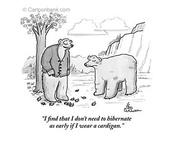
We were very sad to hear the news of the death of New Yorker cartoonist and veteran airline pilot Leo Cullum. (Click his name to see the full archive of his wonderful cartoons for the magazine.) From the New York Times obituary:
Mr. Cullum, a TWA pilot for more than 30 years, was a classic gag cartoonist whose visual absurdities were underlined, in most cases, by a caption reeled in from deep left field. “I love the convenience, but the roaming charges are killing me,” a buffalo says, holding a cellphone up to its ear. “Your red and white blood cells are normal,” a doctor tells his patient. “I’m worried about your rosé cells.”
Mr. Cullum seemed to have a particular affinity for the animal kingdom. His comic sympathies extended well beyond dogs, cats and mice to embrace birds — “When I first met your mother, she was bathed in moonlight,” a father owl tells his children — and even extended to the humbler representatives of the fish family. “Some will love you, son, and some will hate you,” an anchovy tells his child. “It’s always been that way with anchovies.”
“There are many ways for a cartoon to be great, not the least of which is to be funny, and Leo was one of the most consistently funny cartoonists we ever had,” said Robert Mankoff, the cartoon editor of The New Yorker. “He was certainly one of the most popular — some of his cartoons were reprinted thousands of times.”
Here’s the full obituary, and we’ll add other stories throughout the week.
Our condolences to Mr. Cullum’s family and friends, including the many New Yorker cartoonists who knew and loved him. Here’s the post reporting the news at the magazine’s own Cartoon Bank.
Later: Here’s the Comics Reporter on Cullum and his career.
Paul Conrad, 1924-2010
_Pollux writes_:
One of the many books on my parents’ bookshelves was a volume of Paul Conrad’s collected work. Conrad’s book, which, to me, had always graced these shelves, stood amongst volumes on other artistic greats: Duchamp, DalÃ, Kahlo, Picasso. Conrad belonged there.
Conrad’s sharp and funny cartoons were both an inspiration and an historical record of several decades of American history, unflinchingly showing us at our worst. His drawings for _The Los Angeles Times_ earned Conrad the enmity of Nixon and Nancy Reagan, as well as the Pulitzer Prize (three times). Conrad didn’t pull any punches.
With Conrad’s retirement in 1993, _The LA Times_ lost some of its power as a critical journalistic voice. Conrad’s mordant pen yanked the mask off Reagan’s grinning face. Conrad’s pen spared no one: it revealed the dark miasma of paranoia emanating from Nixon’s being; lampooned Ross Perot (a cartoonist’s dream); transformed the first George Bush into a weedier, crankier version of Reagan; shrunk Jimmy Carter into a well-meaning, sad-faced milquetoast; and refused to be charmed by Clinton’s grin.
Conrad will be missed. Some of his work can be seen “here.”:http://www.conradprojects.com/Contoon01.html
Harvey Pekar, 1939-2010
_Pollux writes_:
“Some reviewers in Tucson and Kansas City, if they talk about _American Splendor_ at [all,] are gonna say stuff like, ‘This is a comic book? Then why ain’t I laughin’?’ I know that, I’m ready for it.”
These are words spoken by Harvey Pekar in _The New American Splendor Anthology_ (1991), or rather “Harvey Pekar,” the persona who inhabited volumes of comics. As figures and scenes from the Bible were rendered again and again by countless medieval and Renaissance artists, so Pekar was depicted by various comic illustrators, Robert Crumb not the least among them.
From the streets of Cleveland, Pekar gave us a documentary, in comics form, of life as a “flunky file clerk,” a working-class schlub, and self-deprecating visionary. If _American Splendor_ was seen as narcissistic or overly concerned with everyday exertions, it’s because the fact that it was a record of one man’s mind and process was ignored. Pekar wanted to create comics this way. Why leave the reviewers in Tucson and Kansas City laughing when he could give them something new?
Alternative comics allowed for experimentation and collaboration. Comics could become something more than mass-produced, formulaic rags. _American Splendor_, and titles like it, was a comic to keep, shelve, and re-read. Pekar helped us all outgrow simplistic superhero comics.
Pekar was a curmudgeon, yes, but also a diamond in the rough. Pekar helped turn comics into a record of daily life, a collection of little moments that are otherwise forgotten but nonetheless are the stuff of real life.
And real life can be drab, boring, and stressful. Real life is filled with disappointment and solitude. But it can also be filled with laughter, drama, passion, and excitement. Pekar saw that the struggles between caped superheroes paled in comparison to the epic battles of daily life. Who needs Kryptonite when you have bills, loneliness, sickness, and David Letterman? And forget Green Lantern’s ring: what’s better than family or a hard-to-find jazz record?
Gary Coleman, 1968-2010
_Pollux writes_:
“Why should I be afraid of the camera?” Gary Coleman asked, in an April 1979 interview in _Ebony Jr._ magazine (Vol. 6, No. 10). “If it wore a black cape and had fangs, I’d be scared of it. But since it doesn’t, then why be afraid? There’s really nothing to this.” Coleman was eleven at the time. _Diff’rent Strokes_, of which Coleman was the life and soul, had already been on the air for four months.
By the time Coleman celebrated his 21st birthday, the actor had attempted to take control of his life, and his finances, by suing his parents and former manager for mismanaging his $3.8 million trust fund. His life had become a mixture of misfortune and success. Celebrities attended the actor’s 21st birthday. The mayor of Los Angeles, Tom Bradley, declared February 8 to be “Gary Coleman Day.” Coleman cut into an enormous birthday cake shaped like a train (the actor was a model train aficionado).
By 1999, Coleman had filed for bankruptcy and his life was a downward spiral of legal, domestic, and police troubles. Coleman’s calamities seemed to engender more derision and Schadenfreude than understanding.
He had become a punch-line and a pop culture trivia question: Did you know Coleman had worked as a security guard on a movie set? His misfortunes did not always bring out the best in people, or in the media.
Coleman’s life was a reverse image of the American dream. His riches-to-rags story became a subject for parody. There was a character named Gary Coleman in the musical _Avenue Q_. The song “It Sucks to Be Me” captured the tragedy of his life: “I’m Gary Coleman / From TV’s Diff’rent Strokes / I made a lotta money / That got stolen / By my folks! / Now I’m broke and / I’m the butt / Of everyone’s jokes.”
I stood next to Gary Coleman once while in line at a Pavilions supermarket in Culver City. Often, when an actor ages, he or she loses whatever spark that made the actor an object of affection or admiration.
But as Coleman chatted with the checkout girl, one could still see the same boy who, back in 1979, was completely unafraid of the camera. Despite his misfortunes, the bubbling confidence was still there, and to which we should pay tribute.
R.I.P. John Kane, New Yorker Cartoonist, Ukulele Player, Mensch
Emily Gordon writes:
I was very sorry to hear from illustrator and cartoonist Derek Van Gieson that John Kane passed away a few days ago. John, a New Yorker cartoonist, was also a dedicated musician and devotee of that small instrument with a big heart, the ukulele. He sent me many ukulele links and had a YouTube channel dedicated to them; I’ll find it to link to, but right now, the thought makes me too sad.
Here’s Derek writing eloquently on what made John so special.
John may have been getting up there in age by the time I caught up with him, but he was more animated and on the ball than any twelve youngsters combined. He was always going out to exhibitions, learning about some new technology, or improving himself via activities like judo. One of his most recent passions was taking up the uke. He had five models last time I remember. He’d watch Youtube clips and learn from the masters. I know he drove Sam and Sid nuts with all of his uke talk as there was usually something happening in that realm that he was very enthusiastic about. After lunch we’d walk down to the subway and talk music shop or just shop about guitars. He always had a unique theory he was thinking about or a new way of experiencing something that he’d often share. More often than not, I’d come home from The New Yorker luncheons, thinking I was one of the luckiest bastards in the world to be in the court of these fascinating gentlemen. Eventually our friendship became quite solid and if I didn’t make it one tuesday for lunch, either John or Sid would get ahold of me to ask me what the hell happened. I can’t really express how much that meant to me.
But read the whole post. It really captures the person John was, and the person we will all miss whether we were friends, acquaintances (like me), or fans of John’s dynamic, lovable, slightly unhinged cartoons.
J.D. Salinger, 1919-2010
_Pollux writes_:
“If Mr. Salinger is around town, perhaps he’d like to come in and talk to me about New Yorker stories.” So William Keepers Maxwell, Jr., _The New Yorker_’s fiction editor, wrote in 1947. Salinger would contribute several short stories to _The New Yorker_ that year, beginning a career that was at once fascinating and strange, and in many ways, tragic.
There seems to be only one photo of J.D. Salinger: the black-and-white author photo that graced millions of copies of _Catcher in the Rye_. There are, of course, other photos of Salinger, but he will remain for us the young author with the 1950’s style haircut and intelligent face whose stories have become required reading in the library of American literature.
Salinger intrigued us because he was the combination of two American tales: the instant literary celebrity and the famous recluse. Salinger did what most of us are sometimes tempted to do but know we shouldn’t do: hermetically seal himself against the world and close himself to all but the most minimal communication and interaction with the world.
“Although the myth of J.D. Salinger has been partially eroded by recent biographies and memoirs,” Raychel Haugrud Reiff has written in her book on J.D. Salinger, “the myth of Holden Caulfield remains. He will always be the sixteen-year-old whose sense of alienation in a phony, corrupt world speaks to readers worldwide.”
For us here at Emdashes, J.D. Salinger was one of the many figures in an intriguing pantheon of _New Yorker_ writers. Last year we “celebrated”:http://emdashes.com/2009/01/jd-salinger-turns-90.php the fact that we could read his last published piece, “Hapworth 16, 1924”.
We hoped for, as many have hoped for, that Salinger would have published more. But Salinger has passed from life into history, disappearing from the scene as mysteriously as the ducks on the lagoon in Central Park South.
David Levine, 1926-2009
Martin Schneider writes:
Some people, you figure they will just always be there. David Levine was drawing caricatures for The New York Review of Books well before my birth, and it was only reasonable to suppose he’d be at it years after my death, too. It’s difficult to imagine a world without a steady succession of new Levine drawings in it; it’s not merely perverse fancy to wonder whether Levine’s death makes it impossible for The New York Review of Books to keep publishing articles. That is how strong that association was.
You may have guessed that I grew up in a household with The New York Review of Books in it. Has there ever been a connection between an illustrator and a periodical as strong as that between Levine and The New York Review of Books? Norman Rockwell and The Saturday Evening Post, I guess. I can’t think of another one. His drawings meant as much to the identity of that journal as—if not more than—Rea Irvin’s typeface and monocled fop have meant to the image of The New Yorker.
How do these things happen? It’s not just that the drawings synecdochally came to represent the high quality of the articles in The New York Review of Books; the transferral of associations very nearly worked the other direction, too. I guess it’s just a long-winded way of saying, the artist and the periodical were made for each other.
Maybe the highest compliment one can pay Levine’s work (at least the caricatures; he was also a painter) is that the work lies in some realm beyond which the word “witty” really has no meaning. They were not “witty,” and they were not lacking in wit, either. Many of the drawings contain the kind of visual puns that constitute the most basic elements of the caricaturist’s trade. And the drawings could have dispensed with them altogether, without any loss of quality. The drawings rewarded the intelligent and informed reader who is in a mood to be serious but also engaged. In short, the New York Review of Books kind of reader.
Levine’s art appeared in The New Yorker many, many times, but it would be folly for me to celebrate him as a New Yorker contributor, impressive though those contributions surely were. It would be like celebrating Michael Jordan’s exploits for the Washington Wizards.
Earlier this year, I was obliged to empty out the house in which I grew up. Thirty-five years of living had accumulated in its corners, and I was forced to throw much of it away. During that process I came across a faded sheaf of twelve prints by Levine, presumably distributed to subscribers (in this case, my dad) a decade or three ago. I threw away so much, but I kept this, because reading means something to me, because ideas mean something to me, because The New York Review of Books means something to me, because David Levine means something to me. I’m looking at the prints as I write this.
RIP Claude Lévi-Strauss
Jonathan Taylor writes:
Anthropologist Claude Lévi-Strauss has died at 100.
Updating: John Updike praised The Origin of Table Manners in 1979, though he found missed any sense of “the arthropoid breath” in CLS’s “science of mythology”: “It is beautiful like a clock, and cool like a clock—a strangely elegant heirloom from the torture-prone, fear-ridden jungles and plains. Its orderly revolutions and transpositions have the inverted function of not marking but arresting time, and making a haven, for their passionate analyst, from the torsion and heat of the modern age.”
Edward Kennedy, 1932-2009
Martin Schneider writes:
I was hours away from an airplane voyage when news came though of Senator Kennedy’s death. Now, at my destination, I can take the time to accomplish the minimum a post like this should do: direct you to the useful post on The New Yorker‘s website listing the many fine articles that covered Kennedy over the years.
I know I’ll be using it.