Category Archives: Looked Into

Dumb Quotes Are the Cold Tears of a Stick Figure

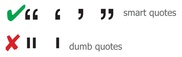
dumbquotes_radarcollectiveconsulting.jpgThere are smart cookies and dumb bunnies. (The latter term can apply to men and women alike, as far as I’m concerned.) There are smart moves and dumbfounding decisions. And, as every discerning typophile, copy cat, and design devotee knows, there are smart quotes and dumb quotes. The image to the right is a succinct visual summary. The Society of Publication Designers feels so (justly) strongly about it that they made smart versus dumb quotes lesson number one in their essential-vocabulary series.
Most recently, John Brownlee at Fast Company’s Co.Design defines the problem and provides the solution:

If you think about it, almost everyone is aware that quotation marks are not, in fact, vertical, but curled or diagonal. It’s how we write quotation marks on paper. So why do we type quotation marks on our keyboard this way?


Blame the advent of the typewriter. As [designer Jason] Santa Maria rightly points out, “Dumb quotes, or straight quotes, are a vestigial constraint from typewriters when using one key for two different marks helped save space on a keyboard. Unfortunately, many improper marks make their way onto websites because of dumb defaults in applications and CMSs.

The fix is blessedly simple. Refer to any of the links above, but especially bookmark Santa Maria’s firm and simple guide, Smart Quotes for Smart People. He knows what he’s talking about. Don’t be a dummkopf. Get smart!

Image credit: Radar Collective, “Cleaning up Bad Typography–10 Rules at a Time.”
Dept. of Voice Acting: I Find This Charming

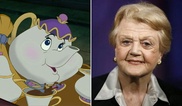
mrs-potts-angela-lansbury.jpg“I get recognized here and there as the voice of Pocahontas. It happened a lot more at the time when it had come out. I couldn’t go grocery shopping without some little kid in the front of the cart going, ‘Mommy–Pocahontas!'”
Irene Bedard
“[Children] don’t know that I’ve done those other things. They know me by my voice because children hear me in a supermarket; sometimes I’ll be chatting with a friend about lettuce, and suddenly a child will say, ‘Mrs. Potts!’ It’s enchanting.”
Angela Lansbury
Image from Voice Actors Who Look Like Their Characters

Other New York Times Headlines About Snake Handling

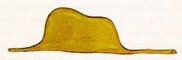
saint-exupery-snake.jpegBill Haast, 100, Florida Snake Handler, Is Dead
Snake Handler Bitten by One of World’s Most Poisonous Vipers
Snake Handler Hospitalized After Suffering 102d Bite
Snake Handler Dies of Bite, As His Father-in-Law Did
Snake Handler Recuperating
Jolo Journal; When the Faithful Tempt the Serpent
Kentucky Man Killed by Rattler In Rite of Snake-Handling Cult
Defiant Snake Handler Dies
SQUEEZED BY AN ANACONDA; A TRYING MOMENT FOR AN EXPERT SNAKE HANDLER
Drought means booming business for Southern California snake handlers
Handling Hogs
SNAKE BITES A SHOWMAN; “Rattlesnake Pete” Gruber Thought to be Dying at Rochester
Zoo Burglar Tries to Steal Deadly Cobras; Mystery in Raid on the Bronx Reptile House
CHURCHES CHIDED ON MATERIAL AIMS
One African Takes Fangs Over Fido As a Sentry

Who First Said “Print Is Dead,” Dr. Venkman?

A rewatch of the original Ghostbusters prompted an urgent Google search, with these satisfying Metafilter results. The asker’s question (also my question):

Print is dead? I was watching Ghostbusters (1984) this weekend, and at one point the character Egon Spengler is asked a question, to which he responds: ‘Print is dead.” What is the earliest recorded use of this phrase?

Among the satisfying replies:

I found a reference in the Antioch Review (1967) that uses “print is dead” as the characterization for Marshall McLuhan’s scholarship, which make a lot of sense to me in this context. This previously is also pertinent.

And:

Someone else in that group also mentions that the “print is dead” line actually gained some popularity in the early 80s in tech circles as the personal computer gained prominence. It likely wasn’t the earliest recorded use, but Egon’s quote may have just been a result of the growing sentiment of the time.

Meanwhile, a recent post on Movies.com answers the question I somehow didn’t think to ask, which is what the various Ghostbusters would look like if they were cartoon ghosts. Now you know.

Best of all, I learned from the Metafilter thread above that Harold Ramis went to the high school three blocks from my new home in Chicago! This must be why I keep watching his movies. Anita O’Day went there, too, which gives me shivers. So did Shecky Greene and Sidney Sheldon, but not all at the same time.

Related: The Contested Number of Years That Bill Murray Is Stuck in “Groundhog Day”

The Contested Number of Years That Bill Murray Is Stuck in Groundhog Day

Harold Ramis says ten. (The screenwriter, Danny Rubin, invites you to pony up to find out what he thinks.) These folks say eight years, eight months, and sixteen days. My favorite estimate comes from this brilliant breakdown, which gives it as 12,403 days of Sonny and Cher and sweet vermouth on the rocks with a twist, or almost 34 years. Poor Phil. He really earned that happy ending.
–Emily Gordon

Shakespeare: For Mature Teens Only

Emily Gordon writes:
Readdle‘s free Shakespeare app include’s Shakespeare’s complete works, “including doubtful works,” and a searchable concordance. It also has this advisory:
Rated 12+ for the following:
Infrequent/Mild Sexual Content or Nudity
Infrequent/Mild Alcohol, Tobacco, or Drug Use or References
Frequent/Intense Realistic Violence
Infrequent/Mild Mature/Suggestive Themes
Infrequent/Mild Horror/Fear Themes
Infrequent/Mild Profanity or Crude Humor
Frequent/Intense Cartoon or Fantasy Violence

Some Highbrow Literary Profiles from People Magazine in the 1970s and 80s

sam.jpg
An Angry Black Poet of the 1960’s, Nikki Giovanni Cools Down with Success By Patricia Burstein, July 12, 1976
Writers Joan Didion and John Gregory Dunne Play It as It Lays in Malibu By John Riley, July 26, 1976
Author Susan Sontag Rallies from Dread Illness to Enjoy Her First Commercial Triumph By Barbara Rowes, March 20, 1978
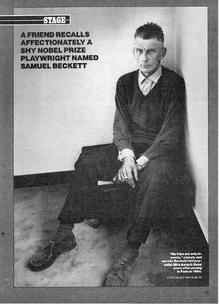
A Friend Recalls Affectionately a Shy Nobel Prize Playwright Named Samuel Beckett By Mira Avrech, April 13, 1981
Nobel Prize Winner Isaac Bashevis Singer on Life, Sex and the Storyteller’s Art By Allan Ripp, May 17, 1982
Nadine Gordimer: A Radical South African Novelist Writes Paeans to Revolutionaries and Awaits a Racial Apocalypse By Joshua Hammer, March 26, 1984
After 31 Years, Don Bachardy and Christopher Isherwood Are Still a Portrait of Devotion By Carol Wallace, May 21, 1984
Saul Bellow Returns to Canada, Searching for the Phantoms That Shaped His Life and Art By Joshua Hammer, June 25, 1984
Also, music and art:
Francis Bacon: a Great English Painter Brings His Horror Show to America By Lee Wohlfert, April 21, 1975
Painter Alice Neel Strips Her Subjects to the Bone—and Some Then Rage in Their Nakedness By Patricia Burstein, March 19, 1979
Philip Glass Composes a Sanskrit Opera About Gandhi, but Who Can Understand a Word of It? By Joseph Roddy, October 06, 1980
—Jonathan Taylor

When Janet Malcolm Broke the New Yorker’s Profanity Barrier

Jonathan Taylor writes:
[Update: Back Issues locates an even earlier use of the word “asshole” in The New Yorker, in 1975, among other corrections to Green’s list.]
Bookforum corrects the assertion by Elon Green in The Awl that the word “asshole” was first used in The New Yorker in 1994 (as you would gather from the mag’s own site search). In fact, the word “assholes” is believed to have debuted in a quote in an October 20-27, 1986, two-part Profile by everyone’s favorite antijournalist, Janet Malcolm, “A Girl of the Zeitgeist.”
The “Girl” in question was Ingrid Sischy, editor of Artforum. This portrait of the “art world” through Sischy–herself a curiously fleeting presence in her own profile–drew a response (also two-part) by the Village Voice‘s art critic at the time, Gary Indiana, subtitled “Breaking the Asshole Barrier.” He wrote, “The maiden appearance of the word ‘asshole’ is the least distressing infelicity in Malcolm’s article, but in the context of The New Yorker it seems portentous of the shape of things to come.”
In part one, Indiana dissected what he calls Malcolm’s “trial-by-interior,” in which she communicated her estimates of her interlocutors through her admiration, or lack thereof, of their domestic spaces: Rosalind Krauss, utterer of the word “assholes,” lives in “one of the most beautiful living places in New York.”
Artists themselves, Indiana said, didn’t come off so well in Malcolm’s method: Sherry Levine told him, “I knew nothing good was coming when the fact checker from The New Yorker called to ask me if it would be accurate to say that my bathtub is in the kitchen and I live alone with my cat,” and asked Levine to define “railroad apartment.”
(Malcolm also somewhat famously critiqued Sischy’s style of chopping tomatoes: “She took a small paring knife and, in the most inefficient manner imaginable, with agonizing slowness, proceeded to fill a bowl, tiny piece by tiny piece, with chopped tomatoes. Obviously, no one had ever taught her the technique of chopping vegetables, but this had in no way deterred her from doing it in whatever way she could or prevented her from arriving at her goal.”)
The other “famous story” about profanity in The New Yorker, of course, is Norman Mailer declaring that “true liberty” meant the “right to say shit in The New Yorker.”

Banned Words and Phrases: The Scourge of “Pretty Awesome”

Emily Gordon writes:
Lately I’ve been waging an inner war against millennial modifiers. Is it Gen Y’s fault (let’s blame them!), or the fault of us ad-sandblasted, dichotomy-spurning, latchkey-clutching Xers, that everything is “kinda” and “basically” now? I often used these qualifiers myself before I started noticing how hollow and cynical they sound. I’m objecting to this: “pretty awesome” and “kinda genius” and “sort of hilarious” and “basically the best thing ever.”
It takes character, and sometimes bravery–a Franzen-style commitment to loving rather then insta-liking–to declare a person or a thing actually good or smart or funny. What’s the point of declaring your devotion to something, or admiration for someone, if you can pre-take it back just in case someone else thinks your choice is lame? It’s simultaneously hyperbolic (which, as an enthusiast, I’m fine with), disingenuous (danger!), negating (hipster disaffection masking vague woundedness), and oxymoronic (and how is that a held belief?).
Although it’s already been replaced by Dicking Around, I’m still a proud adherent of the New Sincerity. Will you join me in putting on the sweet high lonesome sound of The Secret Sisters and wearing your heart on your (corduroy) sleeve instead of hiding it in an equivocating, halfhearted irony bucket?
Related: More banned words and phrases.

“The Patented Trump Palaver”: Time to Reread Singer!

Emily Gordon writes:
Anyone who’s surprised by reports about Donald Trump’s wiggly business sense–and anyone who’ll enjoy a little extra schadenfreude and outrage in this crazy-making political season–need only read Marc Singer’s classic 1997 Profile of the three-card-monte king. A sample:

Months earlier, I’d asked Trump whom he customarily confided in during moments of tribulation. “Nobody,” he said. “It’s just not my thing”–a reply that didn’t surprise me a bit. Salesmen, and Trump is nothing if not a brilliant salesman, specialize in simulated intimacy rather than the real thing. His modus operandi had a sharp focus: fly the flag, never budge from the premise that the universe revolves around you, and, above all, stay in character. The Trump tour de force–his evolution from rough-edged rich kid with Brooklyn and Queens political-clubhouse connections to an international name-brand commodity–remains, unmistakably, the most rewarding accomplishment of his ingenious career. The patented Trump palaver, a gaseous blather of “fantastic”s and “amazing”s and “terrific”s and “incredible”s and various synonyms for “biggest,” is an indispensable ingredient of the name brand. In addition to connoting a certain quality of construction, service, and security–perhaps only Trump can explicate the meaningful distinctions between “super luxury” and “super super luxury”–his eponym subliminally suggests that a building belongs to him even after it’s been sold off as condominiums.

Here’s the rest. Enjoy.

And related, in Salon today: “The biggest political lesson of the Trump ‘campaign.'” As Alex Pareene writes, “Trump realized that even though his ego was pushing him further and further into politics, he is much better at cashing checks from NBC for playing a billionaire than actually being a billionaire real estate mogul.”