
Jonathan Taylor writes:
A quaintly short list! An Emdashes tradition.
Monthly Archives: May 2011
Obligatory Rapture (Re)Post
Jonathan Taylor writes:
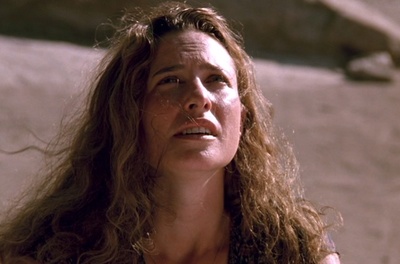
Have You Seen the Pearl? Tolkin’s ‘Rapture’ Gets Its Due
I’ll Stick With “Foodie”?
Jonathan Taylor writes:
Bon appetit, techies!
“The Patented Trump Palaver”: Time to Reread Singer!
Emily Gordon writes:
Anyone who’s surprised by reports about Donald Trump’s wiggly business sense–and anyone who’ll enjoy a little extra schadenfreude and outrage in this crazy-making political season–need only read Marc Singer’s classic 1997 Profile of the three-card-monte king. A sample:
Months earlier, I’d asked Trump whom he customarily confided in during moments of tribulation. “Nobody,” he said. “It’s just not my thing”–a reply that didn’t surprise me a bit. Salesmen, and Trump is nothing if not a brilliant salesman, specialize in simulated intimacy rather than the real thing. His modus operandi had a sharp focus: fly the flag, never budge from the premise that the universe revolves around you, and, above all, stay in character. The Trump tour de force–his evolution from rough-edged rich kid with Brooklyn and Queens political-clubhouse connections to an international name-brand commodity–remains, unmistakably, the most rewarding accomplishment of his ingenious career. The patented Trump palaver, a gaseous blather of “fantastic”s and “amazing”s and “terrific”s and “incredible”s and various synonyms for “biggest,” is an indispensable ingredient of the name brand. In addition to connoting a certain quality of construction, service, and security–perhaps only Trump can explicate the meaningful distinctions between “super luxury” and “super super luxury”–his eponym subliminally suggests that a building belongs to him even after it’s been sold off as condominiums.
Here’s the rest. Enjoy.
And related, in Salon today: “The biggest political lesson of the Trump ‘campaign.'” As Alex Pareene writes, “Trump realized that even though his ego was pushing him further and further into politics, he is much better at cashing checks from NBC for playing a billionaire than actually being a billionaire real estate mogul.”
Ryan Lizza on Liposuction; Louis Menand on Charlie Sheen….
Martin Schneider writes:
Slate‘s Tom Scocca is on to something here with some reassignment suggestions for the New Yorker editors. I also enjoyed his description of the magazine as “America’s leading crypto-newsweekly,” which is simultaneously complimentary and deliciously suggestive of a subtle publishing conspiracy.
What Not to Wear, Ogg
Ancient bones suggest cavemen wore boots
Neanderthal Shell Discovery Shows Cavemen Wore Makeup
Cavemen wore jewelry 19,000 years before Earth was created
“It is common knowledge that cavemen wore dreadlocks, not for spiritual reasons, not for fashion, just for the fact that the comb wasn’t invented yet.”
How To Make a Caveman or Cavewoman Costume (“To top the costume off, make sure to make your hair frizzy and messy much like how cavemen wore it back in the day. Finally, you can opt to carry a wooden club or crude stone axe. Don’t forget to act like a caveman by walking funny and by speaking gibberish.”)
“It is possible, the article opined, that cavemen wore mullets out of sheer practicality.”
Sexy Neanderthals Wore Feathers
Susan Sarandon Wears Teeth Bracelet!
–Emily Gordon
“My Perestroika” Movie May as Well Be “Russian People 101”
Martin Schneider writes:
Last night the IFC Center in New York had a special event for the tremendous new documentary My Perestroika in which director Robin Hessman and the Meyerson family, three of the movie’s subjects, fielded questions from the (it turned out) largely Russian-fluent audience.
My Perestroika retrospectively tracks a handful of Moscow elementary school chums from the 1970s to today. Hessman’s subjects are, for lack of a better word, “ordinary” Russian citizens, which fact must present a hell of a challenge for a documentarian. These people are noteworthy for not having gaudy and obviously narratizable biographical details: The aforementioned Meyersons today are schoolteachers with a winsome young son. One fellow is a former rock musician, another manages the retail presence of a French shirt designer; one woman makes a living managing the pool tables in an unspecified number of Moscow bars. The day-to-day details of the lives of these people and their uniformly sensible comments about the political upheavals of the past and present form the beating heart of this engrossing and observant movie.
For those who can remember the Cold War as a distant “adult” drama that never yielded much in the way of detail, My Perestroika has a few surprises in store. A key one is that the USSR of the 1970s wasn’t such a bad place for middle-class Muscovites to grow up. The struggle against the belligerent, materialist West was a fine cause for idealistic children to sink their teeth into (we see them designing handmade posters for media-ready protests). Halfway through the movie, the viewer is likely to marvel at the seemingly stark differences between the Russia of “closed” 1975 and that of “open” 2006. By the time the movie is over, that take will seem more than a little naïve. Vladimir Putin may have overseen a country with access to the capitalist West and the Internet, but his role ended up being uncomfortably similar to that of Brezhnev or Andropov.
To Hessman’s credit, My Perestroika is as interested in the lives of its subjects as the political lessons to be drawn from them, although both elements are important to the movie’s power. The people we meet are unremarkable, yet oddly likeable; the viewer never tires of them, I think. If such footage had been widely available to Americans several decades ago, perhaps the Cold War would have been shorter or less scary. The unavoidable irony is that the movie could only have been made and distributed after it was no longer necessary in that way.
My Perestroika‘s run at the IFC Center has been extended beyond its initial week-long commitment, so do check it out.