Author Archives: Emdashes

Obituary: Iris Murdoch (Newsday)

**Dame Iris Murdoch, 79, Celebrated Novelist**

By Emily Gordon

Dame Iris Murdoch, a novelist whose mastery of the English language was equaled by her confidence in the world of ideas, died Monday in Oxford, England, at the age of 79.

In his recently published book, “Elegy for Iris,” critic John Bayley, her husband of more than four decades, confirmed that she had been suffering from Alzheimer’s disease for the past five years.

Murdoch, who wrote more than 30 books – including the novels “The Sea, the Sea,” which won the 1978 Booker Prize, and “The Green Knight” (1994) – had lost contact with her intellectual faculties, though she and Bayley continued to be, as he wrote, “fused together.”

Murdoch was born in Ireland on July 15, 1919, the only child of Anglo-Irish parents, and grew up in the suburbs of London. She had a sparkling career as a scholar; educated at both Oxford and Cambridge, she studied for a year with disciples of the Austrian philosopher Ludwig Wittgenstein before going on to a lifetime of teaching philosophy at Oxford University. She also produced a legion of highly charged, intricate, sometimes comic novels, as well as poetry and plays. In 1987, Murdoch was made a Dame Commander of the Order of the British Empire, the equivalent of a knighthood for women.

Murdoch’s novels stand apart from anything written during her lifetime, in part because her style developed without sway to literary trends. Her earliest work is informed by existentialism; while working for the UN after World War II, she met Jean-Paul Sartre and the French writer Raymond Queneau, whom she considered an inspiration.

In her books, intensely thoughtful people are wracked with intellectual and moral struggle, which often requires the searchlight of an even greater mind for the relief of some understanding. Her themes are love, freedom, metaphysics and even enchanted mysticism. This often lends her scenarios and her characters a radiant quality that is both recognizable and utterly strange. Yet they cohere, because, as she told the Times of London, “We live in a fantasy world, a world of illusion. The great task in life is to find reality.”

As Bayley lovingly describes her, Murdoch was a contented eccentric, unconcerned with conventional standards of female allure or housekeeping; their home in north Oxford was a sea of books, papers and a collection of stones. She refused most editing, even of punctuation, and wrote every book – which she conceived in full before penning a line – in longhand, eschewing even manual typewriters. She and Bayley had no children. She once said, “Writing is like getting married. One should never commit oneself until one is amazed at one’s luck.”

Yet it seems, in both Murdoch’s published interviews and through Bayley’s searing portrait of her both before and after the fog of Alzheimer’s surrounded her, that she had found that fortune in her own life as a writer, scholar and companion. She wrote: “Happiness is a matter of one’s most ordinary everyday mode of consciousness being busy and lively and unconcerned with self.”

–Published in _Newsday_, February 9, 1999
Obituary: Poet Laureate Ted Hughes (Newsday)

**Obituary: Poet Laureate Ted Hughes**

By Emily Gordon

Ted Hughes, Britain’s poet laureate, died Wednesday of cancer at age 68 in his Devon home. Known as much for his tragic marriage to American poet Sylvia Plath as for his own formidable work, Mr. Hughes spent decades in the light of a public scrutiny that was highly unusual for a modern-day poet.

He was born Edward James Hughes in 1930 in Mytholmroyd, England, the son of a carpenter. After serving two years in the Royal Air Force, Mr. Hughes went to Pembroke College, Cambridge, first studying English, then switching to archaeology and anthropology. Upon graduation he moved to London, where to support his writing he worked as a script reader, as a gardener and at a zoo. (His extensive knowledge of animals would become crucial to his poetry, which often drew on the violence of the natural world.)

In 1957 in Cambridge, Mr. Hughes met the brilliant, and still unknown, young Plath. They married within a few months and moved to Amherst, Mass. Their meeting – instantly dramatic and literally bloody (in a fierce embrace, she bit him hard on the cheek) – foretold the passionate combat that would characterize their life together.

That same year, Mr. Hughes published his first book of poems, “The Hawk in the Rain,” followed by “Pike” (1959) and “Lupercal” (1960), which won a Somerset Maugham Award and the 1961 Hawthornden Prize. In 1962 his “Selected Poems” appeared, by which time Mr. Hughes and Plath had returned to England. After Plath committed suicide in 1963, Hughes stopped writing poetry for nearly three years.

Even after he returned to writing, producing an astonishing number of volumes of poetry, prose, translations, children’s books, plays and criticism – more than 75 over his lifetime – Plath continued to haunt him.

He came under fire in his role as her literary executor. (Though Mr. Hughes had left her for another woman – Holocaust survivor Assia Wevill, who later killed herself along with her child by Hughes – their divorce had not yet gone through at the time of Plath’s death.)

Mr. Hughes provoked a sustained outcry for withholding some of Plath’s work and papers from publication and denying scholars permission to quote. He omitted the angriest poems about him from her book, “Ariel”; he lost an unfinished novel; in an act that appalled Plath’s students and fans, he destroyed the last volume of her diaries.

The conflict between Mr. Hughes’ perception of his family’s privacy (his two children by Plath; daughter Frieda, and son Nicholas, are now in their 30s) and her literary and historical stature has produced its own field of scholarship and discussion, resulting in works that include Janet Malcolm’s “The Silent Woman.” It has been an emotional subject for many nonacademics as well. Repeatedly, people have chipped the name “Hughes” from Plath’s gravestone in Yorkshire. Throughout the years, while providing introductions and corrections, Mr. Hughes would not speak about his former wife, and the subject had seemed closed.

Yet earlier this year Mr. Hughes, who was appointed poet laureate by Queen Elizabeth in 1984, made a dramatic reversal and published “Birthday Letters,” a substantial volume of poems about Plath’s indelible influence on his life. By publishing the book in the last stages of the cancer he had kept secret for 18 months, Hughes ensured, and perhaps sanctioned, a perpetual interweaving of their words and lives. While often uneven, the book is startingly raw and tender.

Critics have praised Mr. Hughes for his willingness to take risks in his subject matter, his interest in mythic themes and the richness of his language, characterized by one critic as having a “nearly Shakespearean resonance.” With equal insistence, others have objected to his fascination with gore and the animal world and dismissed him as a “cult poet.” In his poem “Pibroch” (from the book “Wodwo,” 1967), all of nature is caught up in destruction and change:

Minute after minute, aeon after aeon,
Nothing lets up or develops.
And this is neither a bad variant nor a tryout.
This is where the staring angels go through.
This is where all the stars bow down.

–Published in _Newsday_, October 30, 1998

Book Review: Michael Ondaatje’s “Handwriting” (Newsday)

Speaking From Memory
By Emily Gordon
HANDWRITING, by Michael Ondaatje. Knopf, 78 pp., $22.
THERE IS SOMETHING almost boyishly game about Michael Ondaatje’s poems: He takes risks he rarely approaches in his prose, despite the tremendous ones he ventures there. It can be startling to come upon such tender honesty, so much personal reflection and detail, in fragments from a writer whose characters and narratives–like those in his best-known book, “The English Patient”–are so well formed. We may catch ourselves wondering whether this material would be better served in fiction or memoir. But these stories are undeniably his, and his to make into poetry.
Throughout “Handwriting,” his ninth book of poems, Ondaatje continues to demonstrate that he is an emissary of the world. A Canadian who lives in Toronto, Ondaatje was born in Sri Lanka, and speaks from memory when he summons up saffron, parrot trees and jackfruit, “a silted water garden in Mihintale,” “a nine-chambered box from Gampola.”
The book’s first section (of three) presents landscapes and historical vignettes from his first home, replete with buried Buddhas, bronze Buddhas purloined by shaking men in the dead of night, a Buddha’s tooth “smuggled…from temple to temple for five hundred years,” heady smells, stealth and secrets. It’s clear Ondaatje loves the sounds these scenes evoke. Indeed, the names of the plants and the cities alone are redolent and magical, unfamiliarly intoxicating.
Yet what this collection proves even more clearly is that Ondaatje’s true mastery lies in his diplomacy of the senses. The book’s second section, titled “The Nine Sentiments” and drawing on themes of classical Sanskrit and Tamil poetry, is a celebration of the body, particularly in the form of a beloved woman. Ondaatje’s eroticism occasionally crosses the line into excess cleverness: “I hold you the way astronomers / draw constellations for each other / in the markets of wisdom.” And sometimes it’s simply too much (“Ancient dutiful ants / hiding in the ceremonial / yak-tail fan / move towards and climb / her bone of ankle”); the English Patient would raise what’s left of his eyebrows. But the great majority of these poems are winsome and stirring, and Ondaatje’s reverent stance–“My path to this meeting / was lit by lightning,” “her fearless heart / light as a barn owl / against him all night”–allows for buzzed and empathetic reading.
And so, if the first section of “Handwriting” concerns an almost-buried time, myth, symbol and a sensory return to the childhood realm, “The Nine Sentiments” is a study in the geography of the body. It’s full of trysts, lovers’ breathing, the discovered truths of and underneath the skin. This section tells a complete tale of anticipation, connection and attendant terror, and ends with questions–“Where is the suitor / undistressed / one can talk with / Where is there a room / without the damn god of love?”–that are, alas, unanswerable, but still full of a kind of partisan allegiance to passion. In the third (untitled) section, Ondaatje exposes other devotions, as with the sentimental rush of memory for “the tears / I gave to my ayah Rosalin on leaving / the first home of my life,” and his identification with the 14th-Century poet-calligrapher Yang Weizhem, composer of an elegy for Zou Fulei, “almost unknown, / who made the best plum flower painting / of any period.”
In the lucid prose poem “Death at Kataragama,” Ondaatje leaves the human realm altogether: “There is a woodpecker I am enamoured of I saw this morning through my binoculars. A red thatch roof to his head more modest than crimson, deeper than blood…. Can my soul step into the body of that woodpecker? He may be too hot in sunlight, it could be a limited life. But if this had been offered to me today, at 9 a.m., I would have gone with him, traded this body for his.” He captures perfectly a craving for escape without death or erasure – the violent gratitude for being alive coupled with the heartache of being oneself.
The poems in “Handwriting” emphasize narrative structure less than those in his previous books of poetry (collected into one volume, “The Cinnamon Peeler,” and very much worth adding to any Ondaatje library), instead lingering in spaces and pauses that sometimes cause more puzzlement than respite. Ondaatje can tell a story, but sometimes he chooses not to, and the result can be frustratingly glancing and elliptical.
Still, the stories he does tell–in longer lines, and occasionally in the form of a prose poem–are corkers. “The Story,” for instance–which begins with a king’s premonition to his pregnant wife of a war, a seven-man journey among dancing rope-makers and a fateful creep into a dangerous castle, and continues as his son becomes one of the seven – lives the story as a fairy tale adventure, rather than as abstract parable. There is wisdom here–“There is no way to behave after victory”–as well as the humor that glitters off many of his earlier poems. The story in “The Story” is tumultuous, vibrant, tragic and over too soon.
If there is a larger theme in “Handwriting,” it is the one its title suggests: Ondaatje longs for a less corrupted life of creation, one in which, for instance, “the poets wrote their stories on rock and leaf / to celebrate the work of the day, / the shadow pleasures of night,” or a stonecutter who has only one tool and uses it expertly. Just as essential is the humility required in these endeavors, recalling Robert Frost’s line in “The Woodpile” about the dignity of abandoning fuel “far from a useful fireplace.”
In each section, through the poets and artisans he invents or recalls, Ondaatje reveals his own methods and designs, failings and desires. Like Zou Fulei, Ondaatje is concerned with explicit accomplishment: making, in words, the best plum flower painting – rather than, for instance, the great Canadian novel. He celebrates craft, vision and intense concentration, even as he is lovingly, and constantly, distracted.
Certainly, there’s ambivalence inherent in this kind of life–evident in his reverie on the woodpecker, which ends, “This woman whose arm I would hold and comfort, that book I wanted to make and shape tight as a stone – I would give everything away for this sound of mud and water, hooves, great wings.” Yet his choice of “Last Ink” to end this book returns him to the company of the calligrapher, Fifth Century seals that contain multitudes, a time “before the yellow age of paper.” Ondaatje has inherited this century’s mediums for expressing the human condition, but he can be counted among those who “shared it / on a scroll or nudged / the ink onto stone / to hold the vista of a life.”
–Published in Newsday, March 21, 1999

Treading Water and Holding Your Head Up: Second-Generation Single Mothering

On Mother’s Day, friend of Emdashes Caledonia Kearns writes:
For years I thought my father was the story, though I knew nothing of his day to day. I just knew that his life was more cinematic than mine and my mother’s–for one thing, he was dealing his way through the grit and graffiti of 1970s and ’80s Manhattan. A surviving beatnik, he went from burning his draft card and feeding the poor on the Bowery at the Catholic Worker, to selling marijuana in a loft with special built-in bins for the various varieties he sold.
When I was three, he left our limestone apartment in Crown Heights and moved to a SoHo that still smelled like industry and garbage. It was bohemian existence. The loft wasn’t fancy, but the bathtub was made out of a whisky barrel, the antiquated elevator had a steel gate like an accordion, and Joey Ramone occasionally appeared in the elevator. My father met John Lennon at the Corner Bistro, knew that Kerouac’s preferred drink was Jack Daniels on the rocks because he’d sat with him at the bar. Once, when he was selling the Catholic Worker newspaper on the corner of 8th Street and 6th Avenue, he said that Allen Ginsberg’s boyfriend tried to pick him up.
So many stories we tell are about men known by their last names: Kerouac, Ramone, Lennon, Ginsberg. This is what tripped me up for so long. My father had a New York life that intersected with those of New York men and I thought I must be interesting by association. But my childhood story is that of a single woman raising her child alone in an unglamorous Northern city–my mother and I left New York City for Boston when I was four. My father looks like the Monopoly man, and growing up he was like the game’s top hat to me, a metal piece I moved from east to west, uptown and downtown across the map of Manhattan in my mind. My mother was my home.
When they were first separated, the year I turned three, I saw my father every weekend. Once we moved, he visited three times: my 8th birthday, a ballet recital when I was 12 and my high school graduation. He was getting arrested, on and off probation, visiting Mexico and Puerto Rico on business and to lie low, while my mother was a Montessori teacher, a waitress, a worker in the mailroom of Boston’s public television station, a graduate student, a Head Start teacher, a graduate student again, a waitress/adjunct professor, then finally a professor of adult students going back to college to get their undergraduate degrees. She did not get that job until I was a senior in high school. If we hadn’t had family friends with three daughters who fed me dinner at least twice a week, and opened their home to me whenever necessary, I don’t know what would have happened to me.
I was always clear, however, that my mother and I were better off alone. My father was not just a dealer, he is an addict, and there was never any way to divorce the two. He called occasionally and except for annual reunions, initiated by my mother at his mother’s house in New Jersey, he knew nothing of harsh New England winters or how the salt air wafts into Dorchester off of the Atlantic. My father once told me he got me a good mother as if he were some kind of god with the power to grant maternal favor, but there is some truth to this. He had a child with a woman whom he knew was more than capable of raising that child alone. He knew he could trust my mother to work like a dog and support me in a way he never could. And, he did, indeed, know that she had that indefinable something extra–she was a good mother.
But my mother is not unique. She is a member of a tribe of single women who work hard to support their children and do it well. Common as bread. Throughout my childhood, I thought I could avoid her fate. I told my grandfather not to worry, that I wouldn’t end up like her. When I was ten and my mother was raging yet again about how little money there was and how my absent father never contributed to my support, I vowed I would do better. Not in terms of career, I knew my mother was doing her best while fulfilling her intellectual gifts, and I never begrudged her making the choice to get her doctorate, but I promised myself I would find a partner I could depend on, a partner who would take care of me. And I did, but I didn’t marry him. My first love is one of the most steadfast men I have known, but we were too young. Years later I married an artist obsessed with painting. We separated when our daughter was four.
I didn’t escape the sins of my father. I thought my ex-husband would change after the baby was born. Instead I found myself in an enormous building alone. When he left he said his leaving would be okay, our daughter would be fine, as I had been, but he never connected my fatherlessness to what it was about me he had to leave–the fatherless child pretends not to need. He knew no matter what he did I would take care of our daughter as my mother had done for me.
For so many years, I worried I’d become my mother. To escape her fate, I trolled for love on OkCupid, dated all the unavailable fortysomething men in Brooklyn, then blamed my own unavailability on them. I understand as the years go by that I have inherited my father’s restlessness. And while our circumstances echo: single woman, urban apartment, cat, daughter, I now say I’m a single mother who was raised by a single mother without flinching. You’d be surprised how freely people comment on my situation. A lover who thoughtlessly asks, “Do you ever worry you’re just like your mother?” Worse is the unspoken judgment. The unsaid, “Poor you.”
My mother worked hard every day of my childhood. She wrote in the morning, ran hundreds of miles, served hundreds of people at one restaurant or another, went to school either as a student or a teacher. No one ever told her it was going to be okay. And we were lucky, my grandfather was a liquor salesman who paid for my sneakers and braces and bought me a cornflower blue Marimekko comforter and matching sheets for my 12th birthday. He left enough money when he died so that my mother’s cashing in her pension each time she switched jobs did not screw her financially in retirement. She lives carefully, but has a car, a small house, a horse and a cat.
Ultimately, there is no “leaning in” when you are raising kids alone, nor is there any leaning on. Being a single mother means constantly treading water to stay afloat, while holding your head up in the process. Maybe this is why there are so few single mothers who write about work. I have wanted to contribute article after article to the ongoing debate about working mothers, but finding time to write when you have a full-time job and are running a household, while possible and achieved by many, has been challenging for me. This is, in part, why I write poetry. A poem is jewel-like in its compression. It can be entered into and revised intermittently and on the fly.
It has always been ironic to me that that while society offers no real support for the single mama, there is, in concert with the pity, loads of condescending admiration. Friends and colleagues wonder how I do it alone. I never answer, “I don’t know how you do it and stay married.” I say that sharing my daughter with her father offers me time to myself, that while I miss her when she is with him, we have been doing this for nearly a decade. It has taken nearly that long to shed my skin, not to be afraid that I am living my mother’s life. We may not be models of partnership and interdependence, but no one can have it all. I am a second-generation single mother proud of my mother’s legacy of hard work and creativity. This is not such a bad inheritance.
Elsewhere, Caledonia Kearns in the Awl: “Louie” in Divorceland, Where a Fun Schlub is a Super-Stud.

Dept. of Voice Acting: I Find This Charming

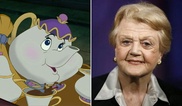
mrs-potts-angela-lansbury.jpg“I get recognized here and there as the voice of Pocahontas. It happened a lot more at the time when it had come out. I couldn’t go grocery shopping without some little kid in the front of the cart going, ‘Mommy–Pocahontas!'”
Irene Bedard
“[Children] don’t know that I’ve done those other things. They know me by my voice because children hear me in a supermarket; sometimes I’ll be chatting with a friend about lettuce, and suddenly a child will say, ‘Mrs. Potts!’ It’s enchanting.”
Angela Lansbury
Image from Voice Actors Who Look Like Their Characters

Happy 2013, and New News

This site turned _eight_ at the new year, which is almost a million in internet years. What have we been doing with ourselves? After a couple of years in Chicago writing theater reviews, I’m back in New York, getting to work with longtime hero Jen Bekman at 20×200 and living in hilly and historic Peekskill with wonder duo Todd Londagin, on the trombone, and Merideth Harte, on the Wacom tablet. (Todd has a new album out, by the way, and you gotta hear it. _Look Out for Love_!)
How about my friends and co-conspirators? Emdasher Martin Schneider is writing Box Office Boffo. Paul Morris (a.k.a. Pollux) is, as usual, a whirlwind of visual productivity, from Art-o-Mat to, well, everything. And the erudite Jonathan Taylor is grad-schooling and writing.
Probably because my 20×200 bio links here, I’ve gotten a few emails asking when I’m going to start posting again, already. In 2012, I made a goal to get to Gmail Draft Zero. So how about getting to Blog Draft Zero in 2013? Look for posts we saved and forgot to finish, essays just missing that one copyright-free image, and cartoons that want only tender loving formatting. Our unofficial motto, after all, is “Old news is good news.” And, of course, there’s a whole world of symbols and punctuation and hieroglyphs and pictograms and semaphores to attend to.
Happy new year. And thanks for visiting, as always!

Attention! New Punctuation Marks for You.

Emily Gordon writes:

Once upon a time, from 2004 to about 2010, Emdashes was a New Yorker fan blog. But now that The New Yorker has so many blogs of its own for people to follow and be-fan, we’ve slowly started morphing back into what we intended to be in the first place: a punctuation blog.

Fortunately, sometimes our first love, The New Yorker, venntersects with our second love, punctuation. Today marks one such occasion. You probably already know that the magazine sponsors a weekly Twitter contest, Questioningly, in which people tweet entries (along with the hashtag #tnyquestion) in response to editor Ben Greenman’s inspired and loopy challenges. Greenman just posted the results of the most recent contest: Invent a new punctuation mark. Some of the winners:

There were inventions specific to the online world, such as @seancarman’s smÅ¿ticon, which consisted of “two colons on either side of an internet comment identifying it as an out-of-character expression of rage.” There were inventions characteristic of our age, such as @madbeyond’s sollipsis, “a personalized ellipsis points shifting the discussion back to me me me.” But for the winner we went beyond rage and self-absorption to @toddlerlit’s bad-writing apology mark.

You’ll have to read on to find out more.

Meanwhile, do you know what an interroverti is? It’s the winner of our own punctuation contest from a few years back, in which we asked reader to name the nameless upside-down question mark. There are pictures, too. Enjoy. And since readers seem undaunted by the winner having been announced in 2008 and are still posting submissions, we invite you to do the same.

So Here’s My Tumblr; You Can Follow, Maybe

Emily Gordon writes:
Lately, when I’m not at work, cooking up a blog redesign, or buffaloing cartoonist and critic Pollux into coming up with a comic (drawn and debuting soon!) to herald the site’s new focus on images and symbols, I’ve been noting sentences that strike me in this Tumblr, The Beautiful Sentence. If you submit a sentence you like (from anywhere you like–a novel, a blog, an article, a cereal box) and I like it too, I’ll post it. A beautiful sentence can be funny, wise, intricately constructed, or just cool.

Other New York Times Headlines About Snake Handling

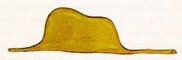
saint-exupery-snake.jpegBill Haast, 100, Florida Snake Handler, Is Dead
Snake Handler Bitten by One of World’s Most Poisonous Vipers
Snake Handler Hospitalized After Suffering 102d Bite
Snake Handler Dies of Bite, As His Father-in-Law Did
Snake Handler Recuperating
Jolo Journal; When the Faithful Tempt the Serpent
Kentucky Man Killed by Rattler In Rite of Snake-Handling Cult
Defiant Snake Handler Dies
SQUEEZED BY AN ANACONDA; A TRYING MOMENT FOR AN EXPERT SNAKE HANDLER
Drought means booming business for Southern California snake handlers
Handling Hogs
SNAKE BITES A SHOWMAN; “Rattlesnake Pete” Gruber Thought to be Dying at Rochester
Zoo Burglar Tries to Steal Deadly Cobras; Mystery in Raid on the Bronx Reptile House
CHURCHES CHIDED ON MATERIAL AIMS
One African Takes Fangs Over Fido As a Sentry

Alison Bechdel: Cathexis, Fontographer, and the Proper “It’s”

Maud Newton puts the noble in Barnes & Noble in this terrific interview with Alison Bechdel. Here’s an intriguing pair of passages about Bechdel’s use of a digital font (made with Fontographer, as I recall from a recent event with the cartoonist at the School of the Art Institute of Chicago) instead of hand-lettering for her graphic novels:

BNR: …Apart from all your second-guessing of your writing itself, I’ve noticed that you’re really hard on yourself for using a font based on your handwriting to letter your frames.

AB: I do feel guilty about it, like it’s somehow cheating to use a digital font, and to not actually hand-letter my work. But at the same time, I have these lengthy passages of quotations from [Donald] Winnicott or from Virginia Woolf that I have obsessively hand-lettered.

BNR: So interesting: the parts that aren’t your language.

AB: Yeah. In fact those things are treated as drawings in the book, even though they’re text. I frame them as a drawing and often overlay them with my digital narration. It’s almost like I’m giving those words more attention than my own words, but not really.

BNR: When I read about your font, I had the image of you sitting there trying to decide which —
AB: Actually, I basically did that. This guy had me write five or six versions of each letter, and then he kind of averaged them out.

BNR: Does it help with the niggly copyediting problems — its/it’s and whatnot — that pedants like me notice in a lot of graphic novels?

AB: Yeah, it enables me to make corrections of typos or to make last-minute editing changes in a way that would be just way too onerous to do by hand. You’d have to go in and manually erase and re-draw the “it’s” and take the apostrophe out and move the space. It would take you forever; it’s insane. So I feel like I’m able to write more carefully because I’m using a digital font. A lot of cartoonists, their stuff is filled with typos. It’s part of the charm, but I feel like my kind of writing I can’t do that. I can’t live with that.

Related dessert triptych: Khoi Vinh on 1) the discomfort and obsolescence of precise penmanship. 2) Josh Fruhlinger reprints the primary source of the Bechdel Test. 3) And last but not least! Alison Bechdel’s Em Dashes.