
Lorrie Moore unlocks ‘A Gate at the Stairs’
By EMILY GORDON
A GATE AT THE STAIRS, by Lorrie Moore. Alfred A. Knopf, 322 pp., $25.
Lorrie Moore inspires fierce loyalty, for good reason: She’s the sheriff of a wild and lonely territory, in which empathetic people fight despair with charming words. Her language — its puns, musical refrains and catchphrases — only partly hides the sadness behind it. The result is that kind of silliness that peaks just seconds before bursting into tears.
The crises Moore addresses with high-spirited clowning have included romantic confusion, isolation, illness, death and even loss on a mass scale. Moore’s new novel, “A Gate at the Stairs,” artfully blends all these themes into a tale that’s as much a shifting of emotional seasons as it is a narrative.
Tassie Keltjin, a student in a college town much like Madison, Wisc. (where Moore lives and teaches fiction), takes a job as a nanny for a dynamic but scattered restaurateur, Sarah, who’s unable to conceive with her husband, Edward. The daughter Sarah adopts, a biracial little girl named Mary-Emma, brings out everyone’s desire to nurture, but the question of how best to love remains foggy. The parents who attend Sarah’s weekly rap sessions for parents of biracial children, preoccupied by origins and identity, can’t seem to get beyond talking in excitable circles. At the same time, Tassie falls in love with a friendly Brazilian in her Sufism class. But something is clearly not right, with either him or Sarah and Edward.
Why is the past so incongruous and confusing? These are persistent questions for everyone, but particularly so for Tassie, who was raised by moderately successful organic farmers in the country outside this liberal town. Tassie, who’s adjusting to work, love and living on her own, is continually stunned by newness, even as it amuses her. She can be the competent one on her volatile travels with the strong-willed Sarah and the vulnerable Mary-Emma, and with her slightly loopy roommate, but her dealings with the Brazilian are harder: she doesn’t heed the drastic signs of trouble until it’s far too late.
Moore never says so explicitly, but civic life after 9/11 is a backdrop throughout: governments, employers, boyfriends, teachers and parents engage in doublespeak, only to deny it moments later. Perhaps the most uncomplicated voice here come in the e-mails from Tassie’s younger brother, Robert, who is keenly seeking her guidance, but she’s too distracted to oblige.
Unlike the parents’ meetings, which sound like jumbled bumper stickers, Tassie’s interior monologue is sharp and specific and, needless to say, extremely funny — all a familiar balm to Moore fans. Similarly, Tassie’s conversations with her roommate are hilarious and true to life.
In the second half of the book, a terrible death enters the narrative. And Tassie’s linguistic playfulness, which transforms ugly facts and incoherent action into logic and wit, becomes far darker — but also much more lyrical. She returns home, city to country, down to earth. This is a new country: a pastoral Lorrie Moore novel. Tassie grows up, yes, but this is no mere coming-of-age novel. She embraces the death that is part of life. In the process, she, and Moore the novelist, enter a new realm of maturity and understanding.
(September 17, 2009)
Category Archives: Clips
Everybody Loves Rea Irvin
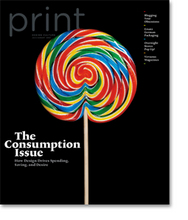
That’s the headline for a story by me in the hot-off-the-presses Print magazine, in a special issue on type. Ever wonder who was behind Eustace Tilley–and hundreds more iconic images and visual features (including the famed “Irvin type”)–in the first decades of The New Yorker? There’s so much more to say about this spectacular moment in graphic history, and particularly about what came before it, but this is a start. And it was incredibly fun to write. Since I had limited space to acknowledge the many people who provided documents and contacts for the story, I’ll give three grateful cheers here to cartoonist Liza Donnelly and to Dorothy Parker Society sagamore Kevin Fitzpatrick. They have both been incredibly generous with their resources and thoughts.
Very soon, we’ll run the contest I mentioned the other day. It’s a doozy! And I’ll tell you what our interns will be up to this summer, too. And if you haven’t heard about this, here’s some welcome news about two new Joseph Mitchell reissues, one of which has a new introduction by David Remnick. I can’t agree that Mitchell “is perhaps most remembered not for his writing, but for not writing,” but there’s never anything wrong with new readers for this peerless writer of New York’s proud populations, human, aqueous, and otherwise.
Interview With Francoise Mouly: Hooked on Comics
For Print magazine, a quick glimpse at the debut of TOON Books, the winsome passion project of the RAW co-founder and New Yorker art editor.
Lizzie Widdicombe: An Ingenious Talk Technique
Widdcombe covered a festive book event (Not Quite What I Was Planning). Each pithy phrase is subtly witty: It’s no longer than six words. Appropriate for the book in question! I couldn’t make the party, sadly. But I did contribute a tale. Oh, you’d like to hear it? “Do as say, not as did.” (P. 180, in all its glory.) Another memoirist compiled a master list. Moved to write your short story? Show off your quick, dirty syntax.
Review: “King’s Gambit,” by Paul Hoffman (Newsday)
KING’S GAMBIT: A Son, a Father, and the World’s Most Dangerous Game, by Paul Hoffman. Hyperion, 400 pp., $24.95.
By Emily Gordon
Chess brings out grandeur and brutality in its human players. Paul Hoffman, who’s been deeply involved in the game since he was a child, is an intimate observer of — as David Remnick put it in a recent interview with grandmaster Garry Kasparov — “the absolute, singular concentration of a life bent over 64 squares.” Hoffman’s memoir, “King’s Gambit,” a chronicle of his and others’ lives spent at that level of concentration, is as jagged, passionate and methodical as the game itself.
Hoffman (who ranks as a Class A chess player) is the former editor in chief of Discover magazine and president of the Encyclopedia Brittanica, as well as the author of two well-received nonfiction books about an eccentric mathematician and an early pioneer of flight. Hoffman clearly likes to gets his facts right — this is a sturdy volume of carefully explained (and footnoted) details and digressions — but it’s chess that really grips his psyche. Its rules, characters and histories occupy his head, a labyrinth of positions and personalities.
Is that a form of madness? Throughout the book, Hoffman asks it directly. “Chess was an insane game,” he writes. “When I lost, I was unhappy. And yet it was necessary to play and risk defeat if I was ever going to win and relish victory.” In essay-like chapters, Hoffman ranges over this and the other great subjects of chess: chess as war strategy, the challenge of computers, the domination of Russians, the emergence of women players, chess-world politics, and so on. Hoffman illuminates his account with many well-chosen quotes from the literature of chess, fiction and nonfiction, although, curiously, he skims over Walter Tevis’ peerless novel “The Queen’s Gambit.”
Chess is truly a great subject: There’s nothing sedentary about the players of this seated game. Hoffman — who once played Kasparov himself — seems to have met most of them, and he has a terrific ear for dialogue. He shows us that chess rivals can be close as lovers: “After he downed another vodka, Karpov looked a bit wistful. ‘I know Kasparov as well as I know anyone,’ he told me. ‘I know his smell. I can read him by that.’ Indeed, the two men had sat face-to-face for a total of perhaps 750 hours, their foreheads sometimes only millimeters apart as they leaned in over the chessboard. ‘I recognize the smell when he is excited and I know it when he is scared. We may be enemies, but we are intimate enemies.'”
This is not just a book about chess, however, and the danger referred to in the title is not just in the chance of losing a game or a tournament. Hoffman is preoccupied with plenty of chessmen, but the central character here turns out to be his father. James Hoffman was a B-grade journalist who wrote salacious, punning stories for gossip magazines and forged layers of deception in his own life that Hoffman is still trying to figure out. After he and Paul’s mother (who is not much discussed here) divorced, he moved to a downtown Manhattan bachelor pad. When Hoffman started coming in from Westport, Conn., to see him, he began to play in an American chess mecca: Washington Square Park and the chess clubs and stores that surrounded it at the time.
This childhood and adolescent relationship wounds and provokes Hoffman the writer and adult, and he seems to return to it almost fresh each time, as though he’s only just sitting down at the board against a baffling opponent. Hoffman struggles to believe in and promote a valiant image of his father, but must constantly question him; his father undermines his son in turn. Still, some of his father’s parental crimes (“dragging” him to Quaker meeting as a child so that someday he can stay out of a draft on religious pacifist grounds, for example, or “imposing” “experimental New Age braces”) can surely be seen as loving, if not always especially considerate. Since Hoffman’s father died in 1982, he can’t speak to these stories.
One of the qualities Hoffman admires in his father — his giddy, carefree way with language — eludes him during these psychological meditations, which can have an austerely formal quality. At times, he seems to be attempting an impossible project. It might be possible to write a thorough oral history of chess, or of Hoffman’s father’s career, of Hoffman’s own games, or of his chess-world friends; the latter was what made “Word Freak” so engaging on the equally obsessive subject of Scrabble.
But when you add further categories, like Hoffman’s marriage, a nearly debilitating and mysterious illness, and his ambivalence about his father, complete documentation becomes futile. “Chess players live in an alternative world of what might have been,” he writes early in this book, and like Mary Gordon’s “The Shadow Man,” this is a search for an inadequate, elusive parent that can never be completed.
On the other hand, whenever Hoffman gets carried away with a story that gets him, and us, outside his history and head — as when he gets into situations filled with international intrigue and peril, like being interrogated by the police while trying to play in Libya — his prose is vigorous and very funny. His unselfconscious portraits of neurotic or outrageous characters are as effective as good fiction, and his chapter about women chess players — especially the section about top player Jennifer Shahade — is one of the book’s liveliest and best.
Obsession is often unquenchable, parents frustrating, love and the mind prone to failure, the sweetest dreams unrealizable. Hoffman is a noble character here, all the more noble because he’s so self-effacing, and he’s careful in his writing not to show off too much. He has some things to show off about, and he deserves a victorious break from replaying so many real and metaphorical games, whose results are unalterable.
Published October 7, 2007
“It Can’t Be Just Another News Site”: The New Yorker’s Web Redesign
I interviewed esteemed Winterhouse designers William Drenttel and Jessica Helfand, who worked with The New Yorker on the magazine’s web redesign, as well as the web editors at Harper’s, The Nation, and Scientific American.
It’s all in Print, and, at a quality newsstand near you, in print.
Review: James Ellroy’s “My Dark Places”
If you liked The Black Dahlia, you’ll love (possibly) my review of James Ellroy’s My Dark Places, published in The Nation in 1996. This is my first attempt at uploading a PDF, which seems like an easier way of dealing with clips when I don’t have them in text form. Let’s try it! Hey, that’s handy—at least in this browser, it just comes right up on screen.
(Note from 2011: R.I.P. John Leonard, who assigned me that piece, and farewell to Elaine’s, where John took me to meet Ellroy. What a great memory that is.)
My Interview With Roz Chast for Newsday
New Yorker Cartoonist: These Days, She’s Changing Her Toon
By Emily Gordon
Special to Newsday
November 26, 2006
For a public humorist, Roz Chast is admirably discreet. She laughs often and may occasionally say, “La la la la la,” as the people in her New Yorker cartoons do, but her humor is also decidedly ironic. The New York Times has described her as “small, blond, bespectacled and self-deprecating—equal parts Mia Farrow and Woody Allen.” In person, whether she’s onstage reading her cartoons to a fanatically attentive audience, casing the umbrella rack at an upscale drugstore or considering the oddness of eyebrows, she’s an appealingly diplomatic personage.
Racing through the 400 pages of her newest and biggest collection, Theories of Everything: Selected, Collected, and Health-Inspected Cartoons, 1978-2006 (Bloomsbury, 400 pp., $45), Chast fans will see her irony in all its dimensions, as well as her sympathy with many (though not all) of her fellow humans—especially put-upon children and parents. Theories of Everything, which documents the best of Chast’s creations over nearly three decades, demonstrates that her range far exceeds the surreal living-room drama and the ominous doily. “For a while I was doing more domestic-type cartoons, when my kids were younger,” she says. “I still do them, but not as much.”
One of the persistent delights in Theories of Everything is Chast’s precise—if not precisely accurate—documentation of peculiar objects. Outer space and amoebas make many appearances in this book, too (Chast also contributes drawings to science magazines), as well as pointed political cartoons. Mortality and melancholy often loom, as does a cheerfully narrated sense of foreboding.
Chast was born in Brooklyn in 1954. In an unusually personal cartoon, she recounts how the kids in her neighborhood would explore only as far as a certain street; she’s more or less the same way now when driving in Connecticut, where she lives with her husband, humor writer Bill Franzen. When she needs directions, she says, she takes a map in which every street is labeled and enlarges it: “Ideally, I’d like to enlarge it so that each street was exactly the same size as the real street, and so you could follow along. One mile equals one mile!” In the stories of her drawings, “Writing is always patching together stuff that happened, stuff that never happened, stuff you wish happened, stuff you would dread happening, somebody you knew that lived in your building, somebody you’ve never met.”
After growing up as the best artist in the class, she became one of many such artists at the Rhode Island School of Design. It was at the Art Students League in New York that, she says, she learned more of her technique. Cartooning seems to have been in her blood from her early years, when she worshipped the work of Charles Addams (her parents subscribed to The New Yorker) and devoured “Krazy Kat” and “Nancy.” She still lives pretty close to the page: “I love the medium [of drawing] because it’s so simple, in a way; it’s just pen and paper,” she says.
She has mastered the elaborately painted Ukrainian Easter eggs known as pysanky, and loves their controllable scale: “When you look at books of pysanky decoration, they all work with geometry.” Many of her cartoons, and her preoccupations, similarly end up being about (slightly awry) organization. She loves the crammed surfaces and spaces of New York City, and recalls one Upper East Side coffee shop: “I loved how everything looked behind the counter. Everything was just crammed in—a turkey roasting on a spit, cereal boxes, pickles and then the water glasses. Every square inch was used, and I just loved it.”
When Chast draws, the light from the bulb illuminating the drawing at hand is almost all she can see; cartoon figures emerge with their own ideas and hilariously formless wardrobes. She relishes talking about the key moments in the cartoons—the tidy, complete worlds they make on a panel or a page—more than chatting about her actual life. When ABC Family animated some of her work not long ago, she was delighted to see one of the classic Chast ladies “walking” across the screen. Ultimately, though, the involvement of a slew of executives and committees took too much of the fun out of the world she had created. In the end, “It’s just about telling the story—and it sounds so cheesy to say it, but communicating a very specific feeling or thought, hopefully a funny one.”
Some of the standout cartoons in Theories of Everything are multi-page, autobiographical tales that she drew first for DoubleTake magazine. They involved adventurous traveling, and she’d love to take more trips, but still has a teenage daughter at home, “so I have to be really careful with projects so that I don’t take on more things.” (She also has a son in college.) Meanwhile, she and Steve Martin have collaborated on a children’s alphabet book to be published in 2007. If some of Chast’s life has to be lived outside the bright circle of her pen, it’s a safe bet that hers is the life to have.
Note: This version varies slightly from the published story.
Book Review: Two Tales of “Jeopardy!”
The competitive pursuit of trivia
By Emily Gordon
Special to Newsday
October 29, 2006
BRAINIAC: Adventures in the Curious, Competitive, Compulsive World of Trivia Buffs, by Ken Jennings. Villard, 269 pp., $24.95.
PRISONER OF TREBEKISTAN: A Decade in “Jeopardy!,” by Bob Harris. Crown, 339 pp., $23.95.
The recital of known facts has often kept chaos at bay, but in a culture blanketed with “truthiness” and spin, Internet alter egos and reporters composing out-of-state bulletins from their living rooms, perhaps facts have become more important than ever. It seems wrong, then, to dismiss the precise naming of details from the world’s history of art, politics, science, technology, and so forth as mere “trivia,” a game as frivolous as Twister.
Bob Harris and Ken Jennings agree. Two high-profile stars of television’s “Jeopardy!,” they’ve each written about being on the show, but both books are really about the lives that went into the playing of this game—their own lives, certainly, but also the
millions of lives that made the games, the collation of facts and the facts themselves possible.
Ken Jennings is a name so revered (and feared) that there are several YouTube parodies of his 74-show winning streak; one animated short has mustachioed host Alex Trebek take him out with a handgun after a boyishly eager Jennings has gotten the question right one too many times. Jennings may have pummeled his opponents on the air with his clear head and quick thinking, but his tone throughout “Brainiac” is one of a properly humble guru, as well as that of a gentle investigator sharing his journey with his friend the reader.
Indeed, Jennings’ book – while it does include the tale of that famous winning streak—is much more concerned with how “Jeopardy!” and related tests came to be than in his personal journey, engaging as that turns out to be. He tracks trivia’s intellectual history back to 1691 and visits Stevens Point, Wis., host to the world’s biggest yearly trivia event. He also seeks out several quiz-show kings and queens, from “Jeopardy!” writers to champs of the past. A Mormon, Jennings and his unflaggingly supportive wife, Mindy, even brave a popular barstool video game he’s never encountered. As a bonus treat, every chapter’s end has the answers to all the footnoted, unanswered questions that have likely been stumping you as you read.
Jennings and computer programmer Bob Harris would likely never have met had they not both shared a “sponge-like brain” (as Jennings puts it); Harris, who’s worked in comedy, TV and radio and is an endearingly frank showman, may be a bit rough-and-tumble for Utah. Where Jennings’ storytelling is solid and focused, Harris’ is a jubilant Mexican jumping bean of digressions and asides. He seems to conceal nothing from us: his mad mental leaps of faith during a question, the books he’s never read whose key details he nonetheless knows by heart, the things that are worrying him even as he’s thumbing the buzzer, while the maddening “Think usic”—composed by Trebek himself—ominously ticks off the seconds.
Still, larger life events are never far from Harris’ thoughts, in particular his sister Connie’s frustratingly undiagnosed illnesses and the scary period in which Jane, by far the most serious of his girlfriends, undergoes breast cancer treatment. We even stop with him at his father’s grave; there are no simple relationships here, and perhaps the reliability of facts, if not always of memory (Harris won and lost and won again), was a good counterbalance to the rockiness of illness and family life.
Harris’ book has other pleasures to recommend it, like playful typographical representations of his digressive thought process (the letters get very, very small) and evocations of the trademark “Jeopardy!” screens both real and fanciful. Everything in Harris’ memoir is lighthearted and fast-paced, even when it isn’t. The revelation of his many mnemonic tricks will be a valuable addition to the “starter kit” of trivia-related books he includes, the bibles of hopeful future Harrises and Jenningses around the world.
“Jeopardy!” may be just a TV game show, but what do college kids doing Quiz Bowl, political bloggers fact-checking the hours away, stats-mad baseball fans, Supreme Court clerks and librarians have in common anyway? Love for truth is clearly one of the answers. Jennings puts it well: “As I stand behind a ‘Jeopardy!’ podium and answer question after question on cancer drugs and the civil rights movement and the
lives of Einstein and Gandhi and Mozart, I realize why the word ‘trivia’ is so inappropriate. It’s actually important to know who history’s great geniuses were, that some cancer is treatable, or that the civil rights movement happened.”
The waterfall of facts in “Brainiac” and “Prisoner of Trebekistan” may exhaust you, but it’s more likely to send you to an atlas, a newspaper, or a play. Trivia is the world we’ve been given, the one we want to hold on to, and it’s as precious as the water we drink.
Incidentally, by both accounts, Trebek is a lovely guy.
I Reviewed Those Two “Jeopardy!” Books
…and here’s the review. Note that I do not make light of the breast cancer diagnosis of one author’s girlfriend, which is more than the Times Book Review can say. Isn’t it odd that Jeopardy! winner-loser-winner Bob Harris has the same name as the hero of Lost in Translation? Or was that on purpose, Sofia? Should we be reading something into this about the search for answers in a Babel of mixed signals and missed connections?