Category Archives: Eustace Google

Trillin Kills Again

Calvin Trillin spoke at Stanford the other day and, once again, proved that he should do more Benchley stuff like giving funny speeches and acting in plays and short subjects, not just going to restaurants and writing. The Stanford Report reports:

Facts are messy and inconvenient, and nonfiction writers are obliged not to clean them up, writer Calvin Trillin said in a campus conversation last week that touched on topics as diverse as the ethics of nonfiction writing, barbecued mutton in Owensboro, Ky., the deployment of National Guard troops in Iraq and the writer’s childhood dog.

Trillin was interviewed at Stanford by Alan Acosta, associate vice president and director of University Communications. Acosta, a Pulitzer Prize-winning journalist and a former editor at the Los Angeles Times, had spoken with Trillin before, Acosta reminded the writer. In the 1980s, Acosta had been Trillin’s waiter at a restaurant in Greenwich Village in New York City, where Trillin resides. (“You spilled the soup,” Trillin deadpanned.

Trillin also addressed the recent debate over memoirs, including James Frey’s A Million Little Pieces, which was marketed as a memoir but contains fictionalized accounts of events. “Now, in order to write a memoir in the U.S. that will sell and will show your redemption, it has to be pretty horrible. This kid was a middle-class druggie—they’re a dime a dozen,” Trillin said. “I was in jail longer than that kid.”

Here’s the rest.

The Internet Isn’t for Porn


…the Internet is porn. Besides, these days you can get porn in The New Yorker. This week, anyway. Just a few days ago I’d been thinking, if only there were more smutty stories in the magazine (Nicholson Baker will do just fine)! Full-page photos of nude-ish dancers in black and white are usually the best it gets, but this issue’s not fit to read on the subway unless you aren’t a blusher, and I am. I love that I had to hurriedly skip a page as I read on the F train this morning. More of that, please! No girlies on the web link, sorry.

Anyway, this is a link dump. Like a regular dump, it’s a goldmine; unlike a regular dump, it’s not whiffy and there are no vermin. Although some film-critic critics (see below) might beg to differ.

First, I’ve recently become a contributing editor at the fabulous new blogher, where I’ll be writing about movies. I just posted about Annie Proulx’s bitching about boring old Crash winning the Oscar when Brokeback could’ve nabbed it.

Speaking of movies, or perhaps Films, various people are pissed at David Denby about his V for Vendetta review. For instance, Edrants calls for his resignation. Movie City Indie revisits James Wolcott’s fears: “James Wolcott offers a tart aside to the most goombah of early reviews, with the New Yorker’s august David Denby partaking in the aborning controversy over the movie’s mere existence.” New City Chicago employs the summery adjective as well:

Longtime New Yorker editor William Shawn supposedly said that a good review offers voice and viewpoint but also enough information that you would feel like you’d learned enough about the movie to feel comfortable participating in a dinner-table conversation about the work at hand. While working to digest “V from Vendetta” from a distance of only twelve hours or so, I pick up the august David Denby’s review in the March 20 issue of the New Yorker: “`V for Vendetta,’ a dunderheaded pop fantasia that celebrates terrorism and destruction, is perhaps the ultimate example of how a project with modest origins becomes a media monster.” Do you want to see a movie after reading a lead like that? Do you want to finish the review or change the subject over drinks?

It’s all just making me more excited to see V for V, of course. Then I’ll be able to read the review and properly assess. As a rule, I’m a Denbyhead, not a Laneiac, but Lane has been terrific on a few serious movies lately; they should let Denby make the jokes. Meanwhile, all those boobies in the magazine inspired me to do some creative scanning, to be revealed shortly. PW Daily led me to the news, coincidentally, that “Playboy Enterprises announced the launch of Playboy Press as part of a joint publishing venture with Hanover, N.H.-based Steerforth Press.” My, they’re getting lit’rary! Now we’re going to say we read it for the books.

So (that’s my effort at a transition, but when you’re getting out the news, you can’t always be stressing about the segues), here’s Marc Weingarten on Truman Capote’s newly re-famous martyr-man Jack Dunphy: “This is a tragic story about what happens when a fine writer’s reputation is obscured by the very public persona of a genius, and how literary fame always trumps solid literary grunt work.”

In other NYer-figure news, it’s blogger Dave Chase‘s opinion, expressed in his review of Jim Surowiecki’s The Wisdom of Crowds, that

Surowiecki aims to be the next New Yorker contributor to have a mass appeal book, ala Malcolm Gladwell. He clearly wants to position this book as the next “The Tipping Point” — combining cognitive science and other disciplines into a book addressing business, politics, society and economies. The book’s relevance to marketing may not be as obvious as The Tipping Point, although there are examples from our industry….

Finally—because, like millions of other happy lambs, I’m Gervais-mad or at least Gervais-fixated—there’s a little Salon archive of Office, XFM, interview, and podcast stuff I just landed on, and the interview with an unusually relaxed Terry Gross is a hoot, surprisingly enough. Maybe she’s better talking to people who won’t show their vulnerable sides, or whose vulnerable sides aren’t the most interesting part of the story. Listening to the XFM clip after yesterday’s disappointing Gervais podcast made me a little sad, since the boys are having about 50% more fun on the old show. I hope the fame of the podcast isn’t burning them out; perhaps they should let Stephen talk a bit more.

And if you’re not listening to the Comedy 365 podcast Big Squeeze yet, I simply can’t help you. You’re clearly determined never to laugh like a complete fool again.

More About Megachurches

Googling for the Talk of the Town about Cheney’s ratings, I happened on this provocative and revealing comments page, in which Atlanta Journal-Constitution readers responded to the query “Why do you attend a megachurch?” The paper had just run a story on the subject (site asks for registration), and the commenters respond to it and to each other. It reminded me of Malcolm Gladwell’s good profile of Rick Warren and his Saddleback Church back in September. Here’s one of the 96 often long and thoughtful comments on the AJC page:

By Darrell

February 15, 2006 07:12 AM

I’m an African-American male and I attend a “megachurch”. I’ve been a member of First Baptist Atlanta (FBA), where Dr. Charles Stanley is senior pastor, since February 1986.

However, prior to joining FBA I was a member at a small, all-black church which had been in my family for at least two generations. Why did I leave? Because there was nothing of any substance for my heart to hold on to once I walked out the doors of the church each Sunday. The services were all emotion with no concrete teaching. Another reason is that all the members were old enough to either be my parents or grandparents, so there was no “common ground” from which I could build relationships with others my age.

At FBA I’ve learned how to study the Bible in-depth (even learning to read some Greek and Hebrew), build relationships with others through small group Bible studies and ‘life-application” classes, and just recently, I became director of the single-parents ministry at the church.

I’m a testament to the fact that being a member of a megachurch isn’t all that bad.

Here’s another:

By Rudy

February 15, 2006 09:46 AM

The article mentions that megachurches know how to make worship entertaining. That is not a compliment but an indictment. Our culture has become so used to being entertained that even churches aspire to have huge audiences of spectators, not congregations of worshippers. There is a big difference.

And:

By Lina

February 15, 2006 08:46 AM

I’m not really sure what makes a megachurch mega, but I assume that the ones on TV would fit the profile. And I honestly believe that’s why some people attend. It makes them look good to say they are part of a church that is so great and famous that it’s on TV. So they must be the perfect followers. I think the mega churches lose that personal connection and people aren’t as touched emotionally by the sermons because it’s like…well, watching someone on TV. Smaller churches make me feel more comfortable and more willing to talk about my problems and ask for guidance. The Long Dollar churches seem to be out for just that – the long dollar.

And:

By Jay

February 15, 2006 11:27 AM

…It cost to bless others. We (small or large churges) can not be a blessing to others broke. Feeding and clothing the homeless cost. Teaching a man to fish… cost. Gas price in your home cost. So gas in a large or small church, cost. Production to reach the masses, cost. So on and so on. Plus you would be amazed how most Pastors or given these large ticket items from people outside the church their church. Please do understand that Christ is the riches of all. It’s a misconception that he was poor. As far as taxes go… Yeah the church should pay taxes and I think this because then they would be able to touch on political issues. Oh by the way, I do think the church is a business. The business is to save souls and there is presently a war on the church. My point about those corporations is that most people have no problem with the world but will place GODs house under a microscope. GODs children are to not take sides but take over. Please be more aware how our kids are looking at 50 cent driving a nice ride while Christions are more concerned about a pastor driving one. Who is the better example out of the two? Certainly not the one who worships money. Stay focused on the word never mind all the material things. We are currently losing our Civil rights leaders do to time. The head was cut off with Martin, let’s not distroy the body.

Alternately:

By hockeyfan

February 15, 2006 11:35 AM

“stayinvolved” – I believe you have made an error in assuming that all “megachurches” are the same. That’s like saying every small church is the same. I happen to belong to a megachurch that has a pastor who is a “regular guy”. He doesnt live in a mansion or drive an expensive car or wear designer clothing. Our church facilities are functional, not frivolous. And when our neighbors are struggling, both our leadership and membership are there to assist with a clothes closet,feeding the homeless, a food pantry, an emergency assistance fund and a free counciling program. We wouldnt have the resources to do that at a small church, so the neighborhood appreciates that we are here. I think your comments just proved the point of the article…your assumtions of what “megachurches” are is not necessarily accurate.

There’s a wide range of voices, opinions, and approaches to religion (e.g. “TAX them, especially the ones that stage Democratic pep rallies from the pulpit. TAX them to high heaven”) on the board. Worth perusing.

Gladwell Goes to the Dogs

Entirely unfair; I had a long conversation with my sister last week about Gladwell and she convinced me to give his writing another look. And look I shall! Anyway, The Toronto Star responded to Gladwell’s shaggy naughty dog story with an editorial that keeps blinky theory on a short leash:

Rather than banning this class of dog, Gladwell’s solution is to subject bad owners to extra rules and attention. People who are irresponsible should have their dangerous dogs neutered, or subject to mandatory muzzling, he says. And bylaw control officers should “track down” and monitor these owners to ensure they are obeying the rules.

In short, Gladwell wants to “profile” bad owners with violence-prone dogs. The problem here is that it’s hard to establish the combination of aggressive dog and irresponsible owner until tragedy strikes. And it’s hard to keep long-term track of bad owners and their pets.

Ontario’s pit bull ban is a far more effective way to proceed. All animals deemed pit bulls are required to be neutered, and muzzled in public. Bad owners are held responsible for the abuses done by their dogs. And owners who deliberately seek bellicose dogs are hampered by the ban on breeding or importing pit bulls.

Still, as I noted before, the cost and bother of fixing animals is still a deterrent for too many people. Maybe owners could even be rewarded for bringing in their pets—with a free leash or a catnip carrot, perhaps.

Dept. of Blogs We’re Delighted to Welcome

to the New Yorkerphile-osphere: Between the Squibs, a brand-new review of The Complete New Yorker and, well, everything in it, just as Squib (I made that up, but it sounds very Conning Tower) discovers it. More often than not, he goes looking for things that illuminate, or deepen, a new story or event. As the author writes in his modest manifesto:

I think we can safely say that it was a good day when I heard that the New Yorker was going to release all of its issues in DVD format. In the autumn of 2005, I bought the Complete New Yorker (CNY) set, and I’ve been enjoying it with gusto ever since.

Most of the reviewers who praised the CNY made reference to the futility of actually trying to read all of it. The number of issues (4,109) was often mentioned. It is certainly a daunting number. If you spend every single evening reading one issue, you will be nearing the end in the year 2016. (Once you finished that, you’d still have to continue the exercise for another year and a half to catch up with the issues released since autumn 2005.)

As I eagerly consumed my fill of the excellent articles, I often wished for some sort of online directory, blog, wiki, or catalog containing the favorite finds of some industrious person. Of course, this worked in two directions: after reading a particularly satisfying article in the CNY, I also wished that there were an obvious place where I could post the find.

Strangely enough, I never found any such directory, and Amazon’s comments page for the product wasn’t exactly doing it for me. So I’m starting my own.

This blog is herewith dedicated to the collection of discerning recommendations of treasures to be found in the CNY. Articles, Talk of the Town pieces, Cartoons, Advertisements, Squibs, you name it. If you stumbled on it in the CNY, and you think people should know about it, drop me a line. I promise to do my share of the recommending.

This will also be a place where people can discuss and debate the DVD collection itself. I am aware that there has already been considerable annoyance expressed in some quarters about various technical quirks and legal ambiguities concerning the collection, and — provided that the tone remains civil — I would like consumers of the DVD to consider this blog a potential resource for such topics. Having said that, I should state that I am relatively not very bothered by such matters, and I will not allow this blog to become a place for wholesale trashing of the project.

Eventually I would like to see this blog (should it find palpable response) turn into a collective enterprise, but for the time being I will be in charge of it.

So onward! I have plenty of articles I want to pass on, and I sincerely hope you do as well. This blog will never work if it remains a one-way street. Welcome!

It’s a grand idea, and I plan to read BTS avidly as a guide to the shiniest Easter eggs in the Great Lawn of my eight discs. In a new post, he gives the current Mohammad cartoon controversy context:

But the importance of Muhammad in the Muslim world, in and of itself, cannot be underestimated. Consider Ved Mehta’s 1968 article about the massive turmoil sparked by the theft of a single strand of the Prophet’s hair, an event that occurred in December 1963 in the contentious region of Kashmir. There, too, other factors played a role: the intractable politics of Kashmir, the larger context of India-Pakistan relations. Mehta relies a little too much on lengthy excerpts for my taste, but it is still a valuable piece of background to the current cartoon furor.

There’s already much more. I must express my relief, too, that there’s now someone else besides Greg.org, my pal I Hate the New Yorker, and me to cover this rather large beat. Welcome to New Yorker blogdom, honored Squib!

More un-captions for your clicking pleasure

Hi Gawkerati. There are more faux contest captions like Charles Lavoie’s “Christ, what an asshole!” around, most currently in Daniel Radosh’s consistently funny anti-caption contest, in which readers submit the worst possible caption for the current drawing. Radosh’s legions are already working on the new Gahan Wilson drawing; after you’re sufficiently inspired, you may want to enter for real.

Other cartoonist-type wags took stabs at various NYer cartoons in a thread called “Photoshop Fun: Make Your Own New Yorker Cartoon!” Earl Wang did a bit for McSweeney’s about a previous incarnation of the caption contest. In some subliminal webby way, it may well have inspired Lavoie, what with the rampant cussing.

BTW, here’s who to vote for in the current contest (a snake-wrapped woman on the couch, drawn by Matthew Diffee): John Mainieri, who submitted “Oh, he probably just smells your python.” It’s by far the funniest and he’s from New York. What better reasons are there?

Later on: Ah, yes, another potty-mouthed parody. I’d almost forgotten about this one.

The bridge, Didion, and Fayard Nicholas

The New Yorker‘s Alec Wilkinson was on WNYC’s Leonard Lopate Show today talking about his February 15, 1999, piece on suicide notes, along with Thomas Joiner, the author of a new book called Why People Die By Suicide. While Joiner was researching the book, his father killed himself. [See comments for more detail on this point.] The show (now downloadable) was strange and grim. Excerpts from the NYer archive summary of Wilkinson’s piece:

“The writer describes how twenty years ago, while he was a policeman in Wellfleet, Massachusetts, on Cape Cod, he imagined what it would be like to kill himself. He was twenty-three at the time…. The writer became interested in suicide notes because he thought they might contain revelations about the end of life that couldn’t be found anywhere else…. Only 1 out of 5 suicides is likely to leave a note…. The writer describes the oldest suicide note–a letter written on papyrus by an Egyptian man in 2000 B.C. The letter is titled “The Dispute with His Soul of One Who Is Tired of Life.”… [T]here are 5 kinds of suicide notes: notes that blame someone, notes that deny an obvious reason is the cause, notes that blame & deny, notes that contain an insight, and notes that contain no explanation at all…. The writer excerpts 10 notes in the article. Some of the notes discuss how life is no longer worth living, some blame others for their death, some give instructions for the dispersal of their property, some claim to be possessed by demons, etc.”

I happen to have that Egyptian poem (maybe I copied it from the issue at the time?). Spacing is off but it’s late, so I’ll fix later.

To whom can I speak today?
One’s fellows are evil;
The friends of today do not love.
To whom can I speak today?
Faces have disappeared:
Every man has a downcast face toward his fellow.
To whom can I speak today?
A man should arouse wrath by his evil character,
But he stirs everyone to laughter, in spite of
the wickedness of his sin.
To whom can I speak today?
There is no righteous;
The land is left to those who do wrong.
To whom can I speak today?
The sin that afflicts the land,
It has no end.

All day this has woven into what I’ve been reading. I used to say that the saddest double feature in the world would be Breaking the Waves and The Sweet Hereafter. But if you survived the cruel screening and were still unsure whether life was all about suffering, reading Joan Didion’s The Year of Magical Thinking would finish you off. I stopped reading it in public—I can’t not cry, I can’t not move to the next chapter. It’s brutal. Knowing how many thousands of times more brutal it was and is for Didion herself is not comforting.

While we’re on this sunny subject, here’s that Tad Friend piece on the “fatal grandeur” of Golden Gate Bridge, which people still talk about often (and plagiarize—apologies to the tipster at the time whose email I didn’t follow up on). Did Lopate perhaps originally intend to book Friend rather than Wilkinson? That would seem to make more sense, since Friend’s piece came out more recently and Wilkinson was understandably reticent on the subject. The compelling oft-repeated and occasionally filched passage:

Survivors often regret their decision in midair, if not before. Ken Baldwin and Kevin Hines both say they hurdled over the railing, afraid that if they stood on the chord they might lose their courage. Baldwin was twenty-eight and severely depressed on the August day in 1985 when he told his wife not to expect him home till late. “I wanted to disappear,” he said. “So the Golden Gate was the spot. I’d heard that the water just sweeps you under.” On the bridge, Baldwin counted to ten and stayed frozen. He counted to ten again, then vaulted over. “I still see my hands coming off the railing,” he said. As he crossed the chord in flight, Baldwin recalls, “I instantly realized that everything in my life that I’d thought was unfixable was totally fixable—except for having just jumped.”

Later in Friend’s piece, there’s an interesting coincidence of phrase with Didion’s title:

Jumpers tend to idealize what will happen after the step off the bridge. “Suicidal people have transformation fantasies and are prone to magical thinking, like children and psychotics,” Dr. Lanny Berman, the executive director of the American Association of Suicidology says. “Jumpers are drawn to the Golden Gate because they believe it’s a gateway to another place. They think that life will slow down in those final seconds, and then they’ll hit the water cleanly, like a high diver.”

That is not the case.

Fayard Nicholas R.I.P.

In other very sad news, the unmatched tap dancer Fayard Nicholas died this week. If the history of race in America and, as a result, Hollywood had been different, you’d already know this, and television would devote a week or a month to showing his leading-man movies. Do a little soft-shoe in private for him, or if you’re brave, go to a tap jam; discover you can swing. It’s easy. True, doing what Nicholas and his brother, Harold, did is probably impossible, but you can still do something joyful for yourself that’ll also carry forward a meaningful piece of what he loved and perfected.

Early Fayard Nicholas work

Eustace Google: The strange, sad case of Brandenn Bremmer

Emily Gordon writes:
I’m interested to see what people are saying about “Prairie Fire,” the Letter From Nebraska by Omaha native Eric Konigsberg in this week’s New Yorker. The piece is about the suicide, last March, of the 14-year-old homeschooled rural Nebraska prodigy Brandenn Bremmer and his heartbroken, perplexed parents, who gave nearly all their material and emotional resources to developing Brandenn’s interests and career. There’s not much talk about the piece yet, since it’s not online and it’ll take a few more days for most people to get the current issue, but just after Bremmer’s death there was plenty of press coverage and internet discussion. Here’s the Blog of Death obituary; I’ve omitted the many links (some expired).

Brandenn E. Bremmer, a 14-year-old musical prodigy from Nebraska, sustained a gunshot wound to the head on March 15. The boy died the following day at Children’s Hospital in Denver. Authorities suspect he committed suicide.

Bremmer taught himself to read when he was 18 months old. He began playing the piano at 3 and was home-schooled from kindergarten on. At 10, Bremmer became the youngest person to graduate through the Independent Study High School conducted by the University of Nebraska-Lincoln. Described by friends and family as a bright young man who smiled often, Bremmer dressed up like Harry Potter — one of his favorite literary characters — for his graduation picture.

Bremmer was only 11 when he began studying piano improvisation at Colorado State University at Fort Collins, Colo. Last year, he released his debut album, “Elements,” and gave concerts in Colorado and Nebraska. The day his body was found, Bremmer had just completed the artwork for the cover of his second CD, which features meditative, New Age piano music.

Like most kids, he loved watching cartoons, playing video games, riding his bike and catching fish. In January, Bremmer enrolled in a biology class at Mid-Plains Community College in North Platte, Neb. He planned to graduate from the University of Nebraska’s medical school by the time he was 21 and become an anesthesiologist.

His mother, mystery writer Patricia Bremmer, said he showed no signs of depression and didn’t leave a suicide note. Bremmer’s kidneys were donated to two people. His liver went to a 22-month-old and his heart to an 11-year-old boy.

The comments are worth reading, too, including one by a 13-year-old named Sydney Lee Smith, who appears to have been a friend of Bremmer’s. (Smith and her mother, Mary, are also quoted in this Lincoln Journal Star piece about the suicide.) More on this soon, and send in any links you find.

Also via Blog of Death: photos of an older Bremmer (he’s seven in the one The New Yorker used), and details about his piano-composition recording Elements, on the Windcall Enterprises page.

“He maybe just kind of ‘crashed’ like computers can,” and other spontaneous theories on the case from back in March, on Common Ground Common Sense.

There’s been a spirited, provocative debate on Wikipedia on the definition of “child prodigy” and which alleged prodigies (including Bremmer, Willie Nelson, and Michael Jackson) to include on the site. In a separate thread, Wikipediaers argue about whether to delete Bremmer’s page on the site, and whether Bremmer should really be considered “notable.” (The page was indeed deleted.) It’s a useful look inside the workings of Wikipedia, too. A user named Stan, a passionate and caustic advocate for deleting Bremmer’s entry, writes:

This is a very strange and sad story of child abuse, in which a boy’s parents tried to live vicariously through him by pushing him beyond his abilities, vanity-publishing his CDs and helping him with high-school homework to get him through at an accelerated pace. He cracked under the pressure and killed himself. Now that he’s dead, those close to him are still trying to live through him, this time by posting and reposting the same wikipedia article about him. I find the situation monstrous. If we have an article about how child prodigies are manipulated and exploited by their parents, we might merge this with that, as a further example, but I don’t know that such an article exists, or if such an article would meet wikipedia standards. It’s also true that many child prodigies go on to do no significant work as adults–many prodigies are simply experiencing an early spurt and turn out to be average-functioning adults. There’s nothing wrong with that, of course, but it highlights the fact that a prodigy is not necessarily notable just for being a prodigy. So I vote to delete this once again.

“Child abuse” is very strong language for what is surely a subtler moral question. The blogger Terrette posted critical comments about the Bremmer family just after Bremmer’s death and got an email from (it seems) the same friend of the family, Mary Smith, who was quoted in the Lincoln Journal Star piece. Terrette defends her position, point by point, and makes it clear that for her the central issue is gun control:

If I may address my displeased reader frankly: I know it must suck to feel that some long-winded East Coast liberal who probably doesn’t even have kids is trying to tell you right from wrong, but please know that I read the newspapers and see the incidents of juvenile suicide and homicide tallied month after month, and the whole thing has made me wonder: What’s going on in this country? However much you’d like to believe that Brandenn Bremmer took that gun in his hands in a quiet little corner of Nebraska — a place with its own rules and customs and that, as such, is radically exceptional to things that take place on the East Coast or in regions where liberals haven’t developed a proper fondness for weapons — the fact is that Brandenn killed himself in a nation where such incidents are common and where laws regulating minors’ unsupervised access to guns are uniformly lax. Moreover, these laws are lax not because of some Constitutional right that the framers of that document set down in law so that all the nation’s children could take up arms against a potential new wave of British Redcoats, or so that seasonal hunting traditions in the Midwest would go undisturbed, but because the National Rifle Association has long targeted our politicians in Washington with its powerful lobby and thereby assured its friends gun-sale profits at the expense of all social, regional, and safety-related considerations. If the NRA could facilitate the sale of semi-automatic rifles to all the teenagers of this nation, believe me, it would. And no amount of killing of and by our children would ever allay the NRA members’ passion for peddling and glorifying weapons. Their short-sighted and self-serving claim will always be: “it’s not the guns that kill, it’s the shooters.”

Update: Hey there, googlers! Don’t be shy; what do you think of what you’ve read about Bremmer’s life and the criticisms above?

Further update: There’s an interesting discussion of Konigsberg’s piece on Gifte
d Exchange
, “the blog about gifted children, schooling, parenting, education news and changing American education for the better.”

Additional note: In the introduction to this post, I’ve made a slight change to my description of Brandenn’s grieving parents. I think, on reflection, that my original tone had an unsympathetic tinge I didn’t intend. It’s often said that the death of a child is the worst pain a person can experience, and I believe it.

And: Well, everyone’s talking about it now, including John Derbyshire in National Review Online:

You know how once in a while you read something that leaves you feeling vaguely disturbed — suddenly unsettled and insecure, as after a minor earth tremor? Well, that’s my current state. The offending text was Eric Konigsberg’s piece “Prairie Fire” in the January 16 issue of The New Yorker.

Obviously he was a very nice kid, the sort you’d want your own kids to mix with. His suicide seems, from Konigsberg’s account, utterly inexplicable.

The suicide of a child is of course one of the major nightmares of parenting. That is one reason I, as a parent, find the Brandenn Bremmer story unsettling. If THIS kid could do it, who might not? Even aside from that, though, there is something about suicide that is deeply disconcerting to all of us. We have all known instances among our acquaintance, or, if we are unlucky, in our own families. An odd thing I have noticed is that a suicide, even of someone we are not strongly connected to, makes us angry…. I suppose this anger is just an acknowledgment of the fact that killing yourself is the most selfish thing you can do — a gross betrayal of your social responsibilities, the first and foremost of which is to exist, so you can carry out all the others. Surely the old dishonoring of a suicide’s corpse — in Christian countries, it could not be buried in consecrated ground — reflects something of this instinctual anger. Continued.

Discussion is ongoing at the New Yorker Forums. Don’t get me wrong—I think the human brain is just as wondrous as it is ridiculous and rigged—but there sure are a lot of people who use the word “gifted” to describe both their children and themselves as kids. I wonder how this plays out across the classes? Who gets to be called “gifted,” and when does the constant reminder of “giftedness” become a burden? It seems like a crude, loaded word that probably causes more problems than it solves. (I speak as a beneficiary of a groovy, ill-planned “talented and gifted” public high school track that rewarded the students who actually showed up to school with countless hours of unstructured hanging out. Fun! American history? We caught up on that later, or didn’t. True believer Mr. Ihle was the exception. Next track after TAG? “Academically Motivated.” God knows what they called the next down from that.) Feel free to argue.

Speaking of arguments, there are posters on the New Yorker Forums who say they’re close to the Bremmers and that Konigsberg misrepresented them, took quotes out of context, knew the story he was going to write before he wrote it, etc., etc. I’m sure people in that community are feeling exposed and sore, but these are familiar complaints; we all know the polls about how little people trust journalists.

[Updated:] As I remember it, Konigsberg expresses open skepticism only once, in a brief aside when listening to the afterlife theories of Hilton Silverman, who’s married to Linda Silverman of the Gifted Development Center. Antidisingenuousmentarianism typed in much of the passage (which I double-checked because I’m fanatical that way):

“Well, I can tell you what the spirits are saying,” [Hilton Silverman] said. “He was an angel.”

[Linda] Silverman turned to face me. “I’m not sure how much you know about my husband. Hilton is a psychic and a healer. He has cured people of cancer.”

“It kind of runs in my family: my grandfather was a kabbalistic rabbi in Brooklyn, and my father used to heal sick babies with kosher salt,” Hilton said. “Brandenn was an angel who came down to experience the physical realm for a short period of time.”

I asked Hilton how he knew this. He paused, and for a moment I wondered if he was pulling my leg and trying to think up something even more outlandish to say next. “I’m talking to him right now,” he said. “He’s become a teacher. He says right now he’s actually being taught how to help these people who experience suicides for much messier reasons. Before Brandenn was born, this was planned. And he did it the way he did so that others would have use for his body. Everything worked out in the end.”

I just started at that “much messier reasons” on rereading—as though the reasons are the tragedy, and the suicide is incidental. I haven’t reread “Prairie Fire,” but except for that “pulling my leg,” I don’t think Konigsberg reveals any feelings about the matter one way or the other.

In any case, all this just continues to demonstrate that the internet is—yes, Eyebeam panel, it is—a pretty effective forum for democratic free speech. I’m glad the rural, homeschooling, non-coastal subjects of New Yorker articles can respond in a widely distributed public place to what’s written about them, even if the integrity of the journalism ultimately prevails.

More discussion at Urban Semiotic.

New and interesting: A journalist tries to contact Linda Silverman about the New Yorker story for Colorado’s New West. Links are theirs.

This week’s New Yorker features a long, and wrenching, profile of Brandenn Bremmer, a prodigiously gifted 14-year-old from western Nebraska who killed himself in his bedroom at his parents’ farm last March. Figuring prominently in the story is Linda Silverman, who runs the Gifted Development Center, a “resource center for developmentally advanced children and their parents” in Denver.

Silverman, who lives in Golden, doesn’t come off particularly well in the story; writer Eric Konigsberg details her tendency to grade smart kids at IQ-levels well off the scale that most child-development experts consider valid, including a 2001 case in which she scored an 8-year-old boy’s IQ at “298-plus.” That boy was later found to have been coached on the exam by his mother. Interviewed after Brandenn Bremmer’s death, Silverman told Konigsberg that the teenager’s parents “had contacts with him after he left his body” and that Brandenn’s “mission to assist others in this lifetime may have been fulfilled by his death” (Bremmer’s organs were donated to several recipients).

Curious about Silverman’s reactions to the New Yorker article, I rang up the Gifted Development Center. Silverman wasn’t available, and a staffer named Lee Ann politely informed me that she would have no comment on the story “because of confidentiality requirements.”

“So,” I said, “I take it Linda is not talking to anyone with the press about this story.”

“We simply can’t,” Lee Ann replied.

I thanked her and hung up, refraining from pointing out that this makes no sense; any confidentiality restrictions between Silverman and Brandenn Brem
mer (who met Silverman as a young boy and attended several GDC events, according to the story) were violated by Silverman’s extensive interviews with Konigsberg, in which she discussed Bremmer at length.

The whole subject of gifted children has become a fraught one, with experts debating what constitutes “giftedness” and disagreeing how such way-above-average kids should be nurtured and taught. The example of Brandenn Bremmer is a cautionary one for all of us who suspect our kids might be brilliant. Unfortunately, Linda Silverman, at least in this instance, doesn’t seem to be shedding much light on the subject.

Original “Brokeback Mountain” Online

Recently posted to the magazine’s website: Annie Proulx’s October 13, 1997, short story, which inspired the film. (Update: The magazine’s taken down the link. Copyright conflicts? Profits to be generated from sales of the story-to-screenplay mini-book? But a commenter saved the day—the link above is now to Outspoken Clothing, which is bravely hosting the story itself. Thanks, commenter and host!) Proulx talks about writing it in the L.A. Times:

Proulx, 70, in town recently for the premiere of Ang Lee’s film adaptation of “Brokeback Mountain,” says that while she was “blown away” by the movie, she doesn’t welcome the return of Ennis and Jack to the forefront of her consciousness.

“Put yourself in my place,” the author says. “An elderly, white, straight female, trying to write about two 19-year-old gay kids in 1963. What kind of imaginative leap do you think was necessary? Profound, extreme, large. To get into those guys’ heads and actions took a lot of 16-hour days, and never thinking about anything else and living a zombie life. That’s what I had to do. I really needed an exorcist to get rid of those characters. And they roared back when I saw the film.”

The story bubbled forth from “years and years of observation and subliminal taking in of rural homophobia,” says Proulx, whose Pulitzer Prize-winning novel, “The Shipping News,” was also adapted for the screen. She remembers the moment when those years of observed hatred began taking form. It was 1995 and Proulx, who lives in Wyoming, visited a crowded bar near the Montana border. The place was rowdy and packed with attractive women, everyone was drinking, and the energy was high.

“There was the smell of sex in the air,” Proulx remembers. “But here was this old shabby-looking guy…. watching the guys playing pool. He had a raw hunger in his eyes that made me wonder if he were country gay. I wondered, ‘What would’ve he been like when he was younger?’ Then he disappeared, and in his place appeared Ennis. And then Jack. You can’t have Ennis without Jack.”

Proulx didn’t think her story would ever be published. The material felt too risky; Ennis and Jack express their love with as much physical gusto as any heterosexual couple, and it happens in full view of the reader, without any nervous obfuscation. The backdrop is that wide expansive West that bore forth John Wayne and the Marlboro Man — but here the edges of the mythos fray, and the world becomes chilly and oppressive.

The story was published in the New Yorker magazine in 1997, and screenwriter Diana Ossana read it one night when she couldn’t sleep.”It just floored me,” Ossana says, speaking after a screening of “Brokeback Mountain.” She ran downstairs to show it to her writing partner, who happens to be Larry McMurtry (“The Last Picture Show,” “Lonesome Dove”) and suggested they turn it into a screenplay.

The movie, like the story, does not pull any punches. The sex is just as graphic, the critique of rural homophobia just as angst-ridden and raw. Proulx doesn’t pretend to know how the movie will play with audiences, but she likes that her message will be broadcast through such a popular medium.

“There are a lot of people who see movies who do not read,” Proulx says. “It used to be that writing and architecture were the main carriers, permanent carriers, of culture and civilization. Now you have to add film to that list, because film is the vehicle of cultural transmission of our time. It would be insane to say otherwise, to say that the book is still the thing. It isn’t.”

In the Southern Voice, more about the hard ride between story and screenplay:

“I recognized immediately that this was a story that was a work of genius,” says McMurtry…”And I wondered, why didn’t I write it? I’ve been there in the West my whole life.”

Before the end of the year, the two had optioned Proulx’s short story with their own money, but waited in vain as directors and stars came and went on the project. Gay filmmaker Gus Van Sant was attached for a while, as was fellow gay auteur Joel Schumacher.

Actors who saw the screenplay would tell Ossana it was the most beautiful script that they’d ever read but then, a few months later, would strangely distance themselves from the project…. Continued.

Update: There’s a good, concise history of gay material in movies in the SF Chronicle. If you still haven’t seen The Celluloid Closet, rent it–it’s so entertaining as well as true, right, informative, etc. One of the best bits is when Tom Hanks says something like, “I don’t exactly walk into a room and intimidate people. So when I’m cast as a gay man with AIDS, people are like, ‘Aw, look, it’s little Tommy Hanks! That’s not scary.’ ” It made me sorta like him again. Susan Sarandon is also, of course, great: “You wouldn’t have to get drunk to bed Catherine Deneuve, I don’t care what your sexual history to that point had been.”

71978445_2cf900d785_o.jpg

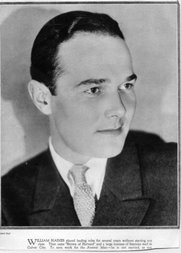
And I really hope someone’s working on a screenplay from William Mann’s riveting and galling Wisecracker: The Life and Times of William Haines, Hollywood’s First Openly Gay Star, a biography of the forgotten early-film headliner (pictured above). When the book was published, Film Forum showed a week’s worth of Haines’ movies (silent and talkies–he made the transition with panache), and I’m telling you, they were great. He used to get top billing over Joan Crawford! Maybe now’s the time to do this stylish, audacious, history-correcting story, especially with Tab Hunter coming out and all. ( I met a savvy, award-winning screenwriter named J. T. O’Neal at the movies recently; I bet he could do it.) Think of the hot actors who’ll run for the part, now that they see how it’s done.

Update update: Isn’t the wording interesting throughout this Catholic News Service review of Brokeback Mountain?

As the Catholic Church makes a distinction between homosexual orientation and activity, Ennis and Jack’s continuing physical relationship is morally problematic.

The adulterous nature of their affair is another hot-button issue. But the pain Jack and Ennis cause their families is not whitewashed. (The women are played with tremendous sympathy, not as shrill harridans.) It’s the emotional honesty of the story overall, and the portrayal of an unresolved relationship — which, by the way, ends in tragedy — that seems paramount.

Director Ang Lee tells the story with a sure sense of time and place, and presents the narrative in a way that is more palatable than would have been thought possible.

Looked at from the point of view of the need for love which everyone feels but few people can articulate, the plight of these guys is easy to understand while their way of dealing with it is likely to surprise and shock an audience.

Except for the initial sex scene, and brief bedroom encounters between the men and their (bare breasted) wives, there’s no sexually related nudity. Some outdoor shots of the men washing themselves and skinny-dipping are side-view, long-shot or out-of-focus images.

While the actions taken by Ennis and Jack cannot be endorsed, the universal themes of love and loss ring true.

Update update update: More on Proulx, Lee, Ossana, McMurtry, and the story’s journey to the screen, in the Austin American-Statesman (originally in the Denver Post).

Update x 4 for you lovely googlers: Read the always brilliant James Wolcott on bloggers who protest too much and “the genteel homophobia hovering behind the he-man hand-fluttering about Brokeback Mountain’s mainstream prospects.”

And here’s the Out review.

Categories: , , ,

Editors like that are the only editors here

Look, an interview in the Stranger with Deborah Treisman, last seen introducing Lorrie Moore and bringing her some nourishing gin. This picture is not very flattering. I’m reading (reviewing) John Lahr’s new collection, Honky Tonk Parade: New Yorker Profiles of Show People, and he dedicates the book to Treisman and to his wife, Connie Booth, who of course played Fawlty Towers’ Polly. Without giving away too much of my scintillating (print!) review, Lahr’s writing has it all—brains, heart, and courage. Ugh, that’s awful. This is what blogs are for, folks! Practice runs and bad puns.

By the way, it’s true: “Honky Tonk Parade” has no hyphen. I looked. People are turning against hyphens, in my world. and I have not yet seen the wisdom of this. Discuss.