_Pollux writes_:
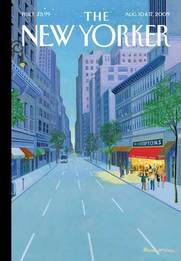
A new themed restaurant has opened in town: _The Hamptons_! Come for the atmosphere without dealing with all the hassles of the real place. When you visit the restaurant, there’s no need to get stuck in traffic on the narrow rural road that materializes after the bridge over the Shinnecock Canal.
There’s also no need to find a place to stay during the crowded summer months. Walk or take a taxi to the restaurant. No muss, no fuss. The scene at the actual place has been “dampened”:http://www.observer.com/2009/daily-transom/checking-georgica-restaurant-and-lounge somewhat by the recession, anyway.
Yes, The Hamptons Restaurant has all the social charms of the real thing and none of the natural charms. There’s no view of Lake Agawam or the hamlets of Water Mill, Sagaponack and Wainscott, but you can settle in for “the season” for just a few pleasant hours. The restaurant has no off-season. Come with friends, come alone. You’re at “The Hamptons,” not The Hamptons.
“Bruce McCall’s”:http://www.brucemccall.com/ restaurant provides access to a social scene–and access to a name. “The Hamptons,” after all, is a name that evokes affluence, expensive zip codes, and plutocratic privilege. To attach the name to a decidedly unspectacular location on an ordinary city street is to attempt to rub a patina of exclusivity on an otherwise ordinary eatery.
McCall thus detaches the name from the place, and challenges us to think of what “The Hamptons” really means. Would the name mean the same to us if it were not associated with the 30-mile string of resorts along the South Fork of Long Island? Does the restaurant retain any of the glamour of the place after which it was named?
As the great American toponymist “George R. Stewart”:http://en.wikipedia.org/wiki/George_R._Stewart writes in his landmark _Names on the Globe_, “Though a place may be conceived as existing in itself or as standing in the consciousness of an animal, a place-name exists only with men, being a part of language…”
Thus, the wide sandy beaches and cornfields and salty air that make up the geographic region of The Hamptons exist in themselves, with or without this famous name. But “The Hamptons” is a name that exists only in the minds of men and women, especially in the minds of the good people of New York.
The people who patronize this restaurant seem happy enough. McCall creates a cheery, convivial atmosphere. The restaurant literally glows with gentle yellow light, casting a beam of happy radiance onto a gray, lonely street. Maybe the customers are happier there than they would have ever been in Long Island, with no traffic, no snobbery, and no distance with which to contend.
As always, McCall creates a quietly detailed scene, making a comment without overstating his point. With McCall’s artwork, one drinks in the scene little by little, as if taking in the layout of a model train set.
Yes, a new themed restaurant has opened in town. The food’s okay. But don’t come for the butter-bathed lobster, stay for the name.