Category Archives: Letters & Challenges

Letter From a Pregnant Person on Atul Gawande

My friend Hillery Stone, waiting to go into labor in the spring, found herself reading the May 1 New Yorker with Daniel Raeburn’s harrowing memoir about his and his wife’s stillborn baby. She left the magazine in the hospital while otherwise occupied, then tracked it down weeks later after her (healthy, luckily) baby was born so she could finish the story she’d been so mesermerized and moved by. Another pregnant person I know—my sister Kate, like whom I wish I could shimmy—found it hard to avoid Atul Gawande’s story about modern childbirth this week:

Was that NYer story on childbirth scary or what? I’m trying to block it out, now that I’ve read it and obsessed over it for 24 hours. When it comes to public discussion about the possible perils of childbirth, we’re not much further than we were in Jane Austen days, where women just disappeared upstairs for a few months and came back down with a baby. Now there’s WAY more discussion of the pregnancy itself (weight gain, nutrition, whether to have your baby listen to Mozart in the womb, etc.) but still almost no conversation—even private conversation—about the scary parts, the high miscarriage rates and the multiplying C-sections and the childbirth mishaps. It’s almost a taboo subject, and when you do try to bring it up wtih other pregnant women, they become offended and upset.
 
So it was nice to read something that actually lays it all out there in an honest way, saying both that there are dangers and also that medical science has countered many of them through increased C-sections. Also to read the detailed description of the C-section, which everyone talks about as no big deal, but which is actually serious surgery!!! Still, as a pregnant woman intent on a vaginal, no-drugs delivery, it was scary to think about how little I know about what will actually happen when I go in, and how few options remain for modern doctors other than cutting me open. Eep.

A Reader Writes: I Want My NTV!

Received in the Emdashes inbox today:

What’s up with Tad Friend writing the TV reviews? I will cancel my subscription if Nancy Franklin is no longer the TV critic. Do you know?

I think Tad Friend is a grand writer, as you know, but I agree, Nancy Franklin is the cat’s pyjamas, and the mere idea of her departure from the TV spot is alarming. What’s going on, friends?
 
Update: She’s just on a well-earned leave and will be back later in 2007, I’m happy to report.

Mailbag: The Cramble Contest

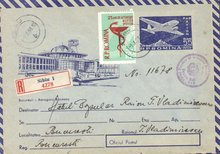
Envelope Romania 1957 Bucharest Airport blue.jpg
A glad reader whose questions were answered–after reading the illumination of Galway Kinnell’s poetic vocabulary in “Burning the Brush Pile” (June 19) by the amazing Sue Blank, about whom more shortly–writes:

Ms Gordon–I believe in serendipity but this has me wheezing–I read the Kinnell poem while enroute to Ireland and noted four words to look up upon my return home. Yes, those four. [“Clart,” “crambles,” “shinicle,” and “hirple.”]

(It occurs to me only now that I might have used Trinity or the National libraries while in Dublin–all four have a celtic-brit air about them, don’t they–but I didn’t. Beckett and Yeats shows erased everything.)

Only now, back here, this very morning, did I return to the list and met total frustration both on and offline … until I at last Googled ‘crambles’ and found you waiting right beneath them!

You’re right, the context did help with them all, crambles suggesting brambles to me (only packed tighter) … shinicle fairly screamed pile, pyre, chimney … clarts are practically onomatopoetic for cinder bits (also those chads of mud you knock out of the cleated soles of your Merrills with a whack of a stick) … and the Aer Lingus seating has had me hirpling around since deboarding, … tho I had osmosed more of a hip-swerving, snakey ankling action from the word itself. Prufrock’s crab, even.

PS. “Isaac” I take to be Old Testament, tho I connect him to “knife” before “fire” but I guess if he were going to forerun the Paschal Lamb in being sacrificed, he’d be roasted in the process. If there’s one false note or red herring in the poem that would be it, giving the work its requisite imperfection.

Anyhow, thanks for being there, I was beginning to wonder how I’d ever live without Safire.

Ed Hannibal

Meanwhile, you are wondering (I know because you’ve written to me wondering) who won the aforementioned Cramble Contest, which challenged readers to come up with the most satisfying definition for “cramble” as Galway uses it in the poem. There were two extremely close-reading co-winners: the still-mysterious Sanbornnapper and Newyorkette, a.k.a. The New Yorker‘s own whip-smart cartoonist Carolita Johnson, who had no assistance from the poetry department in reaching her surmise.

Sanbornnapper’s entry: “Cramble is a v. in the Oxford Universal meaning the twisting of vines or roots. Kinnell nouns it. How about roundel? That’s not a rung. Is he standing on his little shield?” And here’s Carolita’s:

It seems that the French use it as a French version of the word “crumble” as in apple crumble. I found several recipes for “cramble,” all being desserts of the “crumble” type.

It sounds, in the poem, like crumbly baked (by fire) morsels of whatever got burned and cooked. It’s particularly apt because of it’s rhyming to “ramble,” as in the kind of outdoorsy places full of brush and weeds and stuff to stop on that goes crunch in the fall, such as in Central Park. The “cra” has that crunchy sound.

I think it’s an improper (poetic licensed) use of the word for its sound, and vague association with baking.

The winners will each receive a Galway Kinnell volume of their choice. And I’ve since heard from both the marvelously assiduous Sue Blank and her daughter, both of whom write a terrific letter. More Eustace Google contests to come, you can be sure of it.

Incidentally, Carolita has a very funny story on her blog about how the publication of her uproarious recent cartoon–“I never thought turning eighty would be so much fun!”–transpired. It’s a great peek at the cartoon-cooking process.

We’re Aghast: “Impacted” in Talk!

An attentive friend writes:

Could you please do a post about the shocking, outrageous, and downright unacceptable use of “impacted” in last Monday’s Talk section? I’ve just got around to reading it, and it has upset me gravely:

[Link to “Moneyman,” by John Cassidy; “Greenspan himself, in a research paper that he co-wrote last year at the Fed, has pointed out how the proliferation of home-equity loans, which allow people to cash out some of the rising value of their homes, has impacted the economy.”]

And that’s not all. I myself saw an improper “hopefully” somewhere in the back of the book within the past six months. There are so rarely mistakes or syntactical errors of judgment in the magazine that when they do appear, they jump out like zombies in the dark countryside—looming, lurching, and impossible to explain.

Let’s consult our old friends William Strunk Jr. and E.B. White, who had definite views about this: “Noun used as verb. Many nouns have lately been pressed into service as verbs. Not all are bad, but all are suspect.” I quote from the newest edition of The Elements of Style, gorgeously illustrated by Maira Kalman. According to a longtime copy editor I know, the Kalman edition contains several errors. This I must see for myself, I said, so I bought it, and so far all I’ve seen are Strunk and White’s lilting sentences and a loving, mildly peevish introduction by Roger Angell. (White’s 1979 needless-word-less introduction is also here.) But I haven’t read every page; when I do, you’ll know.

Needless-word-less—hyphens, en dash, or close up? Needless-wordless? That has the wrong flavor, I think.

A reader writes: DVD archives don’t print right

Not representative of printing problems, just totally cool.

I’ve had some problems with getting the archive pages to print properly, too. As with Jessica Simpson’s shorts, the bottoms keep getting cut off. (The Capote image above is a mere demonstration of the archive’s cool contents and the DRM-skirting power of Grab, not a dramatic exaggeration of the printing snafu, although it could be that, too.) Coincidence? Bug? Feature? The flummoxed reader’s report:

Are you having any trouble printing pages? When I print, the pages come out looking like shite, and I’ve got a pretty up-to-date printer (HP 720C). I e-mailed their technical service line, but I never heard back.

Update: New Yorker Head of Library Jon Michaud has the answers.
Also, much, much later:: The Complete New Yorker troubleshooting page now has this Jon-echoing note.

I am a Mac user, and I can’t get the last 2 or 3 lines of each column on the page to print properly. I’ve already tried adjusting the page size and my printer is working fine. What should I do?
From the print dialog box, select “Save as PDF,” and specify a location where you want to save it. The PDF file that is generated should open in Preview automatically. In the PDF, select Page Setup from the File Menu, and change the scale option from 100% to 95%. Click OK, and then print the PDF file. (You may need to change the scale % more or less, depending on your printer.)

Letter From Yokahama

Faithful reader Tom Gally, who reads us, I mean me, from Yokohama, Japan, writes:

The new owner of a set of The New Yorker‘s DVD archive faces the problem of where to begin. The book of highlights that accompanies the DVD offers one point of entry, as do the software’s various search and browse features.

I began in the late 1930s. By that point, the magazine had matured beyond its slapdash beginnings, but it still had a youthful lightness and irreverence that would be lost with the coming of the Second World War, the atomic age, and the Cold War.

For a taste, here is the first item under “Notes and Comment” in the issue of January 9, 1937:

“The fortnight has been a busy one. There were hasty conferences to make air travel safe for statisticians. There was a clash of pituitary experts, baring their teeth over a hormone. ‘Alice in Wonderland’ was discredited by a psychiatrist. Women were proved to be fertile for only a few hours each month, during which time they could be made to ring a bell. Sport reached a new pinnacle when an American Negro ran a foot race with a chestnut gelding. A lady in Princeton discovered osmium, thulium, and iridium in the sun. Skiing took its final Americanization vows when a snow train full of skiers was met in Intervale, N.H., by a brass band. And a scientist, taking the words right out of our mouth, pointed out that Man is about to follow in the footsteps of the lemmings, the little animals that run down to the sea and die.”

I think (back to me now) that the weekly satirical email Harper’s sends out is reaching for this very kind of tone and sprightly listmaking, which may not work as well for the dreariest of currrent events. Is this piece credited? I’ll check later on. One of the best things about the archive is that at long last, we know who the heck wrote all those Talks. Here’s Lillian Ross on the early days of Talks and that famous first-person plural.

Letters to emdashes: The Target ads

A crossed letter for cross times

Good morning! Before you read this, do something for me:

BACK UP YOUR HARD DRIVE.

I’m serious, my dear readers. I care about you, as a group and as individuals, and having been though a harrowing loss of data this past weekend as a result of the untimely death of my whirring, alarmingly hot, unhappy-sounding hard drive, I would not wish it on anyone, not even my worstest enemy. And since I’m trying not to have enemies these days, I wouldn’t even wish it on…the worst person you can think of. Please back up! Right now! I’m going to be posting informative and encouraging articles about this all week so you don’t forget.

Really, please do it! I know most of you are at work and you can’t, but you can make some plans for later. Print out, save to your external hard drive, buy an external hard drive, make some data CDs, get a .mac account, upload to your university server (it’s easy!), send yourself a ream o’ gmails, put it on your iPod, do anything to preserve your precious stuff before it’s too late. Because it could be too late, any day, and then you won’t be able to make plans anymore. You’ll just weep. And then you’ll sell a kidney, because that’s how much you’ll need to pay the experts to attempt a data recovery. Trust me. You do not want to have to make those decisions, or have those unsightly scars on your abdomen.

Do you love your novel, your beautifully organized iTunes, your photos, your notes for future projects, your mushy emails, your sonnet sequence, your spreadsheets, your college papers (“Spewing What’s Digested: The Handbook of Epictetus”), your scans, your resume, your myriad lists, your handy files of passwords and phone numbers, your programs, your links, your downloads—all that work and history you’d be lost without? Save yourself the excruciating agony of seeing it all vanish in a single push of the start button and back up RIGHT NOW.

All right, on to the letters to the editor. I solicited readers’ opinions about the Target ad controversy (about which Jon Friedman has just added his comments; NPR’s Marketplace also did a story), and here are two of your responses:

Tom writes from Yokohama, Japan:

I received my copy of the issue on Saturday—they usually come on Friday; sometimes I receive my copy in Japan before my father gets his in California—and the Target ads didn’t bother me at all. It is obvious that they are advertisements, and they are a lot less obtrusive than the usual motley ad mix. The Chicago Sun-Times article you link to goes overboard: The “sacred wall between editorial and advertising” can be said to have collapsed only if it turns out that The New Yorker‘s editors decided to alter their editorial content because Target took out all those ads. I’ve seen no evidence of that, and I don’t see why a one-time full-issue buyout would be more likely to corrupt the editors’ integrity than would repeated advertisements from car makers or whisky distillers.

And Kristin from elsewhere in cyberspace writes:

…I start a lot of sentences with “I was reading this article…” and everyone knows it was from The New Yorker, every time. I’ve read every issue, cover to cover, for about fifteen years, missing only a few right after Sept 11.

Anyway, I like the Target ads. I think they’re kind of cool; it’s artistic, it takes advertising to a whole different level. We’re not going to get rid of ads, so might as well experience them in a new way. (Not unlike the ironically pretentious ad-but-not-an-ad Ketel One ads, but considerably more visually interesting.) It was fun to see what the different artists did with it. Frankly, I liked it. If there’s anything weird about the ads, it’s that Target doesn’t seem to be the right demographic for The New Yorker. Technically speaking, as I learned from a New Yorker article some years ago, they don’t even have a Target in Manhattan.

But perhaps they’re right after all, if I’m any indication; I’m a huge New Yorker fan, and I, frankly, love Target. I like it that Target did something that sophisticated—the ads, the artists, The New Yorker. Funnily enough, the article—possibly a Talk of the Town item—about Target was one of the few times I thought the magazine was just off. [I’m pretty sure Kristin is referring to this 2002 Talk by Nancy Franklin about Christmas shopping at Target’s temporary Chelsea Piers shop.) Struck me as a urbanite’s misunderstanding of life outside the big city; they were mixing the benefits (if any) of big box stores like Sam’s Club with those of, literally, Target. You don’t drop money at Target because you buy in bulk—as the writer stated—but because you buy a wide variety of things there, all well designed and reasonably priced.

Update: Bright and early this morning, Kim from London adds:

Love your blog.

Re the Target ads and the Sun Times: I’ve never heard such a load of precious crap in all my life.

I’m moving to Chicago and looking for work as a reporter in a couple of months. None of this improves my opinion of the holier-than-thou U.S. press. Stick it up yer punter!

You can print that, if you want.

Agree? Don’t? Your opinions are always welcome. As it says over there in the upper-right-hand corner, no correspondence or conversation is printed without permission, and everyone is guaranteed anonymity (that goes for you paranoid big shots, too; you’d be surprised how often this comes up). But links, letters, and miscellany sent as signed contributions are also warmly welcomed. As in other publications, your letter may be edited for space and clarity, but mostly I’ll just leave it be.

This seems like kind of a silly disclaimer, but some bloggers (like me) really are journalists, and so I’ll disclaim that my childhood pal Jonah works for Target as an industrial designer, and…that’s it. Despite the store in Brooklyn, I’ve only been to Target once—in Minneapolis, to find an outfit for Jonah’s wedding a few years ago, as a sartorial homage to his fabulous design-career rise from Lego salesman at the Mall of America to top-secret Lego genius in Denmark to Super-Target Man. Good thing he wasn’t still at Lego when he got married—in what I would have worn, dancing would have been tough.

Did you back up yet? Did you make some plans? I’m counting on you.