Category Archives: Pick of the Issue

I Wish I Could Limn-y Like My Sister Kate

On The New Republic‘s site, there’s a good video co-starring my brainy sister Kate, a progressive energy policy analyst, who’s lately been working with Newark mayor Cory Booker (about whom Peter J. Boyer wrote an excellent Profile early this year) on labor and environmental projects:

As part of TNR TV’s series about the new environmental movement, TNR reporter Dayo Olopade sits down with environmental activist Kate Gordon and policy specialist Bracken Hendricks to discuss whether “green jobs” can actually help solve the current economic crisis.

Just in case you haven’t read Elizabeth Kolbert’s piece on the Danish carbon-footprint-reducers, by the way, it’s really something special. (Warning: It will make you feel weird about flying.) The New Yorker has been doing a swell job upholding its reputation as a leading voice on the environmental crisis, I think. Its coverage of China has also been increasing dramatically, if I’m not mistaken–I can think of half a dozen recent pieces that are gradually mapping China’s environmental, social, educational, athletic, architectural, financial, and musical life in intensely entertaining detail.

Best of the 1.28.08 Issue: Nudie Pix

In which the editor picks out a few choice cuts from the previous week’s New Yorker.
There have been only a few instances that I can remember where I’ve blushed (hey, I’m a half-Canadian part-Midwestern Yankee Puritan) and turned the page rather than let my fellow squished subway-row-seatmate see the page of the New Yorker I’m reading. That was the case with Joan Acocella’s review of the Playboy centerfold book a year or so ago (some Playmates appeared, small but round, in the accompanying photo collage), and generally happens whenever I have a public-transportation encounter with a full-page, artfully composed photo of a gaggle of vamping dancers wearing only their sinews. I love those, by the way, especially when male nudity is equally represented (I said I was half a Canadian-Midwestern Puritan).
But the latest instance, and my pick of this issue, was Calvin Tomkins’s terrifically observed Profile of the painter John Currin (not online; buy the issue if you don’t subscribe). I loved it. This is a portrait of modern, bold, intelligent people at work and play—Currin, his wife, their children, Tomkins himself. By the way, the painting in question is unabashedly hot—inclusive and tender and, as such, fundamentally unrelated to mainstream pornography, not to mention amusing for reasons that Tompkins helps illuminate. (In a class with the brilliant Johanna Drucker at Columbia, I realized how hysterically funny a painting can be—specifically, Grant Wood’s Parson Weems’ Fable.)
Also superlative: the typically excellent essay by Jill Lepore on Benjamin Franklin’s naughty side (so much naughtiness in this issue, including romantic rule-breaking at a mental hospital! Not to mention naughty yet possibly groundbreaking medical philanthropy!). Lepore is a superb writer who’s always going down some riveting road or other. More Lepore, por favor. And although all I’ve read, here and there, about Les Murray led me to believe I wouldn’t like his poems much, I liked “Science Fiction” very much. So shame on me for having preconceived notions.
Because I expect this is going to be a theme till November, I’d just like to get it out of the way now and say that the coverage of the presidential election so far has been very good, and I appreciate the thoroughness and scope of the pieces, Talks and longer stories, on the candidates. A few more stories on specific voters and the scene at campaign headquarters in various states (and explorations of the candidates’ appeal beyond the PR blitzes, as in that revelatory 2004 piece about George Bush’s speech patterns by Philip Gourevitch) might be good to round things out, but George Packer, Hendrik Hertzberg, Ryan Lizza, and the rest are all reporting and writing extremely well. Moments like this, in Packer’s “The Choice” from the week in question, make the coverage here that much more superior to the boring and/or breathless crap that’s serving as analysis of the election in many other media sources:

Obama spoke for only twenty-five minutes and took no questions; he had figured out how to leave an audience at the peak of its emotion, craving more. As he was ending, I walked outside and found five hundred people standing on the sidewalk and the front steps of the opera house, listening to his last words in silence, as if news of victory in the Pacific were coming over the loudspeakers. Within minutes, I couldn’t recall a single thing that he had said, and the speech dissolved into pure feeling, which stayed with me for days.

This kind of frankness, a sense of the actual scene on the actual campaign trail, from the actual mind of the smart, trustworthy person who was there at the time, will keep the New Yorker reports from this unbearably endless election season actually fun to read, not to mention as rich with actual detail and perspective as the magazine’s coverage of New Orleans after Hurricane Katrina. I applaud both series.

I liked John Kenney’s Shouts & Murmurs about the patient trying to end his therapy, too—it’s funny as a parody of adult conversation in general—and the illustration by The Heads of State in GOAT is powerfully symbolic and beautiful at once, like a Christoph Niemann drawing that simultaneously distills an idea and amplifies it, or, hmm, a Soviet poster.

War and Peace and Everything Nice

For some reason, this little unsigned entry in the April 29, 1920 issue of Life magazine (which I just received after a successful eBay auction—I win all my auctions because no one else is ever bidding on what I want) reminded me of James Wood’s piece last week on the new translation of War and Peace.

The Constant and the Inconstant

The characters that one knows in books are more real and unchanging than those one knows in real life. Indeed, those one knows in real life are so unreal that a comparison of them with the ones in books is quite startling. The best friend you have had suddenly develops some quality that you have never suspected, and thenceforth he is quite a different person from what you deemed him. You yourself are often quite dissimilar from what you thought you were yesterday. You survived an unexpected test which you would never have believed possible or you yielded in a manner so absurd that you can scarcely credit it.

But David Copperfield is always the same. Elizabeth Bennet, Lear, Faust, Père Goriot, Ulysses—it makes no difference where you range—they are constant ones.

This is also a very good time to revisit David Remnick’s memorably fine essay on translation from 2005, in which Remnick conducts a thorough investigation into several of the translators Wood mentions, including Richard Pevear and Larissa Volokhonsky. Anyway, I have other Picks of this Issue, to be added to this post soon, for anyone who checks in several times a day. (Confidential to those people: I love you.)

10.8.07 Issue: Suddenly There Came a Tapping

In which the staff of Emdashes reviews the high points and discusses the particulars of the previous week’s issue (or, occasionally, another edition).
Tessa Hadley’s story “Married Love” started out comic and, by the end, worked in helpless regret. This is one of those stories where it’s difficult to tell where the comic leaves off. The story reminded me of the flaky October-June marriage in Zoë Heller’s Notes on a Scandal; these families could be neighbors. The standout article for me was Rebecca Mead’s Reporter at Large, “Our Man in Pyongyang,” about Bobby Egan, a New Jersey restaurateur who is our primary back channel to North Korea.
And if you were considering following Nancy Franklin’s advice and watch Friday Night Lights, by all means do. Standup comedian Patton Oswalt called it “the closest thing…to a Dogme 95 film on television,” the endorsement that induced me to investigate.
The Writers Guild strike has upended both the foreseeable future for so many good shows (and their writers) and the ethics of purchasing a DVD (for which writers earn meager residuals—as of now), but note that Friday Night Lights‘ creators are so confident in its quality that they offer a money-back guarantee. —Martin Schneider

10.1.07 Issue: A Rush and a Push

In which the staff of Emdashes reviews the high points and discusses the particulars of the previous week’s issue (or, occasionally, another edition).
Jean-Claude Floc’h is a discovery I attribute to The Complete New Yorker, so it was a treat to see his drawing of an old-timey golfer on page 24. My admiration for Floc’h suggests that I am bigger fan of the ligne claire style than I even realize.
I enjoyed Nick Paumgarten’s excellent look at the Mannahatta Project, which answers all of the questions a reader could expect to have at the outset, and then some. Loved his description of New Yorkers as having “a kind of a superheated parochial self-regard.” I applaud Paumgarten’s desire and ability to come up with outsize formulations; it made the article more of a magnificent flower.
“The Insufferable Gaucho” is Roberto Bolaño’s cunning satire on the mythos that has developed around the pampas. The story feels like the Chilean author’s private joke on neighboring (rabbit-infested?) Argentina—the two countries, it is said, do not get along. I was so taken by Christian Northeast‘s striking illustration for the story that I tore that page out of the magazine and hung it on an unoccupied nail on the wall of my spare Alpine cabin. —Martin Schneider

9.24.07 Issue: Too Sexy for My Shoe

In which the staff of Emdashes reviews the high points and discusses the particulars of the previous week’s issue (or, occasionally, another edition).
Did anybody else notice the astronomical Proust quotient in this year’s Style Issue? (Why the Style Issue for so much Proust, anyway?) I sure as hell noticed the ribald Proust reference in Francine du Plessix Gray’s Onward and Upward about Marie-Laure de Noailles, boy howdy! (For the record, ladies, I’ve never read Proust.)
Henry Alford’s Annal of Technology about the solar-powered jacket amused me very much. I do confess to being puzzled (nay, alarmed) by his unabashed use of the veddy British word “whinging,” though.
Finally, I hereby nominate Nancy Franklin for Parenthetical of the Year. Here it is, from her fine negative review of Ken Burns’s PBS documentary The War: “(There will also be, in some places, no swearing; local stations worried about F.C.C. fines for offensive language are being offered a version of the series which removes the four instances of tangy language that unaccountably made their way into a documentary about what it’s like to kill, to see your friends be killed, and to spend endless days and nights in unrelieved fear of being killed yourself.)” Thank you for that. —Martin Schneider

9.03.07 & 9.10.07 Issue: A Cornucopia, a Smorgasbord, and Similar Metaphors

In which various Emdashes contributors note what we liked in a recent issue of the magazine—usually that of the previous week, but, as you will see, not always.
Some weeks ago, when Emily and I were still roughly on POTI (what we call “Pick of the Issue”; it’s like POTUS, but without veto power) schedule, The Millions likened The New Yorker‘s annual food issue to Sports Illustrated‘s swimsuit issue. This take on the subject has never occurred to me, but it’s pretty charming. Do any of you feel that way?
Having now tamped expectations, I will say this year’s food issue was a good one. It arrived right on the heels of William Shawn’s hundredth birthday, for which I used the occasion to wax appreciative about him. Naturally, then, I was tickled to see an extensive article, dedicated to William Shawn, by John McPhee (a writer I must read more of) about the strange animals that McPhee and others have eaten. It didn’t, in the end, have much to do with Shawn, but that didn’t prevent the piece from containing quite a few eyebrow-raisers, which is inevitable when you explain the process of fricaseeing mountain oysters. (Clearly, this genre writes itself.)
I loved Patrick Radden Keefe’s Reporter at Large about flamboyant and improbably named apparent oeno-charlatan Hardy Rodenstock. Excavating an imbroglio heretofore limited to a self-regarding coterie is the kind of thing The New Yorker does best. Jane Kramer’s look at Claudia Roden, the esteemed British writer on Middle Eastern cuisine, seemed a bit cramped in places, but by the time the dust settled, I was glad I read it.
Now I’m hungry; off to plumb the fridge. —Martin Schneider

9.17.07 Issue: Because It’s Still on Your Kitchen Table

In which some or all of us review the high points and discuss the particulars of a recent issue.
This issue brought us the first article by Ryan Lizza, and it bodes well. One sign of a good political article is that it is truer two months down the road than the day it came out, and that’s the case here—health care is an asset for Hillary, Obama is cagey and difficult to get a handle on, and Edwards supplies the populist attack on Hillary.
The clear pick in this issue was Mark Singer’s wonderful Letter from England on pianist Joyce Hatto. I don’t even want to say anything about it. If you have a half hour, give it a whirl—you won’t be disappointed. (Then listen to Singer’s audio interview with Matt Dellinger on newyorker.com, and hear more of Singer’s thoughts and some of the music in question.)
Other than that, the cartoons by Zachary Kanin and Paul Noth both have just the right touch of enjoyable daffiness. —Martin Schneider

The Fantastic Pickin’ On Series

Pick of the Issue, our weekly selection of the best of each week’s issue of New Yorker (in other words, the pieces, cartoons, &c. we specifically recommend), has been on temporary New Yorker Festival-related hiatus, but will return soon for your reading pleasure. Meanwhile, what’s your pick of the issue this week?

8.27.07 Issue: Uncle Sap and the Human Bomb

In which some or all of us review the most recent issue.
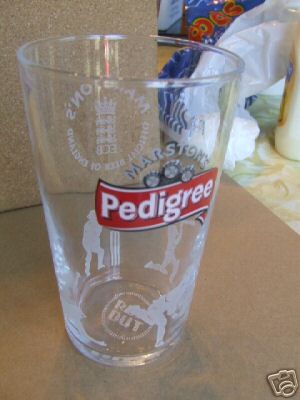
I spent a few days in London a couple of weeks ago, in which time I visited four pubs. How strange to see one of them, The Grapes, invoked in the first paragraph of John Lahr’s splendid Profile of Ian McKellen. Confession: I pilfered a pint glass from the joint. It says “Marston’s Pedigree” and has swell silhouettes of cricketers all along the bottom. When you have drained the glass, the words “RUN OUT” become visible on the bottom of the glass. Just too good to pass up. (I will gladly negotiate reparations with any representative from The Grapes who contacts me.)

d3a6_1.JPG

I wish that Adam Gopnik’s Letter from France had been longer, and if that sounds like a compliment, that’s the idea. The last two paragraphs especially are required reading, in my view. There’s been a fairly sudden change of the guard throughout western Europe—Germany, France, and England have all ushered in new leaders in the last couple of years, two of them since early May. The New Yorker looked at Merkel in late 2005. I look forward to the Letter from London on Gordon Brown…before the year is out?
As political forces tug to and fro in Washington over Iraq, it was a mild shock to encounter, of all people, Scottish hawk Niall Ferguson and his counterfactuals at the back of the book, but I do admire his emphasis on economics, and the review was well worth reading.
I loved the snapshot of Antonioni and Monica Vitti, that goes along with Anthony Lane’s look back in which Antonioni reminds me of Paul Stewart’s Raymond, from Citizen Kane.
Finally, here’s more this week’s cover by Kara Walker, and more about this week’s (I think, but correct me if I’m wrong) caption contest winner. —Martin Schneider