
Benjamin Chambers writes:
What with the Democratic Convention going on and all, it was highly serendipitous to find a two-page spread of great cartoons entitled “Political Conventions” by James Stevenson in the August 25, 1968 issue of The New Yorker. I couldn’t find them among “Stevenson’s work “:http://www.cartoonbank.com/search_results_category.asp?sitetype=1§ion=all&keyword=james+Stevenson&advanced=0&x=12&y=13featured at the Cartoon Bank, so I’ve uploaded a couple of my favorites below. (For the complete set, I’m afraid you’ll have to reach for the Complete New Yorker.) Stevenson has always been one of my favorite cartoonists; “click here”:http://biography.jrank.org/pages/1693/Stevenson-James-1929.html for a very thorough profile of his artistic career.
While chuckling at Stevenson’s quietly satirical sketches, though, I’ll admit I experienced a bit of cognitive dissonance, since after all, they were published during the infamous 1968 Democratic National Convention.
Here’s the first (click to make it bigger):
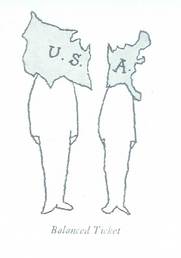
And here’s the second one (click on it for a larger version):

Author Archives: Benjamin
So Long to One Great Fiction Editor; Hello Again to Another
One of the great fiction editors of the latter part of the 20th-century, Rust Hills, died this month at 83. Hills made his mark at Esquire; you can read an obituary at The Washington Post. Mention is made of a “wry” piece he wrote about “eating ice cream cones,” which I see originally appeared in The New Yorker in 1968.
Meanwhile, NPR just did a story on William Maxwell, the longtime fiction editor at The New Yorker and accomplished author in his own right, who died in 2000. You can listen in here, or track down John Updike’s eulogy in the Complete New Yorker.
Shirley Jackson on Not Getting It
The Poynter Institute’s blog on journalism published “an interesting column”:http://www.poynter.org/column.asp?id=78&aid=146828 by Roy Peter Clark last month on the hazards of satire. The column’s real topic had to do with the infamous Obama cover, but contained some fascinating material from Shirley Jackson on responses from New Yorker readers to her story, “The Lottery,” whose “60th anniversary “:http://emdashes.com/2008/07/happy-belated-60th-anniversary.php of publication was just the other day.
From Clark’s column:
[Jackson’s] essay called “Biography of a Story” begins this way: “On the morning of June 28, 1948, I walked down to the post office in our little Vermont town to pick up the mail. … I opened the box, took out a couple of bills and a letter or two, talked to the postmaster for a few minutes, and left, never supposing that it was the last time for months that I was to pick up the mail without an active feeling of panic. … It was not my first published story, nor my last, but I have been assured over and over that if it had been the only story I ever wrote or published, there would be people who would not forget my name.”
The column goes on from there, and makes for hair-raising reading for anyone who has faith in the intelligence of the average reader. (But see Paul Morris’ vision of what her story would’ve looked like it if it had gone through rewrite today.)
51 Years of Ruth Prawer Jhabvala
I admit it: I always thought “Ruth Prawer Jhabvala”:http://en.wikipedia.org/wiki/Ruth_Prawer_Jhabvala was born in India (she wasn’t; she was born in Germany to Jewish parents). Nor did I realize she was the primary scriptwriter for Merchant Ivory Productions. And while we’re at it, I may as well ‘fess up and say that I never read anything she wrote before “The Teacher” appeared in the July 28, 2008 issue of The New Yorker.
To atone (at least a little), after reading “The Teacher,” I went back and read “The Interview,” Jhabvala’s first-ever story in TNY, which appeared almost exactly 51 years ago, in the July 27, 1957 issue. (Telling for the time, though, she signed it, “R. Prawer Jhabvala.”) And what interesting bookends these two stories make!
The narrator of “The Interview” is chronically unemployed and looking to stay that way. He is the sweet, good-looking, younger brother of his family, which is based in Bombay, I think. His older brother supports the family with a government job; his brother’s beautiful wife now runs the household; his mother is in her dotage; and his own wife, whose stupidity and ugliness he laments, wishes he’d get a job so that the two of them and their child will be able to move out on their own.
But the narrator has no desire to leave the rest of the family. Nor does he want to get a job: he’s had at least one before, which did not end well; he’s terribly afraid he will make mistakes and be yelled at. Far better, he reasons, to sit and think and let his family coddle him, because he is, he insists to the reader, a sensitive man.
The story’s poignance and the narrator’s weakness of character are perfectly encapsulated as the story comes to a close. The narrator, despite his position as a favorite in the family, is profoundly dissatisfied—and so, he notes, is everyone around him. First he describes his wife’s unhappiness, and then he goes on to describe that of the others:
bq. … my brother, who has a job, but is frightened that he will lose it—and my mother, who is so old that she can only sit on the floor and stroke her pieces of cloth—and my sister-in-law, who is warm and strong and does not care for her husband. Yet life could be so different. When I go to the cinema and hear the beautiful songs they sing, I know how different it could be, and also sometimes when I sit alone and think my thoughts, I have a feeling that everything could be truly beautiful.
Reading that, it’s hard not to feel that the narrator’s anguished passivity is central to the unhappiness of the other members of his family … and he knows it.
Fifty-one years later, in “The Teacher,” Jhabvala writes about Dr. Chacko, who, though hardly anguished, could be an older, stronger, happier version of the narrator of “The Interview”. Like him, Chacko is charismatic—people dote on him, and give him lodging, food, and employment, so that he never lacks—and he, too, is passive. He simply accepts what people give him until they stop giving.
When we meet him, he is teaching an informal workshop in New York on a regular basis. In the course of the story, a disillusioned adherent breaks with him publicly, and the workshops come to an end. Later, the narrator asks him about it.
He said, “People move on. I move on, too.” As he did so often, he answered my question before I had asked it. “There’s always somewhere. One gets used to it.”
I said, “But wouldn’t you rather stay?”
“If there are people who wish me to stay.”
Evidently, he didn’t intend to continue this conversation, and I also realized that there was no need. It was cool outside now, in the night air. Glowworms glittered below, stars above. Instead of talking, he began to hum one of his songs. Was this his teaching? To say nothing? To want and need nothing?
So we see that Chacko’s passivity is different from that of the narrator of “The Interview,” because it has a spiritual dimension—or that’s how others perceive it, at any rate. It’s this perception that makes people want to give him food, lodging, and adulation. The irony is that it’s never clear what he teaches and writes about, though it has to do with “life and death” (which is obviously supposed to be Significant). In fact, it’s not even clear whether Chacko himself understands what he’s trying to teach.
But Chacko’s passivity is not the only point of similarity between “The Interview” and “The Teacher.” Both stories are characterized by pellucid sentences that I imagine are Jhabvala’s trademark; both are written in the first person; and the narrators (both unnamed) each persist in emotional stasis, victimized, sort of, by divorce and marriage respectively.
When we meet her, the female narrator of “The Teacher” has been divorced for 10 years and now lives in a large house outside of New York City. A pair of do-gooder acquaintances convince her to host Dr. Chacko in a cottage located on the grounds surrounding her home for what turns out to be a couple of years. She develops a mild, slow-growing, attraction to him that borders on the non-existent before finally, too late, it fluoresces into visibility. Just then, he betrays her in a minor way that might or might not be educational, but the do-gooders bring lots of orphans and “fugitives from bad homes” to fill the cottage rather improbably with the joys of childhood, and her life continues on, happily enough, though tinged with rue.
Oddly enough (though anyone reading TNY fiction on a regular basis this year, as I have, could have predicted it), she is detached and passive, like Chacko and “The Interview’s” narrator. When the do-gooders suggest she allow a stranger (Chacko) to move into the cottage, she goes along. When they ask her to give her the names of well-off acquaintances from which to request money, she complies. When they ask her to pay for the publication of Chacko’s turgid, and otherwise unpublishable tome, she writes a check.
She’s made powerless by … what? Her loneliness? It’s not entirely clear. But if so, then in her unhappiness, she is much more reminiscent of “The Interview’s” narrator than Chacko is. While she’s not the source of anyone’s unhappiness (if you don’t count one of the do-gooders, who’s a bit unbalanced anyway), she’s just as trapped by her passivity.
So: we have two stories set on two different continents and published 51 years apart that revolve around the same character, the same predicament. What surprising consistency!
I’d have to read more of Jhabvala’s work to see whether these bookends give a distorted view of her work. Probably they do; I hope they do. Still, I can’t help but wonder: should I be impressed by the high quality of Jhabvala’s work in 1957, or weep for her apparent lack of progression?
Perhaps an Emdashes reader knows …
Truthiness in Advertising
Benjamin Chambers writes:
Might just be me, but I don’t hear people grumble as much as I used to about “truth in advertising.” Maybe it’s because nobody expects it anymore. As with campaign finance reform, we all wish it could happen, but are afraid to admit we could be so childishly naive.
Well, be careful what you wish for there, in the secret spaces of the heart. Here’s a couple of examples from the October 1, 1966 issue of The New Yorker of why honesty might not always be the best policy. First, a mild, “Yeah-we-screw-up,” from Avis (click for full-size):

Then, the major-league, all-our-warts example, from Renault (click to see all the fun):

Had it come in the mail, TNY would’ve classed this ad copy under “Sales Pitches We Never Finished Reading.” Check it out, though: 35 mpg. Where can I get one?
Radiant and Terrific: E.B. White Reading Charlotte’s Web
Great story on NPR by Melissa Block a few days back, paying tribute to E.B. White’s immortal Charlotte’s Web. Follow the links to listen to White himself reading an excerpt. Also, be sure to listen to the New Yorker Out Loud interview with Jill Lepore and Roger Angell about White’s Stuart Little. As our intern Adam Shoemaker wrote last month:
On the New Yorker Out Loud podcast, Matt Dellinger speaks with Jill Lepore about her piece on E.B. White’s decidedly unmousy classic Stuart Little. Roger Angell, E.B. White’s stepson, also joins in the conversation. Lepore talks about her fascination with the piece—and the lengths to which that drove her research. The real story, says the author, is not the battle between E.B. White and the celebrated librarian Ann Carroll Moore, but rather the sometimes noble, sometimes cosseted vision of children’s literature the Victorian Moore tried—ultimately, unsuccessfully—to impose on America’s young readers.
Related: Emily’s beef with the stereotypical voice casting for the live-action movie version of Charlotte’s Web.
Looking Back at the Future, Circa 1964
Benjamin Chambers writes:
What did the future look like back in 1964? Here’s a clue: this rather puzzling cartoon by Alan Dunn (click to see it full-size) from the October 3, 1964 issue of The New Yorker.
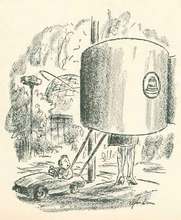
Judging from the globe in the background, you probably could find phone booths like the one drawn here at the 1964 New York World’s Fair. So far, so good. But what the heck is the kid riding in, and what’s so funny about the cartoon?
As to the first question, the Complete New Yorker index describes the kid as sitting in an “automobile pushcart.” Perhaps these were commonly available at the World’s Fair, perhaps not—but I don’t think it’s supposed to attract our attention. Instead, the kid’s dismayed look tells us what’s funny: the phone booth itself.
No doubt such booths were a radical departure from the full-size, glassed-in phone booths typical of the period, an intimation of the future. (Though those were not as ubiquitous as I thought. According to “this advertisement”:http://www.phonebooth.org/phoneadverts/portrait_of_a_city.html posted by the folks at “The Phonebooth”:http://www.phonebooth.org/index.html, the first outdoor telephone booths weren’t installed in Manhattan until around 1960.) Is it possible that the joke here is simply that the kid can’t see his mother? Your ideas welcome.
[UPDATE: I’ve gotten a lot of useful information from commenters and elsewhere that throws some light on the cartoon, so I’ll collate it here. First, thanks to Marc Francisco of www.phonebooth.org, who sent me this photo from a Bell System press release:

According to him, the copy read, “A pretty World’s Fair visitor makes a call from a Serpentine booth, so called because of its unique serpent-like design. All booths on the Fairgrounds are equipped with the Bell System’s newly developed Touch-Tone service which speeds calling by push buttons instead of a dial.”
(Touch-Tone! Another intimation of the future!) Note that the “pretty visitor” is wearing pumps, like the woman in the cartoon. No kid in a pushcart, though. Perhaps “she’s calling the operator”:http://www.phonebooth.org/phoneadverts/full_of_bees.html to find out where he went.
Then Bill Cotter sent a link to a shot of the booths “in use”:http://www.worldsfairphotos.com/nywf64/phones.htm at the time of the Fair, as well as a photo “explaining”:http://www.worldsfairphotos.com/nywf64/hertz.htm the kid’s “pushcart”. Thanks also to Mike for sending another link to photos of the booths at the time of The Fair, and several shots of them in their current state of “tragic disrepair”:http://64nywf65.20m.com/Booth/Booth.htm. He’s got more to say in his comment below …
Finally, for those of you astonished to learn that outdoor phone booths weren’t installed in Manhattan until about 1960—where did Superman change clothes when he was outside?—this ad from 1955 suggests they came late (?!) to Manhattan.]
In the same issue, too, I accidentally ran across an ad for perfume that was so modern, it jumped off the page (click for larger size):

Compare it to these two ads, one for perfume, and the other for makeup, taken from the same issue, that exemplify the competition (click for larger size):


By comparison, the ad for the Fabergé perfume stands out, doesn’t it? Unlike the other two, it’s selling a feeling, an impression of carnality, rather than features (“the modern way to carry spray,” “glides on easily”). It’s like an ad for, well, the future.
Often, though, the future has been around for longer than we think. Lycra® (generic name: “Spandex”:http://en.wikipedia.org/wiki/Spandex) is a case in point. I always thought that it was a relatively recent invention. Turns out I’m wrong: it was invented in 1959. Didn’t take long to get it to market, either, evidently. Check out this ad featuring it from the February 3, 1962 issue of TNY:

Still, I’ll bet you not one Beatles fan who saw this ad suspected that “hair bands” were already a foregone conclusion…
Happy Belated 60th Anniversary of Shirley Jackson’s “The Lottery”
From Benjamin Chambers:
Yep, it’s been a little over 60 years since the publication of Shirley Jackon’s classic story, The Lottery, which first appeared in the June 26, 1948 issue of The New Yorker.
In Jackson’s honor, the well-known sci-fi editor Ellen Datlow will be hosting a reading of Jackson’s work tonight—that’s July 23rd—from 7pm- 9pm at KGB Bar in New York City (85 East 4th Street, just off 2nd Ave, upstairs). Because the event is a fundraiser for “The Shirley Jackson Awards”:http://www.shirleyjacksonawards.org/, there will be a $5 cover charge. A list of authors who will be reading can be found “here “:http://ellen-datlow.livejournal.com/94546.html.
Some People, Places & Things That Will Not Appear in My Next Novel
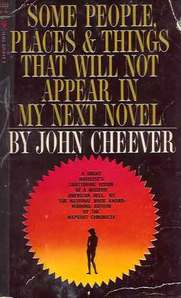
What could be cooler than accidentally running across one of my favorite “John Cheever”:http://en.wikipedia.org/wiki/John_Cheever stories, “Some People, Places, and Things That Will Not Appear In My Novel”:http://www.newyorker.com/archive/1960/11/12/1960_11_12_054_TNY_CARDS_000265256, in the The Complete New Yorker?
Way cooler: realizing that this story, from the November 12, 1960, issue, is longer and more revealing than the cut-down version that appeared in Cheever’s 1961 collection Some People, Places & Things That will Not Appear in My Next Novel (note that added “next”), with a new title: “A Miscellany of Characters That Will Not Appear.” (The latter version is also in his famous collection The Stories of John Cheever.)
Yup, that’s right: he hacked it before anthologizing it.
Both versions are exactly what the title promises: a list of things Cheever (or his narrator) finds irritating, despicable, or disappointing in contemporary fiction. The revised version is seven items long; the original runs to 11, plus a coda. More of an essay than a story, its spleen still startles, even after nearly 50 years.
When he revised it, Cheever cut item 5, one of several cheap shots in the original. It reads, in its entirety, “The dumb blonde, because she’s no dumber than you, whoever you are.” He was right to think better of it (though I confess I like the audacity of its pointed finger), as well as item 7, his swipe at “J. D. Salinger”:http://en.wikipedia.org/wiki/J._D._Salinger, whose success he envied:
Almost all autobiographical characters who describe themselves as being under the age of reason, coherence, and consent; i.e., I mean I’m this crazy, shook-up, sexy kid of thirteen with these phony parents, I mean my parents are so phony it makes me puke to think about them and that’s why I live in Mexico to keep away from these phony parents.
But I was sorry to see several other items go, short fictional sketches that displayed all of Cheever’s compassion and flair for the nomenclature of despair and regret. Item 4, for example, where he describes the jaundiced host of a suburban cocktail party, now keenly aware of his mortality:
He knew that time passed over the apple, over the rose, that time passed even over the old football in the coat closet, but he was astonished to find that time had passed over him. Why hadn’t someone told him? What had become of that form that used to cause so much consternation at the edge of the swimming pool?
It’s funny to think of this ordinary man musing on his own death with such graceful phrases, but it’s part of Cheever’s magic that he invests his characters so generously. Of the drunk advertising man in item 10, Cheever writes,
Here we see, as on a sandy point we see the working of two tides, how the powers of his exaltation and his misery, his lusts, and his aspirations have stamped a wilderness of wrinkles onto the dark and pouchy skin. He may have tired his eyes looking at Vega through a telescope or reading Keats by a dim light, but his gaze seems hangdog and impure.
Vega? Keats? Not a chance. For Cheever’s characters, though, these are real possibilities. Death and failure may never be far from their minds, but he is quick to grant them depth and protect them from judgment.
For example, when Charlie Pilstrom in item 6 converses with his neighbors while waiting on a train platform, he makes sure they all know how demanding his job is. Then the express train arrives, blows open his briefcase, and reveals his lies—he has no work to go to. In steps the narrator:
His unimportance, his idleness, his loneliness, and his unemployment are all exposed, but the scene is invalid because of its maliciousness, and because couldn’t most of us be equally exposed by a gust of wind, a lost button, or some other blackmailing turn of events? It’s too damned small.
Aside from Salinger, whose work exactly is Cheever irritated by? I’m not sure. I’m insufficiently steeped in mid-century American literature to be able to identify all of his targets. But the “pretty girl at the Princeton-Dartmouth Rugby game” (item 1) is actually a type I’m only familiar with from Cheever himself, and “lushes” (item 10), homosexuality (item 11), and fear of failure (items 2, 6, and 10) are all things that obsessed Cheever himself, as we know from his fiction, letters, and journals. It’s impossible to read “Some People,” in fact, without suspecting that the pathetic fallacy may not in this case be a fallacy:
And while we are about it, out go all those homosexuals who have taken such a dominating position in recent fiction. Isn’t it time that we embraced the indiscretion and inconstancy of the flesh and moved on?
Surely, that’s Cheever himself, wishing desperately not to have to hide? He’s frustrated, yes, with contemporary fiction and its flaws, but I think he must also have been frustrated with what he took to be the shortcomings of his own work.
Just look at item 2, which does not appear in the revised version (though it might have reappeared in his next novel). It gives us the story’s manifesto:
Fiction is art, and art is the triumph over chaos (no less), and we can accomplish this only by the most vigilant exercise of choice, but in a world that changes more swiftly than we can perceive there is always the danger that our powers of selection will be mistaken and that the vision we serve will come to nothing. We admire decency and we despise death, but even the mountains seem to move in the space of a night and perhaps the exhibitionist at the corner of Chestnut and Elm Streets is more significant than the lovely woman with a bar of sunlight in her hair, putting a fresh piece of cuttlefish into the nightingale’s cage. Our bearings are rudimentary, but surely sentimentality and picturesqueness have no place in our scheme, so we will throw out, for example, that old crone who, in the autumn dusk, roasts and sells chestnuts on the steps of the Ponte Sant’Angelo on the east bank of the Tiber.
Old crones, chestnuts, and autumn dusk—what phrases could be more typical of Cheever? Whatever the case, the story is a thorny little piece of metafiction, and I can only imagine what TNY readers of 1960 thought of it, when placed beside the more conventional work of “Mary Lavin”:http://emdashes.com/2008/07/mary-lavin-catch-the-wave.php, “John Updike”:http://www.newyorker.com/archive/1960/06/18/1960_06_18_039_TNY_CARDS_000260464, “V.S. Pritchett”:http://www.newyorker.com/archive/1960/07/16/1960_07_16_030_TNY_CARDS_000262147, and “Ruth Prawer Jhabvala”:http://www.newyorker.com/archive/1960/04/30/1960_04_30_040_TNY_CARDS_000263503. So spare some pity for the poor TNY intern who had to write the “story’s summary”:http://www.newyorker.com/archive/1960/11/12/1960_11_12_054_TNY_CARDS_000265256
for the magazine’s index:
Writer does not intend to write about drunks in his novel. He does a brief description of part of the story of a drunk, who is an advertising man, who loses his job.
Mary Lavin: Surf’s Up–Way Up!
You should read Mary Lavin’s short story “The Great Wave” as soon as you possibly can. The story appeared in the June 13, 1959 issue of The New Yorker, so if you have to buy your own copy of The Complete New Yorker to read it, and this story is the only thing you ever read in the CNY, it’ll be worth it.
I hadn’t heard of “Mary Lavin”:http://en.wikipedia.org/wiki/Mary_Lavin before, but given her eminence, it appears I should have. If you scan Martin’s “partial list”:http://emdashes.com/2007/10/the-best-american-short-storie.php of fiction from TNY that has also appeared in the Best American Short Stories anthology series, you’ll find that Lavin’s name fairly jumps out at you. Between 1959 and 1976, she published 15 stories in TNY, of which six, or 40%, were selected for BASS.
That’s a huge percentage. A toes-and-fingers count shows that even the mighty “Alice Munro”:http://www.newyorker.com/search/query?query=alice+munro&queryType=nonparsed&submitbtn.x=0&submitbtn.y=0&submitbtn=Submit, who knows Mary Lavin’s work and “was influenced”:http://www.theatlantic.com/doc/200112u/int2001-12-14 by it, has not achieved Lavin’s ratio of TNY to BASS publication. Between 1977, when Munro first published a story in TNY, and 2004, where Martin’s list stops, she published 47 stories in TNY, but only 16, or 34%, were selected for BASS. (Not that she needs to worry about her own eminence. As “Mark Asch wrote”:http://thelmagazine.com/lmag_blog/blog/post__06260809.cfm in “The L Magazine”:http://thelmagazine.com recently, “Alice Munro is the windshield and pretty much every other living writer is the bug.”)
But back to “The Great Wave.” I’ve now read four of the 15 stories Lavin published in TNY, and it’s unquestionably the best so far, even though it didn’t make it into BASS. Since I know not everyone can access the CNY, I’ll sketch it here. (Consider this your spoiler warning–though it’s the sort of story whose power is not lessened when you know the plot.)
Our story begins with a Bishop. He’s being rowed from the Irish mainland to an unnamed island, where he is to perform the confirmation ceremony, as he does every four years. We learn a few things: he’s fussy about his rich vestments, his colleague is jealous of the money that went into them, and the Bishop grew up on the island he’s visiting.
Now, up to this point, it’s natural to think “The Great Wave” will be a quiet story—perhaps the Bishop will meet the girl he loved before he went away to seminary? Whatever the case, one expects it will uneventful, most likely petering out in a bleak, ironic conclusion.
Nunh-uh. Lavin wrote stories like that, it’s true, but this isn’t one of them.
For “Wave” quickly shifts to the Bishop’s childhood. Though all the other men and boys go out to fish, little Jimeen (i.e., the Bish, in knee pants) is kept from the sea by his widowed mother, who has already lost her husband to the ocean and doesn’t want to lose her son as well. As her son grows, the other villagers resent her protectiveness, because they could use an extra pair of hands when the catch comes in. Yet she is right, for they all fish in small, hidebound boats known as “currachs”: men are scarce, because they often drown.
Then Seoineen Keely, a former wild boy turned seminary student, returns to the island for a visit. The very next morning, the seed herring come in, and all the men in the village go out in their boats for the harvest. Seoineen impetuously goes out as well, with Jimeen as his helper. At first, there’s some question of whether Jimeen’s mother will allow him to go, but because Seoineen is practically a priest and correctly prophesied that the catch would come in that morning, sentiment runs in his favor:
“If you’re ever going to let him go out at all, this is your one chance, surely?” they said. “Isn’t it like it was into the hands of God Himself you were putting him, woman?”
Jimeen’s mother relents, and the two push out to sea. At first, Seoineen exults, happy to be back doing the hard, physical labor he grew up with, so different from life at the seminary. The fish are improbably plentiful, too, crushed together like “pebbles on the shore,” and all of the villagers haul in full nets as fast as they can.
Before long, however, a storm rolls in.
As Jimeen rose up to his full height to throw the net out wide, there was a sudden terrible sound in the sky over him, and the next minute a bolt of thunder went volleying overhead, and in the same instant, it seemed, the sky was knifed from end to end with a lightning flash.
Were they blinded by the flash? Or had it suddenly gone as black as night over the whole sea?
After this, they are disoriented, thrown close in one moment to another craft, manned by a fellow villager named Martin, then thrown so far apart their shouts cannot be heard. Although all the boats are threatened by the sudden storm—indeed, they must cut their nets and abandon the harvest to avoid being capsized—Seoineen rages with exhilaration and greed. He wants to be the only one to return to shore with fish, and though he eventually cuts his own net, he refuses to let go of it, even though his fingers are trapped in it and viciously cut by the weight of the fish it carries.
And then comes the wave.
All [Jimeen] saw was a great wall, a great green wall of water. No currachs anywhere. It was as if the whole sea had been stood up on its edge, like a plate on a dresser. Down that wall of water there slid a multitude of dead fish.
Then down the same terrible wall, sliding like a dead fish, came an oar—a solitary oar. And a moment afterward, inside the glass wall, imprisoned as if under a glass dome, he saw—oh God!—a face looking out at him, staring at him through a foot of clear green water. It was the face of Martin. For a minute, the eyes of the dead man stared into his eyes. With a scream, Jimeen threw himself against Seoineen and clung to him tight as iron.
The wave deposits them on the island—not on the shore, where the village lies, but on top of the island’s promontory, which rises “four times the height of the steeple.” When Jimeen comes to, he is under the boat, the fish are littered about, and Seonieen is looking down at the sea. The boy remembers poor, dead Martin and wonders who else has made it back to shore safely.
[Jimeen] craned over the edge of the promontory to see what currachs were back in their places, turned upside down and leaning a little to one side, under the wall that divided the sand from the dune, so you could crawl under them if you were caught in a sudden shower.
There were no currachs under the wall; none at all.
There were no currachs on the sea.
Nor is that the worst of it. Jimeen asks Seoineen why they don’t hear the village women keening over their losses.
“God help them,” said Seoineen. “At least they were spared that.” And he nodded to where, stuck in the latticed shutters on the side of the steeple, there were bits of seaweed and—yes—a bit of the brown mesh of a net.
Everyone has been drowned. Everyone.
The boys take it differently. Seoineen, his hands damaged, is set in bitterness and turned away from the priesthood.
“It was my greed that was the cause of it,” he said, and there was such a sorrow in his face that Jimeen, only then, began to cry. “It has cost me my two living hands,” said Seoineen, and the anguish of his eyes was in his voice as well.
“But it saved your life, Seoineen!” he cried, wanting to comfort him.
Never did he forget the face Seoineen turned to him. “For what?” he asked.
Jimeen has no answer for him, though he has one for himself:
It was a grief too great to grasp, and still, still, even in the face of it, Jimeen’s mind was enslaved to the thought of their miraculous salvation.
The boy—plucked out of the ocean, a maelstrom, a whole way of life— finds what Seoineen has lost. Lavin wastes no time laboriously showing Jimeen’s path to the bishopric because it’s self-evident, for all its unexpectedness. The Bishop himself marvels about the path he’s taken:
“Who knows anything at all about how we’re shaped, or where we’re led, or how, in the end, we are ever brought to our rightful haven?”
Indeed. Lavin has stripped her tale down expertly, condensing a meditation on life’s cruel mystery into a taut package with only a few characters. Indeed, when read (for example) side-by-side with the loose, flabby stories in the TNY’s 2008 summer fiction issue, its brevity and power seem all the more impressive.
“The Great Wave” is stunning. Catch it soon!