
Category Archives: Seal Barks

O Caption! My Caption! An Interview With Contest Winner James Montana

This week, John Bucher returns with our recurring Cartoon Caption Contest interview. He spoke to winner #109, James Montana, whose caption for Mike Twohy’s drawing — “I hate connecting through Roswell” — pokes fun at the passionately debated UFO capital of America. Montana is a student of German Studies at Amherst College, in Arlington, Virginia, and although he answered some of our questions on returning from Senior Bar Night—”one of Amherst’s grander traditions”—you’ll agree that he’s commendably self-possessed and lucid.
First, what’s your personal connection with the premise of the cartoon, namely, air travel, mutant life forms, and snide comments from barrel-chested men?
I have no connection with the premise of the cartoon whatsoever. I’ve got to be the least abnormal fellow you’d ever met—Catholic, Republican, and I wear my hair in a side part—so, contrary to what a girl here at Amherst implied of me yesterday, I’m nothing like that pseudo-amoeba thing.
That’s interesting. Humor is generally the province of misfits, but as a self-described member of the majority you’ve flipped the tables here, don’t you think?
Oh, I was that pseudo-amoeba kid, no question. I was bookish beyond belief. I remember once, in fifth grade, that my heart actually leapt when a girl called me “dictionary boy,” because I thought she was trying to be complimentary.
I’m not quite sure what has changed—high school football, I think, had a lot to do with making me less of a head-on-legs and more of a human being.
Do you consider yourself funny?
I think that I am better at connecting words than most people, but I don’t have that peculiar gift—I think very few people really do, although conversation these days, at least here at Amherst, always seems like a never-ending round of humorous one-upmanship.
What is your history with the magazine?
Although I live in Virginia, I come from a New York family. My mother’s family was very German and professorial, so they subscribed to The New Yorker for years and years; my father’s family was very Sicilian, so they preferred The New York Post.
I subscribed to The New Yorker two years ago because I wanted to force myself to read more current fiction. I like history and philosophy best, but I had this niggling feeling that I needed more contemporary culture, so I ponied up for The New Yorker. By and large I’ve enjoyed the magazine. I especially like Anthony Lane’s pieces—I’ve never read anyone who reviews movies so insightfully, besides James Bowman.
How did the winning caption arrive?
It arose during a fit of filial resentment, because my father thought that he had a better one—which he sent in, without success. (Actually, to tell the precise truth, my father mentioned that he didn’t like traveling with extraterrestrials, so the germ of the idea was really his. Add that to all of the things I owe him.)

So, Oedipus, what was your father’s caption, and why is yours superior to his?

I’ve already said too much about that—both of my parents are psychologists, so I’ll be in for quite a grilling if I give them any more material!
What, in your view, is the signal characteristic of a good caption?
I wish I were better versed in captions, but the few winners I’ve seen have all induced a very particular kind of laugh: a knowing chuckle, but nothing that would provoke the sort of side-splitting pain that you get from great comedy. I have the impression that The New Yorker wants to add a dash of mild pleasantness without stirring the pot too much.
Allow me to stir the pot a little. As a side-parter (and, okay, Catholic and Republican), how do you find the magazine’s reporting on religion and politics? Do you feel that it skews left?
You’d know better than I, but I think the answer is clearly yes. Occasionally a conservative piece floats up, but it feels like a cameo next to the unrelenting—albeit interesting and thoughtful—liberalism of writers like Hendrik Hertzberg and George Packer.
I enjoy the leftward tilt, though; my usual diet is First Things and The Weekly Standard, so it’s healthy to read the other side.

Are you planning to make a caption contest entry this week?

I’d never entered the contest before and goodness knows I’ll never enter again. Can’t mess with that kind of luck.

***

Other Emdashes caption-contest interviews:

  • Robert Gray, winner #106 (“Have you considered writing this story in the third monkey rather than the first monkey?”)
  • David Kempler, winner #100 (“Don’t tell Noah about the vasectomy.”)
  • David Wilkner, winner #99 (“I’d like to get your arrow count down.”)
  • Richard Hine, winner #98 (“When you’re finished here, Spencer, we’ll need you on the bridge-to-nowhere project.”)
  • Carl Gable, winner #40 (“Hmm. What rhymes with layoffs?”)
  • T.C. Boyle, winner #29 (“And in this section it appears that you have not only alienated voters but actually infected them, too.”)
  • Adam Szymkowicz (“Shut up, Bob, everyone knows your parrot’s a clip-on”), winner #27, and cartoonist Drew Dernavich interview each other in three parts: One, Clip-On Parrots and Doppelgangers; Two, Adam and Drew, Pt. Two; Three, Clip-On Parrots’ Revenge
  • Evan Butterfield, winner #15 (“Well, it’s a lovely gesture, but I still think we should start seeing other people.”)
  • Jan Richardson, winner #8 (“He’s the cutest little thing, and when you get tired of him you just flush him down the toilet.”)
  • Roy Futterman, winner #1 (“More important, however, is what I learned about myself.”)

Roz Chast Chicken and Mankoff KaBob: The Cartoonists’ Feast

On his blog, cartoonist (and occasional Emdashes advertiser) Mick Stevens continues to provide his poignant and entertaining insight into the nerve-wracking process of submitting New Yorker cartoons and waiting fraught days for the magic OK (or the Steinbergian No).
Having just witnessed Carolita Johnson faxing off her batch and observing the fax machine’s temper tantrums as it tried to reject the wavy sheets of well-drawn-on paper—and that was before cartoon editor Bob Mankoff could see them—I have some inkling of what these extremely productive, slightly paranoid artists go through week after week.
Two of Stevens’s recent treats: a batch of witty “recipes” for cartooning à la Chast & co., and a sampling of his comrades’ first OKs. The respondents so far: Kim Warp (“I actually called my friend after we hung up to make sure it wasn’t a cruel cruel joke”), Tom Cheney (“Wisely, Lee had selected a drawing that he was sure I could handle with my fledgling drawing style”), and Gahan Wilson (“There was also a never-opened door painted with the same paint and a small, barred window looking in on a tiny room”).
Carolita, Drew, Matt, Eric, and all the rest of you, I hope you’ll take a moment and post yours! And dare we hope for Barsotti and BEK?

Well, If You Must Know, That Was Abominable

David Marc Fischer at Blog About Town outdoes himself once again with his second analysis of the 100 drawings and captions thus far in the New Yorker Cartoon Caption Contest.
In his first review of the cartoonists and cartoons in the contest so far, he concluded that “the first hundred cartoons in the Caption Contest, drawn mainly by men, tend to depict male, light-skinned, and apparently heterosexual ‘protagonists’ in work and home situations. However, in the bedroom scenarios, the ‘protagonists’ tend to be female.”
In this update, DMF goes on to, as he writes, “offer what contestants will probably value most: information about what makes a winner.” The results may amaze you! (Amusingly, as he reports, “The most common first name among winners is David [4] with Bob/Robert/Rob also adding up to 4.” Are you writing to the unconscious of the editor and cartoon editor, you clever entrants?) Read on.
Meanwhile, over at the St. Louis Post-Dispatch, there’s an interview with Charles “Sandy” Sommer, a retired Ralston-Purina executive, whose caption “It’s a thongbird” is one of the finalists this week. For instant gratification as you wait for the results, read our in-depth Q. and A. with winner #100, David Kempler, as conscientious and serious a fellow as he is winsomely (and darkly) funny, and generous cartoonist Mick Stevens.

O Caption! My Caption! Winner #100, the Cartoonist, Dark Humor, & the Ark

The hundredth New Yorker Cartoon Caption Contest is now past, but the Emdashes bloodhounds, just as the trail was falling cold, picked up the winner’s scent. In a gathering-momentum tradition, the victor sat down with assiduous Canadian intern John Bucher to discuss his win.
Congratulations to David Kempler, of Island Park, New York, for winning Cartoon Caption Contest #100—a drawing of a tourist couple marooned on Noah’s Ark—with the line, “Don’t tell Noah about the vasectomy.” This week, an additional treat: commentary from the cartoonist himself, Mick Stevens. The bolded questions are for David, and so it probably works best if you read the slanty portions, which are Mick’s, in a Wonder Years-style voiceover. —JB
It wasn’t clear to me until this last, much closer scrutiny that it was in fact a woman saying to a man, “Don’t tell Noah about the vasectomy.” I’d assumed it was one of those nonplussed-looking elephants. How did you first take in this drawing, and how did the caption come to you?
First off, you’re right that it’s often difficult to tell who is actually doing the talking in New Yorker cartoons, and I’ve actually submitted two entries in the past that had the wrong person talking.
Says Mick: I can see why you didn’t see right away that it was the woman speaking. I should have emphasized her a bit more. Cartoons depend on getting the visual across right away, otherwise the joke gets blunted some.
As to how this caption came to me, I’m not really sure. I do know that how I used to construct my entries didn’t seem to work so a few weeks before this particular cartoon I decided to try and think like a New Yorker staff member. After playing with that idiotic notion for a while I dropped the strategy and just went back to think what I thought was funny. I think I just got lucky.
Says Mick: The idea for the cartoon came to me this way: I started with the “Noah’s Ark” cliché, then started thinking about the various animal couples on the boat and what they might say to one another. Then I thought about the fact that humans are animals, too, and imagined them as tourists who had booked a cruise and somehow ended up there.
I think David’s caption is a good one. In most cases, those drawings are done specifically for the contest, but this one originally had a caption. The editors decided to drop mine and use the drawing by itself. (My original one: “Next time, I book the cruise.”)

Your caption, David, is a riff on the sacred and the profane—or, at least, the Biblical and the genital. What is your religious temperament, generally, and what are your feelings about the Noah’s Ark story?
I was raised Jewish and am the only child of two Holocaust survivors. I think I have a morbid sense of humor. Whether or not that is because I am a child of Holocaust survivors is impossible to determine. I also participate in a celebrity death pool, where I have enjoyed some success. They get about 1,200 entries for each game, and I have won a couple of times and been in the money a few other times.
I’m not religious but, as I get older, I reflect more upon my family history. This past March I was invited to Germany by a woman who started a program that features an artist who puts plaques outside the buildings from which people were taken to concentration camps. They unveiled four plaques—for my mother’s mother, father, sister, and brother. My mother did not attend because she felt it would have been too upsetting. It was a good decision on her part.
I view the Noah’s Ark story the same way I view all of the Bible. To me, it’s a somewhat honest attempt to represent history. Unfortunately, it suffers from the same problems you encounter playing a game of telephone, where one person reads a passage to a second person, who repeats it from memory to another, to another, etc. Eventually the story veers pretty far away from the original.
Let’s pursue the connection between morbidity and humor a bit more. What impact, if any, did your parents’ being Holocaust survivors have on your sense of humor? Do they share your sense of humor? And what is black humor, exactly?
Hard to say their impact on my sense of humor: I’ve never experienced life as another person or in different circumstances. Maybe I understand better than some how quickly our lives can be snuffed out. My father is dead. He was always clowning around but not in a morbid way. His brother shared my sense of humor. My mother is a much more serious person than my father was.
Black humor is comedy with an underlying uneasy feeling that tells you perhaps you shouldn’t be laughing. One of my favorite examples of black humor is the movie Happiness. One of the plot’s central points concerns child molestation. I thought it was brilliant—but both times I saw it in a theater about a third of the audience walked out, offended.
What is your first memory of reading The New Yorker? What are three pieces that stand out for you?
I don’t remember my first reading, but it was probably in college. Top three is tough and I’m sure I’ll forget something, but, off the top of my head, I would have to go with the Richard Preston piece about Ebola that ended up as the book The Hot Zone—one of the most terrifying things I have ever read. My favorite cover is the Art Spiegelman silhouette of the World Trade Center after 9/11. My favorite reading is anything by Hendrik Hertzberg.
I can’t help but ask a person who confesses a morbid sense of humor: What will your tombstone read? Or, if you prefer, what song will you have played at your funeral?
Never thought about my tombstone, but perhaps I should. Final song would be either something by David Bowie or Elvis Costello. “The Angels Wanna Wear My Red Shoes” pops into my mind at the moment.

***

Other Emdashes caption-contest interviews:

  • Robert Gray, winner #106 (“Have you considered writing this story in the third monkey rather than the first monkey?”)
  • David Wilkner, winner #99 (“I’d like to get your arrow count down.”)
  • Richard Hine, winner #98 (“When you’re finished here, Spencer, we’ll need you on the bridge-to-nowhere project.”)
  • Carl Gable, winner #40 (“Hmm. What rhymes with layoffs?”)
  • T.C. Boyle, winner #29 (“And in this section it appears that you have not only alienated voters but actually infected them, too.”)
  • Adam Szymkowicz (“Shut up, Bob, everyone knows your parrot’s a clip-on”), winner #27, and cartoonist Drew Dernavich interview each other in three parts: One, Clip-On Parrots and Doppelgangers; Two, Adam and Drew, Pt. Two; Three, Clip-On Parrots’ Revenge
  • Evan Butterfield, winner #15 (“Well, it’s a lovely gesture, but I still think we should start seeing other people.”)
  • Jan Richardson, winner #8 (“He’s the cutest little thing, and when you get tired of him you just flush him down the toilet.”)
  • Roy Futterman, winner #1 (“More important, however, is what I learned about myself.”)
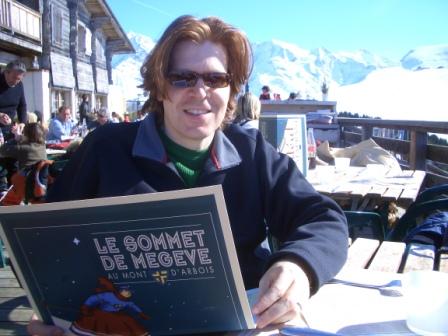
Winner David Kempler, We Are Looking for You

With the friendliest intentions, of course! If a search engine has happened to bring you to this location, please know that we are aching to interview you for intern John Bucher’s recurring feature, “Oh Caption! My Caption!” Please get in touch with him here. Congratulations and happy Fourth! And happy Canada Day, too—though of course Canadians have nothing to be happy about, since at present, they can’t enter the Caption Contest. When will a Canadian taste the kind of glory that David Kempler, winner #100, is basking in right now at his home in Island Park? I will continue to ask this question!

O Caption! My Caption! Winner #99 Speaks

As the New Yorker Cartoon Caption Contest creeps inexorably toward #100, intrepid Canadian intern John Bucher continues the renewed tradition of interviewing the clever and astonishingly elite contest winners.

davidwilkner.JPG
David Wilkner, trolling for the next Big One


Congratulations to David Wilkner (above), of limerick-worthy Pawtucket, Rhode Island, for taking the prize in Cartoon Caption Contest #99—a Leo Cullum illustration of a doctor advising a glum and projectile-pierced cowboy—with the line, “I’d like to get your arrow count down.” Although this contest number has special resonance for Canadians—it’s Wayne Gretzky’s sweater number—David and I discussed things even more vital than hockey. Fishing, for one. —JB
One thing I always wonder about contest winners is whether the caption comes to them quickly or slowly. Which was it in your case?
My “arrow count down” caption was the first one I thought of that Monday morning while online, and it took three to five minutes to compose. I normally come up with a couple of captions that I like the first day, but by the end of the week I will have added ones I think are much better. I hardly ever submit an early one, but I knew this one fit the New Yorker mold of a professional person using his “professionspeak” in an absurd situation. I go to my doctor once a year for a physical, and, of course, he always wants to “get my weight down,” my “cholesterol down,” my “drinking down,” etc.

What process is the devising of a funny caption most like?

Fishing. You’re sitting in the boat waiting for something to bite inside your head. There are days when you catch nothing, or fish so small you throw them back, while searching and waiting for the “big one” you hope is lurking just below the surface.
I really study the cartoon and its makeup, and then follow my thought trail, which may draw from personal experiences or lead to something dealing with irony or an abstract idea. If I’m not getting anywhere I’ll even consider hackneyed phrases. I try to let the cartoon take me down its path to its “rightful” caption rather than forcing one on it.
What kind of relationship do you have with a) The New Yorker and b) its cartoons? How far back does the connection go?
I’ve been hooked on New Yorker cartoons for most of my adult life. As a long-time subscriber, I’ll cut out the cartoons that make me laugh the hardest and tape them on top of each other at my place of work so that people can flip through them. My mother compiled many scrapbooks of her favorites. She passed away five years ago, and would have been ecstatic to know that I won one of these contests.
Of the ones you cut out and post at work, can you winnow out three favorites? What, specifically, do you find funny about them?
1. The classic “I’m sorry, Sir, but Dostoevsky is not considered summer reading. I’ll have to ask you to come with me” cartoon of the beach patrol officer accosting the bewildered tourist; it’s by Peter Steiner. I read a lot of Dostoevsky in my twenties, and like the hilarity of the officer extending his authority into the realm of seasonal reading.
2. The Henry Martin cartoon of the explosion with the title: “Tim, a walking time bomb, met Ed, an accident waiting to happen.” This may be my favorite of all time, because it has no characters or quotations. It’s merely two volatile clichés in a head-on collision.
3. An illustration by Michael Crawford of a Swiss Army knife, but with fourteen corkscrews and no other options—the “French Army knife.” It’s so much fun to make fun of the French!
If you could have one thing in your home autographed by its creator, what would it be?
That’s easy! The print of the Leo Cullum cartoon I won in last week’s contest. It hasn’t arrived in the mail yet. Beyond the home, I’d have to say a Degas pastel of a ballerina in motion that I saw at the Providence Museum of Fine Arts last year. It was so perfect!
What, to the best of your knowledge, were you doing at 11 a.m. on February 17, 1986?
Skiing down the slopes of Killington with my two young daughters and wife.

***

Other Emdashes caption-contest interviews:

  • Robert Gray, winner #106 (“Have you considered writing this story in the third monkey rather than the first monkey?”)
  • David Kempler, winner #100 (“Don’t tell Noah about the vasectomy.”)
  • Richard Hine, winner #98 (“When you’re finished here, Spencer, we’ll need you on the bridge-to-nowhere project.”)
  • Carl Gable, winner #40 (“Hmm. What rhymes with layoffs?”)
  • T.C. Boyle, winner #29 (“And in this section it appears that you have not only alienated voters but actually infected them, too.”)
  • Adam Szymkowicz (“Shut up, Bob, everyone knows your parrot’s a clip-on”), winner #27, and cartoonist Drew Dernavich interview each other in three parts: One, Clip-On Parrots and Doppelgangers; Two, Adam and Drew, Pt. Two; Three, Clip-On Parrots’ Revenge
  • Evan Butterfield, winner #15 (“Well, it’s a lovely gesture, but I still think we should start seeing other people.”)
  • Jan Richardson, winner #8 (“He’s the cutest little thing, and when you get tired of him you just flush him down the toilet.”)
  • Roy Futterman, winner #1 (“More important, however, is what I learned about myself.”)

J.B. Handelsman, 1922-2007

I was sad to learn that longtime cartoonist and cover artist John Bernard (Bud) Handelsman, whose style will be instantly recognizable to readers of the magazine, died earlier this week. You can see some of his work on the Cartoon Bank and in his Comiclopedia bio. On his blog, cartoonist Mike Lynch has a tribute and more biographical information about the New Yorker, Playboy, and Punch artist.

Update: There’s now a slide show of his cartoons and a reminiscence by Nancy Franklin on newyorker.com. The Associated Press also has an obituary, which includes this quote: “‘Bud Handelsman found a way to combine the traditions of the New Yorker cartoon and editorial cartooning and make of it something totally his own,’ David Remnick, the editor of The New Yorker, said in an e-mail. ‘At its best, his work had political bite and, at the same time, a real humanity and wit. Everyone at the magazine—editors, writers, artists, and readers—will miss him and will miss his unique voice.'”

Continue reading

Taxi! Lou Romano’s Animated Cover

Our smart friend in comics sends this link from the cheerful and visually pleasing Cartoon Brew; click on the post to see the current New Yorker cover in all its deep rainy blue and bright yellow glory. Amid Amidi (who recently provided me with a copy of the animated version of James Thurber’s great “The Unicorn in the Garden”) writes:

Congrats to Lou Romano who painted the cover for this week’s New Yorker. Various illustrators who work in animation, like Peter de Sève, have done New Yorker covers before, but could this be the first time a trained animation artist has done a cover in the mag’s eighty-plus year history? The New Yorker is also selling prints of Lou’s cover here.

I think the implicit message in Romano’s cover is, If you want to be happier than Dustin Hoffman and Katharine Ross at the end of The Graduate, skip the bus and hail a cab instead. The triumphant last scene in Valley Girl comes to mind, too. I like how the skyscrapers here seem like a small crowd of friendly elders seeing off the newlyweds with benevolent pride.

So How Many People Enter the Cartoon Caption Contest, Anyway?

Sure, it’s been answered before. But has it been answered with decimal points? When I was reading John’s interview with brand-new contest winner Richard Hine (whose girlfriend is the novelist Amanda Filipacchi, whom I met many moons ago in my other lifetime; I’ll never stop being startled by these coincidences), I wondered anew how many people send in caption entries every week. I’ve heard a few numbers batted around, and I knew it was a few thousand.
Being a Nation-trained fact checker and print journalist packed to the brim with integrity, however, I couldn’t let that kind of imprecision stand. So I went right to the source: cartoon editor Bob Mankoff. His reply was satisfyingly complex: “Through the first 100 caption contests there have been 672,361 entries. So that comes out to an average of 6,723.61 entries per contest. I always find that .61 entry quite funny but incomplete.”
So there you have it: Richard Hine had a lot of competition, and so do you, brave caption-contest entrant. Good luck! If you’re feeling stung by weeks of rejection, soothe yourself by putting a few new spins on a 1933 Thurber cartoon with the irrepressible Radosh gang. I actually think Thurber would have enjoyed reading these.

O Caption! My Caption! Winner #98 Speaks

Due to popular demand, the New Yorker Cartoon Caption Contest interviews are back! Hardworking Canadian intern John Bucher interviews a brand-new member of a truly select group.

CIMG1995comp.JPG
Richard Hine, on the bridge to somewhere


Congratulations to New York’s own Richard Hine (above) for winning Cartoon Caption Contest #98—a P.C. Vey drawing of a man gazing into a wall through a telescope—with the line, “When you’re finished here, Spencer, we’ll need you on the bridge-to-nowhere project.” I asked Richard to address some critical questions for Emdashes readers. —JB
What, for you, goes into writing a caption? I’ve tried the contest (always with miserable results), and I’ve come to feel it is, in many ways, a mental exercise—of identifying an idea related to the drawing, but not an immediately obvious one. Do you have a method?
The short answer is: Yes, but I would hate to give away trade secrets. The long answer is: First, I look at the cartoon online, before my magazine arrives. This, I feel, gives me a crucial head start on other captioneers. I stare at the screen, bite my bottom lip, and shake my head slowly. “Don’t waste your time,” I tell myself, “this one’s impossible.” When my magazine arrives, I look again, searching for details I missed the first time. “Maybe,” I tell myself, “just maybe.” Then, I start making a list of ideas for a few minutes. When I feel confident enough, I test them on my girlfriend. She usually tells me they are lame. So I immediately stop and try and do other things, like write a novel. I come back to my caption list once or twice during the next few days, just to see if I have any other brainwaves. There have been too many weeks when I’ve sent what I thought was my best caption too early in the week, only to come up with something far superior on a Thursday afternoon. I don’t know what other people do, but I only ever enter one caption per week, so once I have a favorite, I try writing it a few different ways and only send it when I feel it’s just right. This method, is of course, 100 percent guaranteed to fail 99 percent of the time.
Your caption has two features that are uncommon among the winners so far—length (fourteen words) and a reference to current events. Brevity, of course, is the soul of wit, and current events have a way of seeming try-hard. Why does this one work?
I was a finalist once before, in contest #82, with a fairly long caption. Of course, I lost out to a shorter, snappier, more crowd-pleasing line. But the experience of being a finalist emboldened me. These days, I allow myself to flex my long caption muscles more and more. Of course, I’ve nothing against short captions. I still send in a short one from time to time. In regard to current events, even though I’ve spent most of my career working for Time and The Wall Street Journal, I usually avoid referencing news items, as they seem not to work well in this contest. But in the case of this P.C. Vey cartoon, I went crazy and broke all my own rules! I not only abandoned my previously described method, I brought in current events, too. As soon as I looked at the cartoon I realized it had “time-wasting” written all over it—both in what it depicted and in its potential to suck up hours of my own time. Through sheer force of will, I made myself come up with a caption quickly and send it in immediately. I figured the “bridge-to-nowhere” concept summed up the reality of corporate thumb-twiddling pretty well, even if not everyone was familiar with the current-events angle.
I’m sensing an emerging time-wasting theme. What, for you, occasions a leap into the ephemera of non-work? What is your most enduring diversion, other than the caption contest? And what gets you back?
Each day, I wake up striving for the ideal balance between productivity and procrastination. I left the corporate world a few months ago, so my definition of “work” and “non-work” has shifted. I’ve finished my first novel and, while hunting for an agent, have started another. I write every day. I also do freelance and consulting projects. My girlfriend, Amanda Filipacchi, actually gets paid to write her novels, so we take advantage of the flexibility we have to travel when we can. On a daily basis, my standard forms of procrastination include: watching The Daily Show and The Colbert Report online, reading news and blogs on Huffington Post and rearranging my Netflix queue. And working out, of course. I plan on doing a lot of that soon.
What’s been your favorite New Yorker cartoon in recent memory?
One of my favorites was actually another caption-contest winner. It was also a P.C. Vey cartoon: two men are looking through a door at an arm sticking up through quicksand and one says to the other: “Of course, the current tenant will be gone before the first of the month.” I don’t think I entered the contest that particular week, but I would not have stood a chance against that line!
If you were convalescing in hospital, what public figure, past or present, would you want in the bed beside yours?
Sir Laurence Olivier would probably have some great stories to tell and if he ran out of anecdotes, I’d just ask him to quote Shakespeare.
Picture the two of you in a cartoon frame. You’re lying back, and your broken leg is suspended in traction. Sir Laurence, his mouth open, inclines himself to you. What’s the caption?
“Should I have said ‘good luck’ instead?”
***

Other Emdashes caption-contest interviews:

  • Robert Gray, winner #106 (“Have you considered writing this story in the third monkey rather than the first monkey?”)
  • David Kempler, winner #100 (“Don’t tell Noah about the vasectomy.”)
  • David Wilkner, winner #99 (“I’d like to get your arrow count down.”)
  • Carl Gable, winner #40 (“Hmm. What rhymes with layoffs?”)
  • T.C. Boyle, winner #29 (“And in this section it appears that you have not only alienated voters but actually infected them, too.”)
  • Adam Szymkowicz (“Shut up, Bob, everyone knows your parrot’s a clip-on”), winner #27, and cartoonist Drew Dernavich interview each other in three parts: One, Clip-On Parrots and Doppelgangers; Two, Adam and Drew, Pt. Two; Three, Clip-On Parrots’ Revenge
  • Evan Butterfield, winner #15 (“Well, it’s a lovely gesture, but I still think we should start seeing other people.”)
  • Jan Richardson, winner #8 (“He’s the cutest little thing, and when you get tired of him you just flush him down the toilet.”)
  • Roy Futterman, winner #1 (“More important, however, is what I learned about myself.”)