
Martin Schneider writes:
Well, it seems the world has finally caught up with us. We were Twittering as far back as the New Yorker Festival, which was nearly six months ago! Now it’s reached that juncture at which phenomena topple over into a phase of greater exposure (hmmm, could be a book in that), and now I’m running into it everywhere. We thought it was high time that Emdashes declared its intention to cover this properly.
So to start with: everyone reading this should know that The New Yorker is using Twitter with great vigor. The magazine’s Twitter is updated regularly and has useful information about new supplementary content on the website like podcasts or videos pretty much every day, usually several times a day.
Richard Brody, who mans “The Front Row” in the blogs section of the magazine’s website, is sending links to his posts on Twitter. The New Yorker Book Club uses its Twitter to link to recent posts and make announcements. The “News Desk” blog is using Twitter regularly. There are also feeds for the Book Bench and the New Yorker Festival.
I’ve done some modest research into New Yorker personnel who are tweeting away, and I’ve come up with the following list:
Sasha Frere-Jones 1
Michael Kupperman
Tad Friend
Bob Staake
Thessaly La Force
Susan Orlean
Liza Donnelly
Julia Suits
Ward Sutton
Sasha Frere-Jones 2 (probably defunct)
Dana Goodyear
Malcolm Gladwell
Erin Overbey (Emdashes regular)
Evan Osnos
Marisa Marchetto (protected updates)
Andy Borowitz
Daniel Zalewski
Lizzie Widdicombe
Lila Byock
Thessaly La Force wonders whether regular Twitterers ought to get extra credit. It’s a fair point. The list is now ordered by number of tweets sent, at least by a mid-March 2009 reckoning; I’ll try to order additions in that spirit.
There’s also the as-yet-empty Cartoon Lounge, apparently run by The New Yorker‘s PR wiz, Jamie Leifer.
A couple of comments: the indefatigable Sasha Frere-Jones tweets about as much as anyone I’ve encountered. Tad Friend tweets quite a bit as well. Dana Goodyear is just starting out, and after a few good weeks, Gladwell may have lost interest—we hope not!
There’s also the charming newyorkerest, run by an enterprising San Franciscan. The purpose of newyorkerest is to isolate the best article in each issue. We’d like to give them a warm welcome to the heady world of New Yorker commentary. What we like most about newyorkerest is that it is all about celebrating genuine achievement; we are too, hence we celebrate newyorkerest.
Oh, here are some Emdashes-related Twitters: Emdashes, Martin, Benjamin, Print magazine.
A final note: We believe that this information—who at The New Yorker indulges in the occasional tweet—is intended for public consumption; otherwise we would not post it. It’s not our intention to catch anyone out or make anyone uncomfortable. So if anyone would like to see his or her Twitter status removed from this list, we’ll only be too glad to do so. Of course, if you’re a New Yorker contributor whose Twitter feed we haven’t discovered (yet), by all means email us and we’ll add it to the list so everyone we know will know how best to follow your interesting activities.
Category Archives: Looked Into
Art for Cats: Going Once, Going Twice…

_Pollux writes_:
A few weeks ago, “we announced”:http://emdashes.com/2009/02/art-for-cats-bid-on-original-a.php the Art for Cats auction in which you can bid on original _New Yorker_ art pieces and help save cats from certain death.
The “Art for Cats auction”:http://shop.ebay.com/merchant/artforcats_W0QQ_nkwZQQ_armrsZ1QQ_fromZQQ_mdoZ has over 60 pieces by New Yorker artists, cartoonists, and illustrators that will go live tonight on eBay at 11:00 EST. Participate in this great cause and start bidding, ladies and gentlemen, before it’s too late!
The Facebook group can be found “here!”:http://www.facebook.com/pages/Art-for-cats/46704559142
Terra Irviniana: Filboid Studge Visits
_Pollux writes_:
Everyone loves Rea Irvin, “including the good people at Filboid Studge.”:http://filboidstudge.blogspot.com/2009/02/life-drawing-sunday-35-rea-irvin.html
We are happy to see a new interest in Irvinian studies, and the site has a great gallery of artwork by the man who gave us Eustace Tilley, the New Yorker typeface, multitudinous New Yorker covers and cartoons, and “The Smythes.” Filboid Studge will be doing an ongoing series on Tilley, and we are looking forward to reading more, so that we may possibly add a new wing to the HQ of the organization co-founded by our very own “Emily,”:http://www.printmag.com/Article.aspx?ArticleSlug=Everybody_Loves_Rea_Irvin the Rea Irvin Institute of Research, not to be confused with the Rea Irvin Research Institute (splitters!). Filboid Studge’s Part One covers 1908 to 1914, so they have a few more decades to cover.
The Heretofore Unknown Mad Men-New Yorker Connection
Emily Gordon writes:
Just as when I read a magazine, I read a magazine, when I watch a show, I watch a show. That usually means (since I don’t have cable) that I watch a whole season of something I’ve become interested in, old or new, and then watch the entirety of the special features and commentaries. If it’s good enough to watch the whole season, it’s good enough to see what its creators, set and costume designers, writers, and (sometimes) actors have to say about the process of making it.
Anyway, I’ve been glutting myself on season one of Mad Men lately, and partly as a way to stave off the inevitability of what I hear is a less sublime season two, I’ve been in full-time commentary and documentary mode; fortunately, the DVDs perfectly reflect the creators’ already obvious obsession with detail, and provide as much of it as anyone could want. (I haven’t even scratched the surface of the show’s online fan base, but it’s clear that they’re at least as consumed with historical perfection.)
One conclusion that I’ve drawn from season one’s commentaries is that many of the people involved in Mad Men, from Matthew Weiner to the set’s hairdressers to writer’s assistant/writer Robin Veith (she moved up, since Weiner seems to promote an apprentice system–I wonder how common that is?), would make terrific New Yorker fact checkers. Etch-a-Sketch wasn’t invented for a few more months? Can’t put it in the episode. Hydroponic apples? We didn’t have them yet–take them out of the supermarket scene. Character a little broke or dowdy and unlikely to wear the latest season in fashion? Put her in something from 1958. Nice touches, and the show is full of them–they’re what makes the show, and the actors say (and repeat many times through the commentaries) that the clothes, corsets, and hair creations do half the acting for them.
Part of the research the team does for every episode involves literature–magazines, books, ephemera, period flotsam–collected not just year by year, but month by month for the time the show’s covering. It’s impressive, and one gets the impression it’s blowing the cast’s minds to read Sex and the Single Girl and similar guides to being alive in the time of Helen Gurley Brown. And here’s Robin Veith on doing some of that research: “I read a lot of the New Yorkers from the period.”
So there you are: the DNA of Mad Men has The New Yorker as its cytosine. In honor of the show and of the recently departed John Updike, here’s a link to one of his Talk pieces (November 17, 1962), on “faces in Manhattan,” that some of the junior admen in the show–the ones obsessed with getting published in The Atlantic Monthly (as they quaintly refer to it)–would rush to read and sigh over. From the abstract: “Perhaps 15% of the faces–invariably male–bear some more or less purposefully shaped ornament of hair, & not more than 5% are marked by duelling scars, shaving nicks, or deeply dimpled chins. One out of three faces wears twin framed panes of glass in front of its eyes, and in one out of three of these the panes are tinted dark…”
Growing Up to Be Susan Sontag
Benjamin Chambers writes:
Over at The Millions, Anne K. Yoder has a humorous review of the recently-published opening volume of Susan Sontag’s journals.
For those interested in Sontag’s early development, I highly recommend her memoir, “Pilgrimage” (published in the December 21, 1987 issue of The New Yorker and curiously classified in the magazine’s index as “fiction”). In it, she describes how she and a friend arranged to meet Thomas Mann at his home while she was still in high school.
She burned brightly, early.
Wouldn’t You Like to See New Yorker Festival Videos on JetBlue?
Emily Gordon writes:
I flew JetBlue to Burlington, Vermont, this past weekend, and was pleased to get a chance to see for myself the airline’s much-discussed new Terminal 5, which was as clean, bright, and waggish (e.g. “OVERSIZE” in massive letters along a wall above the oversize luggage conveyor) as I’d hoped. As usual on JetBlue, I was as comfortable and amused as it’s possible to be in coach.
Although I was committed to reading printouts of Daniel Bergner’s riveting sexology investigation “What Do Women Want?”, Laura Miller’s review of Henry Alford’s How to Live: A Search for Wisdom From Old People and Diana “Stet” Athill’s Somewhere Towards the End, and a Harvard Business Review story about the curious assessment of women managers, I looked up at the little TV screen on the seat back in front of me (I’ve always loved that phrase) from time to time. Immediately, I noticed the signature colors of the New York Times‘ TimesTalks.
Indeed, the airline, the e-newspaper, and American Express have collaborated to invent “Times on Air,” which, as the airline’s press release says, is “the airline’s new in-flight video magazine of unique content from the newspaper’s TimesTalks events — its signature discussion series featuring journalists in conversation with today’s newsmakers and cultural leaders — along with articles and multimedia from NYTimes.com.”
This makes sense, I thought; plenty of people who take JetBlue flights either go to the TimesTalks in person or would if they lived somewhere that held them. Plenty of them would probably also watch TED videos on the seat-back in front of them. And plenty of them would surely watch New Yorker videos–from the New Yorker Festival, the New Yorker Conference, or some of the other new talks, readings, magic shows, and other stimulating entertainments the magazine is hosting or developing as we speak.
Don’t you think?? Wouldn’t you?
The New Yorker on the Kindle: We Have Visuals
Martin Schneider writes:
One of the difficulties of writing about the Kindle is its scarcity: very few people have them, and the retailer that supplies them is virtual, so you can’t even try one in the store. (And they’re always sold out anyway.)
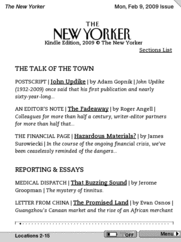
When we reported yesterday that The New Yorker had introduced its Kindle version, we were curious what it looks like. With a black-and-white display, you obviously wouldn’t get a pictorial reproduction of every page, as on The Complete New Yorker or The New Yorker Digital Edition, but what would you get?
Well, now we know. Click on the thumbnail to have a look at the first page of The New Yorker, as seen on a Kindle 1.
Art for Cats: Bid On Original Art, Save a Cat
_Pollux writes_:
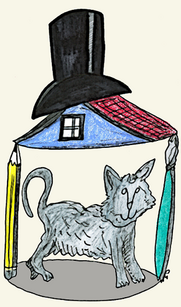
Help homeless cats and kittens by participating in a “a new online auction on Facebook.”:http://www.facebook.com/pages/Art-for-cats/46704559142 The opportunity is irresistible: you can bid on original art pieces by top _New Yorker_ cartoonists and illustrators such as Victoria Roberts, Roz Chast, Danny Shanahan, Liza Donnelly, Sam Gross, Mark Ulriksen, and George Booth!
Inspired by the efforts of cat rescuer Kathleen Goward, the auction is the brainchild of Kathy Osborn, who persuaded these artists to contribute. It was set up on Facebook thanks to the tireless efforts of Alexander Knowlton.
The auction allows you to see the gallery without joining the group, and you can also become a fan to view the auction close dates. Most of the art pieces start at $100 or less. We here at Emdashes love win-win situations, especially when it comes to original _New Yorker_ artwork and saving the lives of animals.
Sante on Sontag: Books Are People, Too
Jonathan Taylor writes:
Out of all the same-samey coverage of the recently published volume of Susan Sontag’s early journals, Reborn, this characterization by Luc Sante stands out to me: ” ‘Reborn’ is in some ways less like a normal book and more like a person.” He continues:
….it is consistent in its deepest reaches, but subject to enormous mood swings. Some very large matters are barely glimpsed, whizzing by at terrific speed, while sundry smaller ones are examined in exhaustive detail. Motives often have to be guessed, and important players enter and exit summarily, without introduction. Various opinions and exhortations—or crotchets or tics—are repeated to the point where it takes a great deal of good will or simple affection to tolerate them. But Sontag does successfully elicit the reader’s good will and affection.
By the way, Sante’s 2008 collection Kill All Your Darlings contains a Talk of the Town piece he contributed in 1988 about the Tompkins Square Park riots, complete with amusing footnotes about how it was changed by the editors.
Funny Money: Rothstein on the Morgan Cartoon Show
Jonathan Taylor writes:
The Times‘s Edward Rothstein had a nice review of the Morgan Library exhibit of New Yorker cartoons about money that Martin wrote about recently. For those who can’t go to it, the many word-pictures and punch lines cited by Rothstein are entertaining enough, because, as he writes,
Their characters are types; their relationships archetypes. It is by eliminating reality’s detail—information about particular individuals, their histories and their desires, information that might stir sympathy or resentment—that the show’s images focus complete attention on how powerful and how precarious a thing money is.
Among the funny ones:
One of the exhibition’s final cartoons shows greedily gloating tycoons celebrating their apparent mastery.
“Well, we’ve licked taxes,” one thunders. “That just leaves death” (Lee Lorenz, 2002).